Custom Website Development vs Template Website: Which Is Right for Your Business?
Choosing the right website for your business is an important decision in today's digital marketplace. Whether you are launching a startup, running a local business, or expanding an established company, your website influences how customers discover your brand, explore your services, and contact your team.
One of the most common questions business owners ask is whether to invest in custom website development or choose a template-based website. Both options have advantages, and the right choice depends on your budget, business goals, functionality requirements, and plans for future growth.
In this guide, Radhix Technologies explains the differences between custom website development and template websites to help you make an informed decision.
What Is Custom Website Development?
Custom website development involves creating a website according to your specific business requirements. Instead of relying entirely on a pre-designed template, developers build the website's structure, user interface, features, and functionality around your objectives.
Custom websites can be developed using technologies such as React, Vue.js, Node.js, PHP/Laravel, Python, or other suitable platforms, depending on the project's needs.
Benefits of Custom Website Development
1. Unique Design and Branding
A custom website allows your business to establish a distinctive digital identity. Layouts, colours, typography, navigation, and page structure can be designed to match your brand and target audience.
2. Tailored Functionality
Custom development supports features designed around your business operations, including booking systems, customer dashboards, advanced enquiry forms, membership portals, and integrations with other software.
3. Greater Flexibility
As your business expands, a well-planned custom website can accommodate new services, workflows, integrations, and features without relying entirely on the limitations of a particular template.
4. Performance Optimization
Developers can optimize code, images, scripts, and page structures according to the website's requirements. Actual performance depends on implementation, hosting, content, and ongoing maintenance.
5. Integration with Business Systems
Custom websites can connect with CRM software, ERP platforms, payment gateways, inventory systems, and third-party APIs when appropriate. This can help streamline operations and reduce manual work.
Disadvantages of Custom Website Development
Custom websites generally require a higher initial investment and more planning than simple template-based projects. Development may also take longer because the design, functionality, and testing are tailored to the project.
Ongoing maintenance may require technical support, especially when the website uses a complex application architecture or specialized integrations.
What Is a Template Website?
A template website uses a pre-designed layout or theme that can be customized with your business name, logo, images, colours, text, and selected features.
Platforms such as WordPress, Shopify, and website builders offer templates that help businesses launch websites without developing every component from scratch.
Benefits of Template Websites
1. Lower Initial Cost
Template websites are often more affordable because the basic design and structure already exist. This makes them suitable for startups and small businesses with limited budgets.
2. Faster Development
Since the layout and many standard components are already available, a simple website can often be launched faster than a fully custom-built solution.
3. Easy Content Management
Many template-based platforms provide user-friendly dashboards for updating text, publishing blogs, adding images, and managing products.
4. Access to Existing Features
Depending on the platform, businesses can add contact forms, galleries, booking features, payment options, and other capabilities through built-in tools or plugins.
5. Suitable for Standard Business Needs
A template can work well for a portfolio, service website, basic corporate website, personal brand, or small online store with straightforward requirements.
Disadvantages of Template Websites
Templates may restrict certain design changes or advanced functionality. Extensive modifications can require additional development work, premium plugins, or custom code.
Some themes and plugins may also introduce unnecessary features that affect performance or maintenance. Businesses should evaluate compatibility, security updates, licensing, and long-term flexibility before selecting a template.
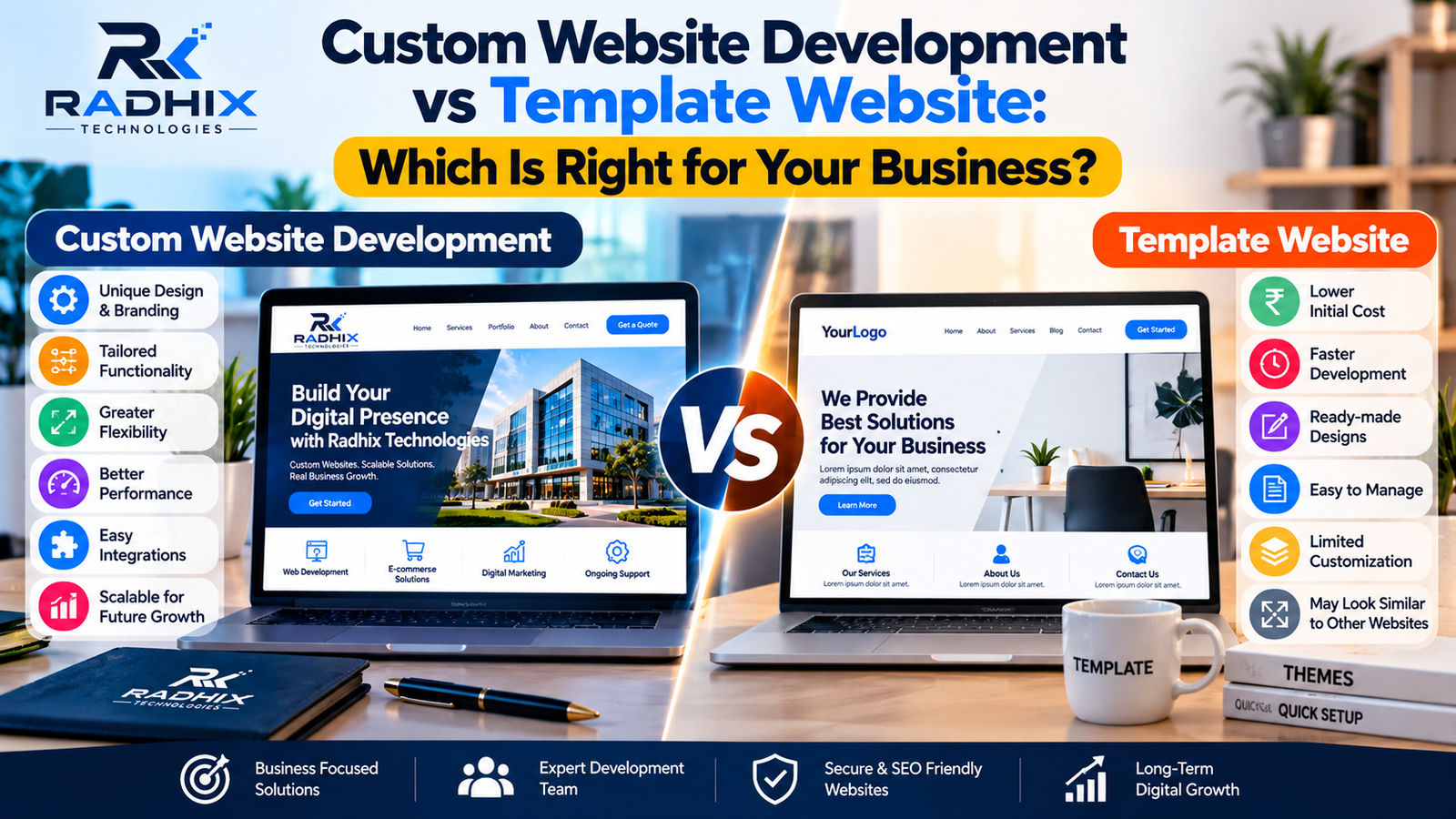
Custom Website vs Template Website: Key Differences
FeatureCustom WebsiteTemplate WebsiteInitial costUsually higherUsually lowerDevelopment timeGenerally longerGenerally shorterDesign flexibilityHighly customizableDepends on the templateFunctionalityBuilt around requirementsUses available features and extensionsBrandingGreater design freedomMay resemble other websitesMaintenanceDepends on architectureDepends on platform, theme, and pluginsScalabilityCan be planned around future needsDepends on platform and template limitationsBest suited forComplex or specialized requirementsStandard website requirements
Neither option is automatically better for every business. A well-built template website can outperform a poorly developed custom website, so quality, usability, security, and business suitability matter more than the label alone.
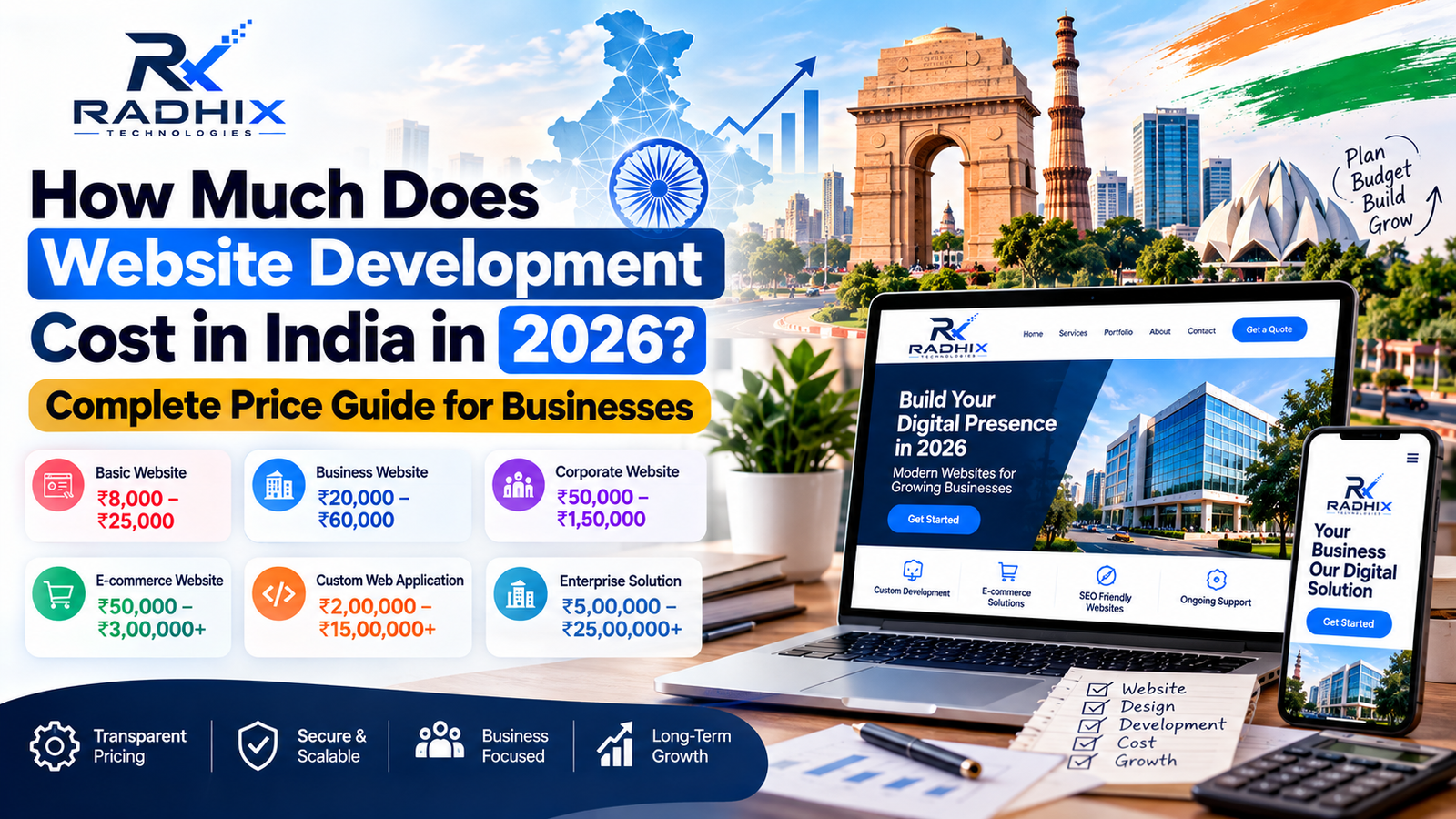
How Much Does Each Website Type Cost in India?
Website development costs vary depending on the number of pages, design requirements, functionality, content, integrations, and developer experience.
The following are indicative planning estimates for India, not fixed quotations.
Template Website Cost
A basic template-based website may cost approximately ₹8,000–₹40,000. More customized template websites can cost ₹40,000–₹1,00,000 or more.
Costs depend on the selected platform, theme licensing, number of pages, configuration, and additional features.
Custom Website Development Cost
A relatively simple custom business website may cost approximately ₹40,000–₹1,50,000. More complex websites and web applications can cost several lakhs, depending on their scope.
Custom booking systems, customer portals, payment workflows, and software integrations generally require additional planning and development.
Remember to account for domain registration, hosting, premium plugins, content creation, maintenance, and applicable taxes where these are not included in the quotation.
Which Website Is Better for SEO?
Both custom websites and template websites can support search engine optimization when implemented correctly.
A template website can provide a strong SEO foundation through mobile-responsive design, editable page titles, meta descriptions, clean URLs, and SEO plugins.
Custom development offers greater control over technical architecture and specialized functionality, but it does not guarantee higher rankings.
For either option, important SEO practices include:
- Creating helpful, original content.
- Optimizing page titles and meta descriptions.
- Using descriptive headings and URLs.
- Improving page loading speed and mobile usability.
- Adding relevant internal links.
- Optimizing images and implementing suitable alt text.
- Using structured data where appropriate.
- Maintaining secure HTTPS connections.
For businesses targeting customers in Faridabad or other local markets, relevant location pages and an accurately maintained Google Business Profile can also support local search visibility.
How to Choose the Right Website for Your Business
Before choosing between custom development and a template, evaluate your requirements carefully.
Choose a template website if:
- You need a basic business website quickly.
- Your budget is limited.
- You require standard pages and contact forms.
- You want to manage content through a familiar dashboard.
- Your current requirements do not involve complex integrations.
Choose custom website development if:
- Your business requires specialized features.
- You need complex workflows or user permissions.
- Your website must integrate with multiple business systems.
- You require a highly tailored customer experience.
- You have specific scalability or technical requirements.
You can also adopt a hybrid approach by starting with a flexible template and adding custom functionality where necessary. This can be a practical way to control initial costs while addressing important business needs.
Why Choose Radhix Technologies?
Radhix Technologies helps businesses explore website development solutions based on their goals, audience, functionality, and budget.
Whether you need a template-based business website, a customized corporate platform, an e-commerce store, or a custom web application, the development approach should match your actual requirements.
A well-defined project plan can include design, development, mobile responsiveness, technical SEO, testing, deployment, and ongoing maintenance. Before committing, ask for a written quotation that clearly defines deliverables, timelines, third-party costs, and source-code ownership.
Conclusion
The choice between custom website development and a template website depends on what your business needs today and where you want it to go in the future.
A template website is often a practical option for businesses seeking affordability and faster deployment. Custom website development is worth considering when specialized functionality, greater design flexibility, or complex integrations are important.
Evaluate your objectives, compare the total cost of ownership, and choose a solution that delivers value without introducing unnecessary complexity.
Ready to build your business website? Contact Radhix Technologies to discuss your requirements and explore a website solution aligned with your business goals.
Frequently Asked Questions
1. Is a custom website better than a template website?
A custom website offers greater flexibility for specialized requirements, while a template website is often more affordable and quicker to launch. The better choice depends on your goals and budget.
2. Is a template website good for SEO?
Yes. A properly configured template website can support SEO through quality content, responsive design, technical optimization, and effective site structure.
3. How much does custom website development cost in India?
A relatively simple custom business website may cost around ₹40,000–₹1,50,000, while complex applications can cost considerably more.
4. Can I convert a template website into a custom website later?
Yes, but the effort and cost depend on the platform, existing code, data structure, and features you want to retain. Some projects benefit from a gradual upgrade, while others require redevelopment.
5. Which option is best for a startup?
A template website can be a cost-effective starting point for a startup with standard requirements. Custom development may be appropriate when the business model depends on specialized software or workflows.
6. Does a custom website guarantee better performance?
No. Performance depends on code quality, hosting, page content, integrations, and ongoing optimization. Both custom and template websites can perform well when developed and maintained properly.