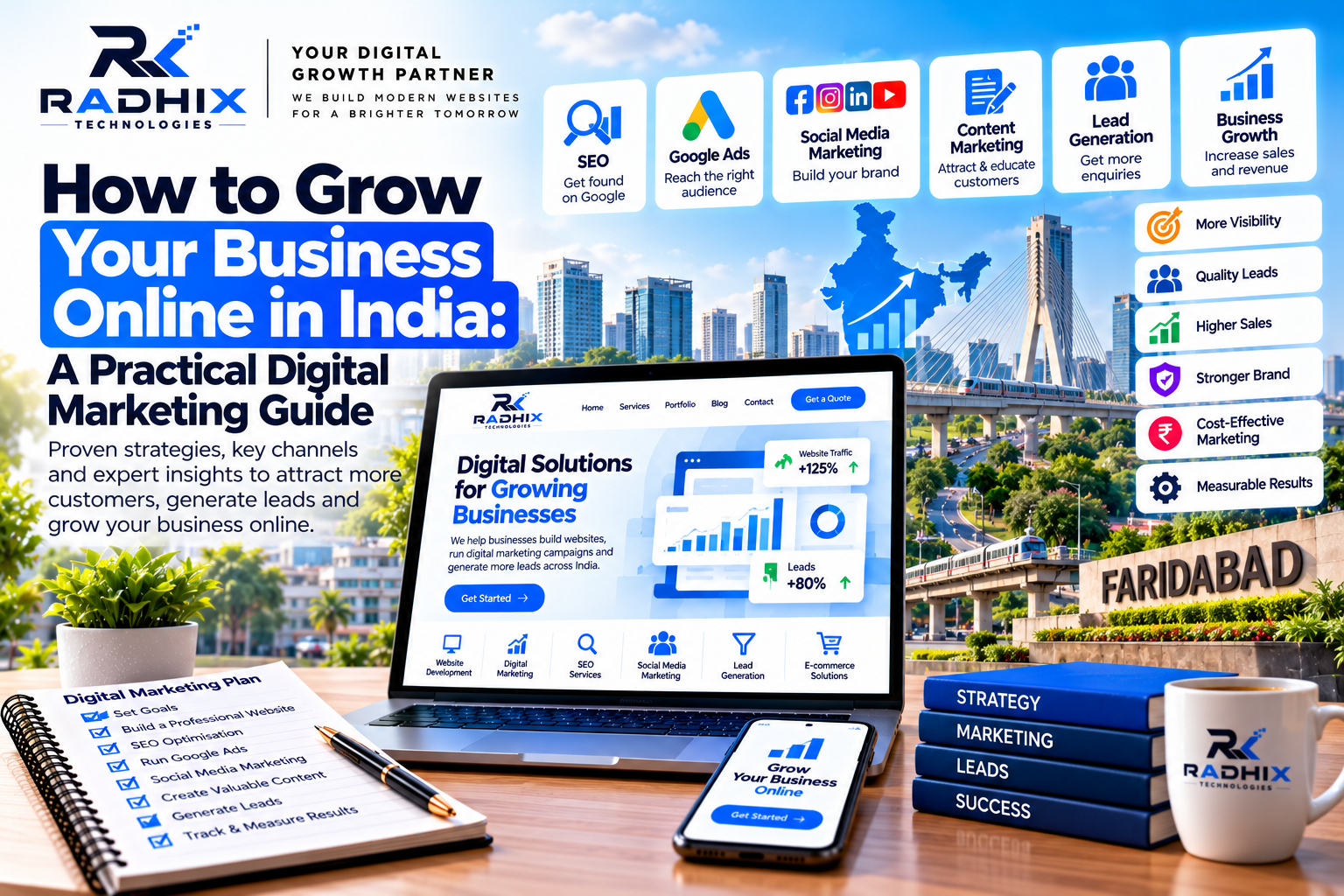
How to Grow Your Business Online in India: A Practical Digital Marketing Guide
Growing a business online in India is no longer limited to large companies with substantial marketing budgets. Small businesses, startups, manufacturers, retailers, service providers, and independent professionals can all use digital channels to reach potential customers and build a stronger brand.
However, simply creating a website or posting regularly on social media does not guarantee business growth. You need a clear strategy that connects your online presence with your target audience, products or services, budget, and business goals.
Whether you are starting a new business or looking to expand an established company, this practical digital marketing guide explains how to grow your business online in India, choose the right marketing channels, generate enquiries, and measure results.
1. Define Your Business Goals Before Starting
Before spending money on digital marketing, decide what you want to achieve.
Different businesses have different priorities. A local retailer may want more store visits and phone enquiries, while a software company may focus on qualified leads and consultation bookings.
Start by identifying your main objective.
Common business goals include:
- Increasing brand awareness
- Getting more website visitors
- Generating qualified enquiries
- Increasing online sales
- Promoting products or services in new cities
- Building a loyal customer base
- Improving repeat purchases
- Expanding into new markets
Choose measurable targets wherever possible.
For example, instead of saying, "We want more customers," define a goal such as increasing qualified enquiries from your website over the next three months.
You should also understand your current performance. Record your existing website traffic, enquiries, sales, advertising expenses, and customer acquisition costs if this information is available.
Practical tip: Start with one or two important business goals. A focused strategy is easier to manage and measure than trying every marketing channel simultaneously.
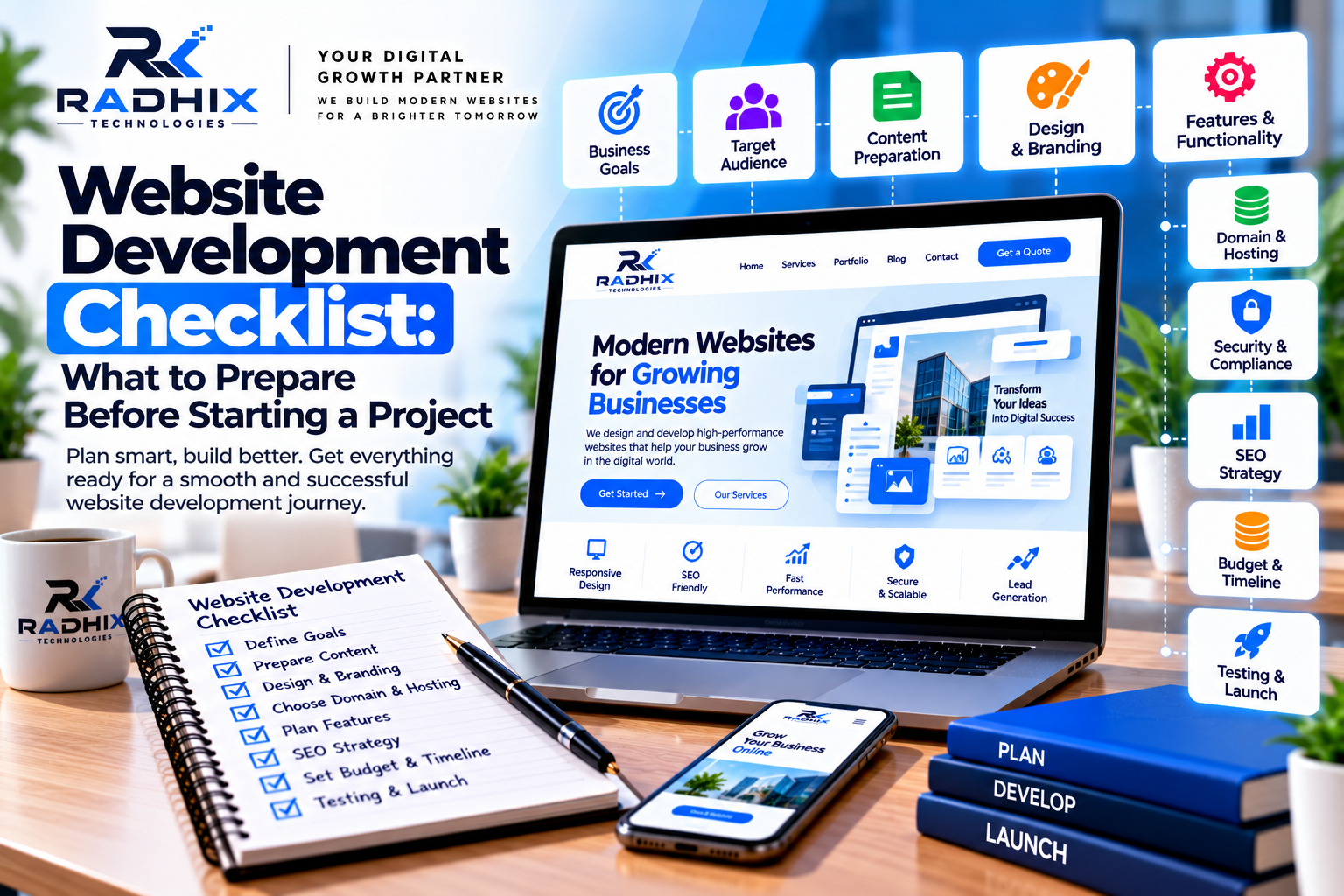
2. Build a Professional Business Website
Your website can act as your digital business office. It allows potential customers to learn about your company, explore your services, review your work, and contact your team.
A social media profile can support your marketing, but a professional website gives you greater control over your business information, page structure, content, and customer journey.
Essential Features of a Business Website
Your website should include:
- A clear homepage explaining what your business offers
- An About Us page describing your company
- Detailed product or service pages
- Contact details and enquiry forms
- Mobile-friendly design
- Fast-loading pages
- Customer testimonials or relevant case studies
- Clear calls to action
- Appropriate security and privacy information
- Basic SEO configuration
Depending on your business, you may also need online payments, appointment booking, product catalogues, customer accounts, or CRM integration.
For example, a digital marketing company can create dedicated service pages for SEO, social media marketing, and Google Ads. A manufacturing company may need product specifications, downloadable catalogues, and quotation request forms.
The goal is to make it easy for visitors to understand your offering and take the next step.
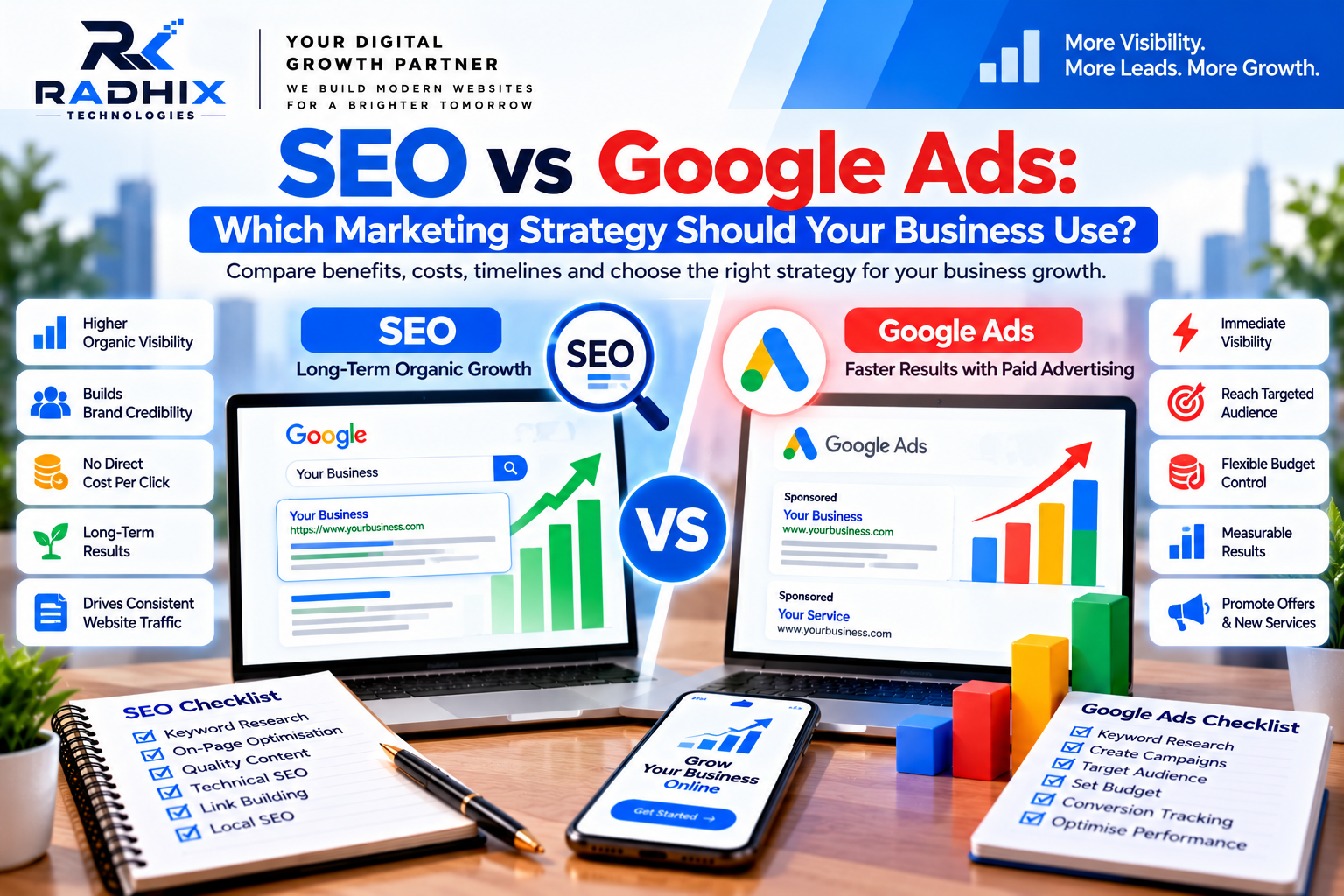
3. Improve Your Visibility on Google with SEO
Search engine optimisation, or SEO, helps your website become more discoverable for relevant searches.
When potential customers search for products or services related to your business, useful and well-optimised pages can help them find your website.
SEO is particularly valuable for businesses that want to build long-term organic visibility rather than depend entirely on paid advertisements.
Important SEO Activities
Keyword research: Identify the words and phrases your target customers use when searching for your services.
On-page SEO: Optimise page titles, headings, descriptions, content, and internal links.
Technical SEO: Review website accessibility to search engines, page performance, mobile usability, indexing, and other technical factors.
Content marketing: Publish useful articles, guides, FAQs, and case studies that answer customer questions.
Local SEO: Improve your business information and local visibility when you serve customers in particular cities or regions.
Performance monitoring: Use tools such as Google Search Console to understand search impressions, clicks, and indexing issues.
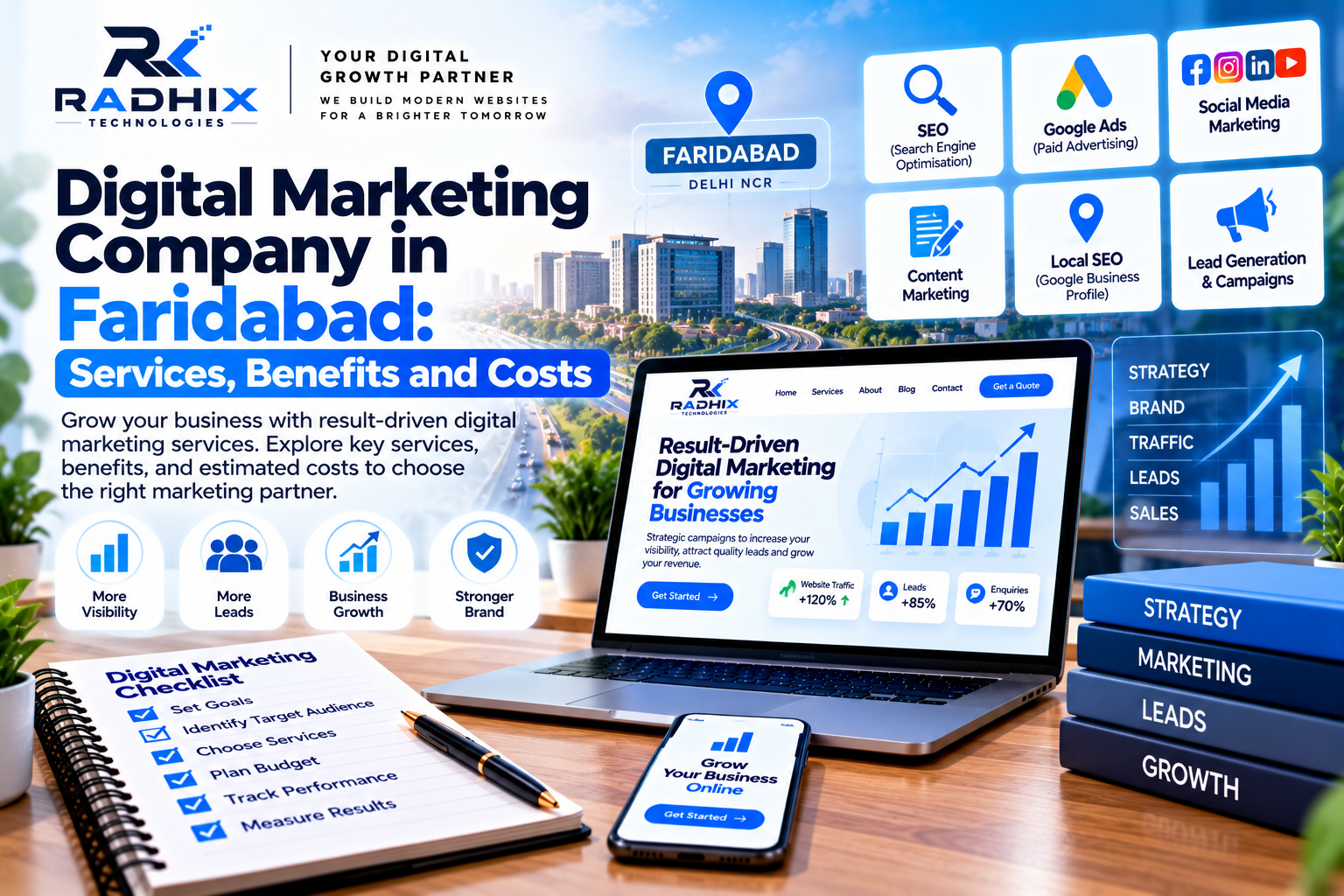
For example, a business serving Faridabad could create a useful page explaining its services in the area, including accurate contact information and relevant customer information.
Avoid creating many nearly identical location pages with little value. Focus on genuinely useful content that matches the needs of your audience.
SEO takes time, and rankings are not guaranteed. Progress depends on competition, content quality, website condition, and consistent implementation.
4. Use Google Business Profile for Local Growth
If your business serves customers in a specific city or location, a Google Business Profile can help people discover your business on Google Search and Google Maps.
For eligible businesses, creating and managing a profile is free.
How to Improve Your Local Business Presence
- Complete your business information accurately.
- Select relevant business categories.
- Add suitable photographs of your business, products, or work.
- Keep business hours and contact details updated.
- Describe your services clearly.
- Respond professionally to customer reviews.
- Encourage genuine customers to share honest feedback.
- Link to the relevant page on your website.
For example, a local salon, repair service, consultant, or retail store can use its profile to help potential customers understand its location, services, and opening hours.
Local visibility depends on factors including relevance, distance, and prominence. No agency can legitimately guarantee a particular local ranking simply by charging a fee.
If you operate entirely online or do not serve customers at a physical location, check Google's eligibility rules before creating a profile.
5. Build Your Brand Through Social Media Marketing
Social media can help your business communicate with customers, demonstrate expertise, showcase products, and build brand recognition.
The key is to select platforms that suit your audience rather than attempting to maintain every social network.
Which Platforms Should You Consider?
Instagram: Useful for visual products, short videos, brand storytelling, and consumer-facing businesses.
Facebook: Can support local community engagement, business updates, and advertising campaigns.
LinkedIn: Often useful for B2B companies, professional services, recruitment, and industry-related content.
YouTube: Suitable for tutorials, demonstrations, product explanations, educational videos, and longer-form content.
Your ideal platform depends on your customers, industry, resources, and content format.
What Should You Post?
Create a balanced content plan that may include:
- Educational tips
- Product or service demonstrations
- Frequently asked questions
- Project highlights
- Customer stories shared with permission
- Industry insights
- Behind-the-scenes content
- Short videos and explainers
- Offers and announcements
For example, a website development company can publish website design tips, website maintenance advice, project walkthroughs, and explanations of common development costs.
Use a consistent brand voice and make every post useful, relevant, or engaging.
Practical tip: Start with one or two suitable platforms and maintain a realistic posting schedule. Consistency and content quality are more valuable than publishing large amounts of repetitive content.
6. Use Google Ads and Paid Advertising Strategically
SEO and organic social media can help build long-term visibility, but businesses may also need paid advertising to reach targeted audiences or test demand.
Google Ads can help businesses appear for relevant searches, while social advertising can support awareness, lead generation, and product promotion.
When Should You Use Paid Advertising?
Paid advertising may be suitable when you want to:
- Generate enquiries for a specific service
- Promote a new product
- Reach customers in selected locations
- Test different offers or messages
- Increase qualified website traffic
- Support a seasonal campaign
- Drive sales for an online store
Before launching a campaign, define your target audience, location, offer, landing page, advertising budget, and conversion goals.
Set Up Conversion Tracking
Do not measure campaign performance only by clicks or impressions.
Track meaningful actions such as:
- Enquiry form submissions
- Qualified phone enquiries
- Consultation bookings
- Product purchases
- Relevant WhatsApp clicks
- Qualified leads generated
A campaign that generates many low-quality enquiries may be less valuable than one that generates fewer, more relevant prospects.
Remember that the advertising budget is separate from the agency's management fee unless your agreement specifies otherwise.
7. Create Helpful Content to Attract Customers
Content marketing helps potential customers understand your expertise before they contact you or make a purchase.
Useful content can answer questions, explain complex topics, address objections, and help customers compare solutions.
Content Ideas for Indian Businesses
Depending on your industry, you could publish:
- How-to guides
- Product comparisons
- Service explanations
- Frequently asked questions
- Industry updates
- Customer case studies
- Cost and pricing guides
- Tutorials
- Buying guides
- Practical checklists
For example, an IT company can publish articles about website development costs, choosing the right technology, website security, and digital transformation.
A manufacturer could publish product specifications, application guides, maintenance instructions, and comparisons that help buyers make informed decisions.
Make Your Content Useful
- Write for real customer needs.
- Use clear headings and short paragraphs.
- Include relevant examples.
- Verify factual claims.
- Keep information updated.
- Link to relevant services and resources.
- Add an appropriate next step for interested readers.
Avoid publishing large volumes of repetitive articles solely to target keywords. Useful, original, people-focused content is a stronger foundation for long-term search visibility.
8. Use WhatsApp and Email to Follow Up with Customers
Generating an enquiry is only part of the customer journey. You also need a reliable process for answering questions and following up with potential customers.
For many Indian businesses, WhatsApp can be a convenient communication channel when customers prefer messaging. Email can also support formal communication, quotations, newsletters, and customer updates.
Practical Ways to Improve Follow-Up
- Respond to enquiries promptly.
- Share clear product or service information.
- Send quotations and relevant documents.
- Record enquiries in a spreadsheet or CRM.
- Set reminders for appropriate follow-ups.
- Segment customers according to their interests.
- Request permission before sending promotional communications.
- Respect opt-outs and communication preferences.
For example, a service company can record the source of each enquiry, the service requested, the quotation status, and the next follow-up date.
This helps prevent promising leads from being forgotten and gives you a clearer picture of your sales process.
Use customer information responsibly and follow applicable privacy and messaging requirements.
9. Optimise Your Website to Convert Visitors into Customers
Getting traffic to your website is not enough. Your website should make it easy for visitors to understand your offering and contact your business.
This is where conversion rate optimisation becomes important.
Improve Your Website Conversion Rate
Use clear headlines: Explain what you offer and whom you help.
Make contact options visible: Add appropriate enquiry forms, phone links, or WhatsApp options.
Reduce unnecessary steps: Keep forms focused on the information you genuinely need.
Build trust: Use accurate business details, genuine reviews, relevant work samples, and transparent service information.
Improve mobile usability: Ensure text, menus, forms, and buttons work well on smartphones.
Improve page speed: Optimise images, scripts, and other elements that affect performance.
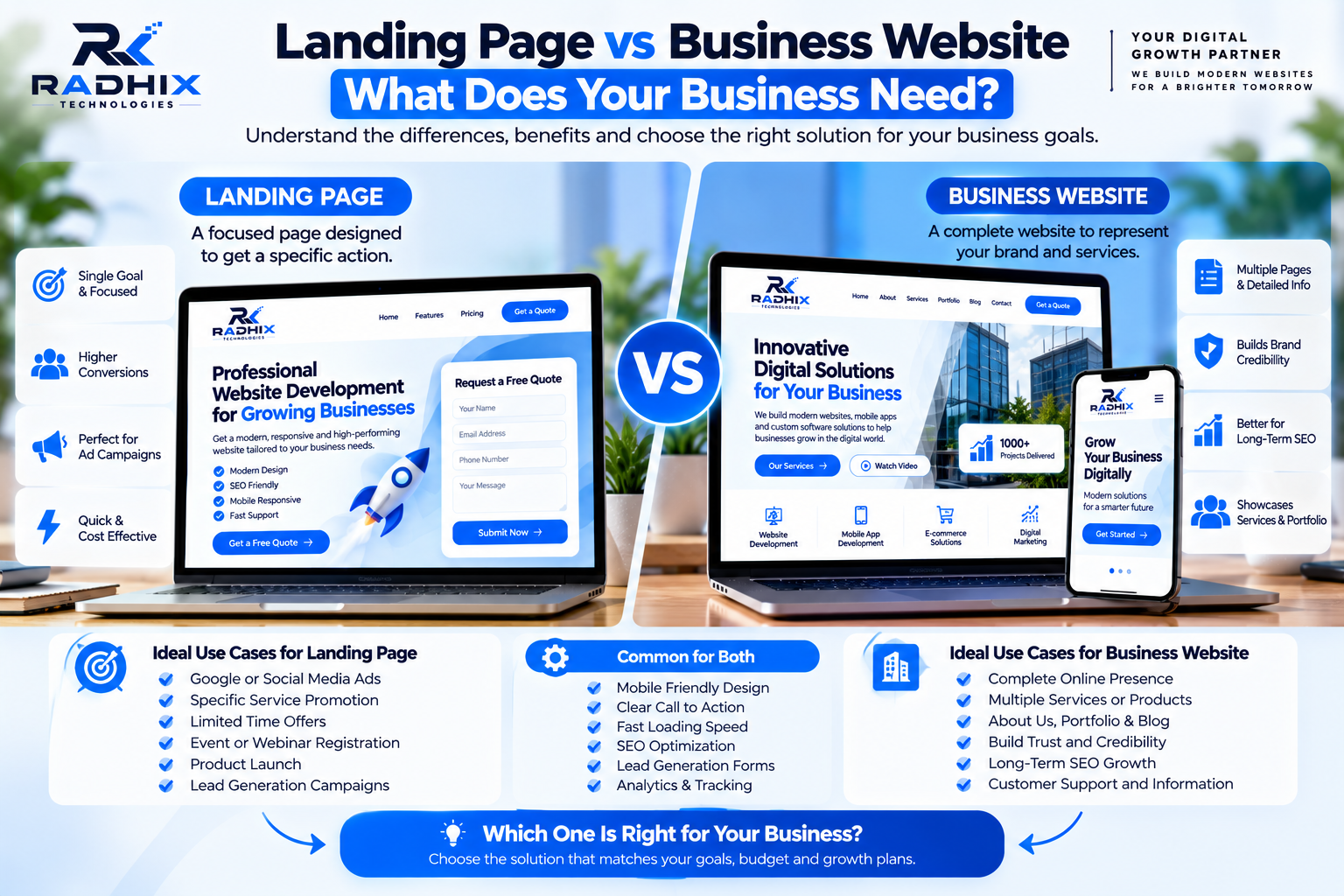
Match the landing page to the campaign: If an advertisement promotes one service, direct visitors to a page that explains that service rather than a generic page.
Measure form submissions, qualified leads, and sales to identify which improvements make a difference.
10. Choose the Right Digital Marketing Budget
You do not need to use every marketing channel from day one. Your budget should reflect your current stage of business, customer acquisition goals, competition, and available resources.
The following are illustrative monthly planning ranges, not fixed market prices or guaranteed service quotations.
Marketing activityIllustrative budget
Basic local SEO₹5,000–₹12,000
- Standard SEO services₹12,000–₹25,000
- Basic social media management₹5,000–₹10,000
- More extensive social media management₹10,000–₹25,000
- Google Ads management₹5,000–₹15,000+
- Integrated digital marketing services₹15,000–₹50,000+
Actual prices vary by provider, scope, competition, content requirements, and location. Website development, advertising spend, third-party tools, and applicable taxes may be charged separately.
How to Allocate Your Budget
For a new small business, a sensible starting approach could be:
- Build a professional website or improve the existing one.
- Set up appropriate analytics and conversion tracking.
- Improve local SEO if your business serves a defined area.
- Select one primary marketing channel.
- Measure enquiries and sales before expanding.
For example, a local service business might prioritise its website, Google Business Profile, and local SEO. An online retailer may focus on product pages, paid campaigns, and purchase tracking.
Review your results regularly and invest more only when you understand what is working.
11. Track Your Digital Marketing Results
Digital marketing decisions become more useful when they are based on reliable data.
Choose a small set of metrics that connect directly to your business objectives.
Important Metrics to Monitor
Website traffic: How many people visit your website, and which channels bring them there?
Search performance: Which queries generate impressions and clicks?
Qualified leads: How many enquiries match your target customer profile?
Cost per lead: How much are you spending to generate an enquiry?
Conversion rate: What proportion of visitors complete a desired action?
Sales conversion: How many leads become paying customers?
Customer acquisition cost: How much does it cost to acquire a customer, when the necessary data is available?
Return on advertising spend: How much attributed revenue is generated for each unit of advertising spend?
Use analytics and advertising reports alongside actual sales information. Platform-reported conversions may not always represent unique customers or completed sales.
A monthly review can help you identify which campaigns deserve more investment and which need improvement.
12. Common Mistakes to Avoid When Growing Online
Many businesses spend time and money on digital marketing without a clear plan. Avoid these common mistakes:
Trying Every Platform at Once
Managing too many channels can stretch your resources and reduce content quality. Start with the channels most relevant to your audience.
Expecting Immediate SEO Results
Organic search visibility usually requires ongoing work. Avoid making business decisions based on promises of guaranteed rankings within a fixed number of days.
Running Ads Without Tracking Conversions
Clicks alone do not tell you whether a campaign is generating valuable business opportunities.
Ignoring Website Quality
A slow, confusing, or outdated website can reduce the value of traffic generated through advertising and social media.
Publishing Repetitive Content
Content should provide useful information and reflect your business expertise rather than simply repeat keywords.
Buying Fake Followers or Reviews
Artificial engagement can damage credibility and violate platform policies. Focus on genuine customer relationships and honest feedback.
Failing to Follow Up on Leads
Marketing results can be lost when enquiries are not answered or sales teams do not follow up consistently.
Ignoring Customer Feedback
Customer questions, reviews, and objections can reveal opportunities to improve your website, offers, services, and marketing messages.
13. A Practical 90-Day Online Growth Plan
A structured plan can help your business build a foundation, launch suitable marketing activities, and learn from early results.
Days 1–30: Build the Foundation
- Define your business goals and ideal customers.
- Review your website and online presence.
- Prepare key service or product pages.
- Set up suitable analytics and conversion tracking.
- Review Google Business Profile eligibility and setup if relevant.
- Research customer questions and target keywords.
- Select one or two priority marketing channels.
Days 31–60: Start Marketing Activities
- Publish helpful website content.
- Improve key pages and contact options.
- Begin a consistent social media schedule.
- Launch a carefully budgeted paid campaign if appropriate.
- Test landing pages and enquiry forms.
- Establish a reliable lead follow-up process.
- Review initial traffic and enquiry quality.
Days 61–90: Measure and Improve
- Review search and campaign performance.
- Identify which pages generate relevant enquiries.
- Improve advertisements and landing pages.
- Expand useful content based on customer questions.
- Review cost per qualified lead.
- Reduce spending on poorly performing activities.
- Plan the next phase based on evidence.
This is a practical planning framework, not a guarantee of a particular sales or ranking outcome. The pace of progress depends on your starting point, resources, industry, and execution.
How Radhix Technologies Can Help Your Business Grow Online
At Radhix Technologies, we understand that businesses need digital solutions aligned with their goals, customers, and budgets.
Our services include website development, custom software solutions, e-commerce development, and digital solutions that help businesses establish and improve their online presence.
A strong digital strategy starts with understanding your business requirements. This includes the website experience, services you want to promote, target audience, content requirements, and ways to measure results.
Whether you are launching a new business website, improving your existing digital presence, or planning a broader online growth strategy, the right approach should be practical, measurable, and suited to your stage of business.
Want to strengthen your business's online presence? Contact Radhix Technologies to discuss your website and digital growth requirements.
Conclusion
Growing your business online in India requires more than creating a website or running occasional advertisements. It involves understanding your audience, building a credible online presence, improving search visibility, sharing useful content, selecting suitable marketing channels, and following up with potential customers.
Start with clear goals and a manageable budget. Build a strong website, focus on the marketing channels that matter most, and track enquiries and sales rather than vanity metrics alone.
As your business gains experience and reliable performance data, improve your strategy and expand the activities that deliver value.
The most effective digital marketing strategy is one that connects customer needs with a useful offering, a strong online experience, and consistent measurement.
Frequently Asked Questions
1. How can I grow my business online in India?
Start by defining your target audience, building a professional website, improving SEO, creating useful content, selecting relevant social media channels, and measuring enquiries and sales. Expand your marketing activities based on performance.
2. Which digital marketing strategy is best for a small business?
There is no single strategy for every business. Local service providers may benefit from local SEO and a well-optimised website, while e-commerce businesses may focus on product pages, paid campaigns, and purchase tracking.
3. How much does digital marketing cost in India?
Costs depend on the services, scope, provider, and competition. Basic monthly services may cost several thousand rupees, while integrated campaigns can require significantly larger budgets. Advertising spend and taxes may be additional.
4. How long does it take to see digital marketing results?
Paid advertising can generate traffic soon after a campaign launches, although profitable results are not guaranteed. SEO and content marketing generally require sustained effort, and the timeline varies by website, competition, and execution.
5. Is a website necessary for growing a business online?
A website is not mandatory for every online activity, but it gives businesses greater control over their information, content, customer journey, and lead generation. It can also support SEO and paid advertising.
6. Is social media enough to grow a business?
Social media can be useful, but relying on one platform may limit your options. A combination of a website, suitable marketing channels, and a reliable customer follow-up process can create a stronger foundation.
7. How do I know whether digital marketing is working?
Track relevant website traffic, qualified enquiries, conversion rates, sales, customer acquisition costs, and campaign expenses. Compare performance with your business objectives rather than focusing only on likes or impressions.
8. Can Radhix Technologies help businesses establish an online presence?
Radhix Technologies provides website development and digital solutions. Contact the team to discuss your requirements and determine which services are suitable for your business goals.