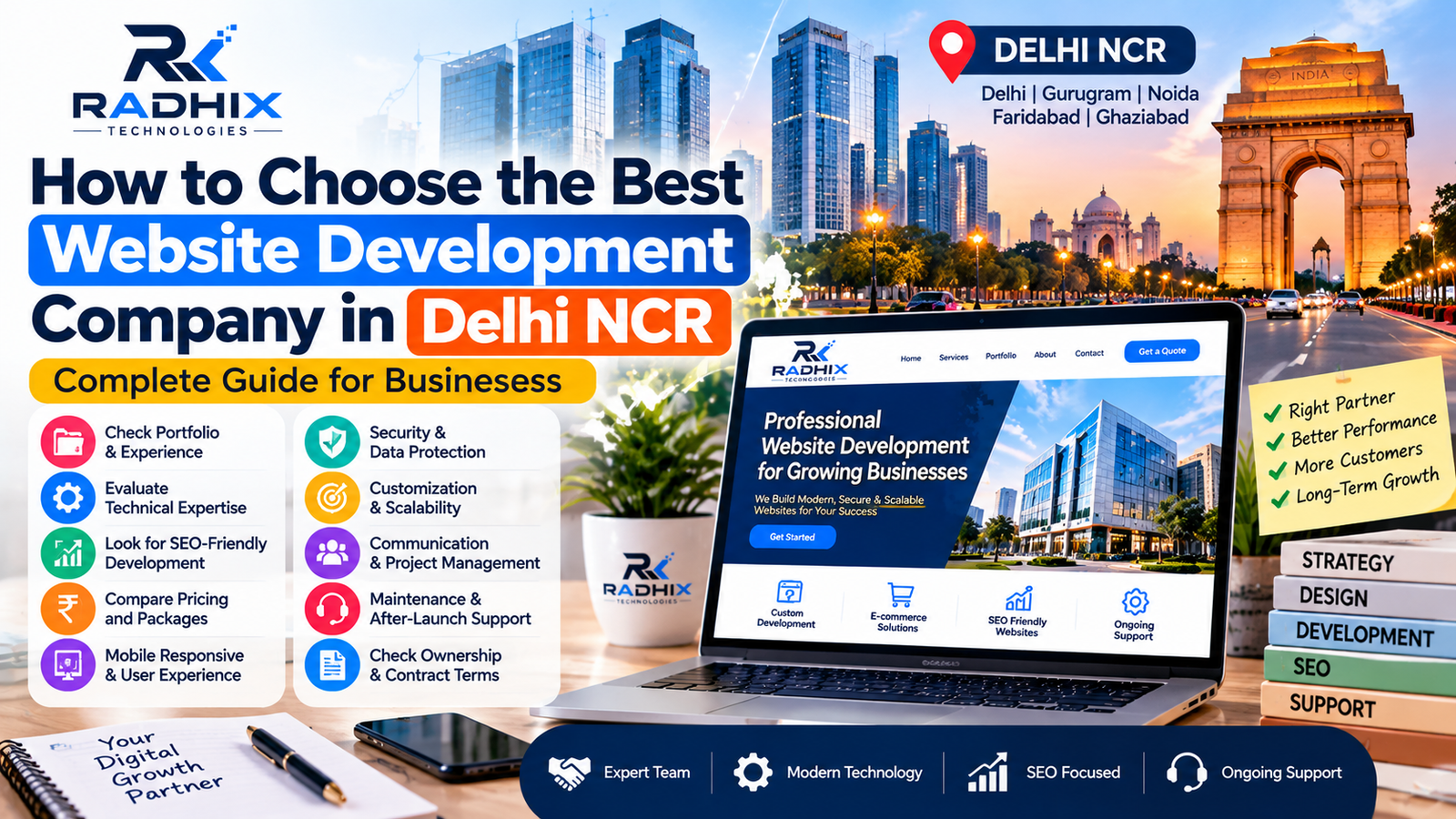
How to Choose the Best Website Development Company in Delhi NCR
In today's competitive digital marketplace, a professional website is essential for businesses that want to build credibility, attract customers, and increase sales. Whether you operate a startup, a retail business, a manufacturing company, or a service-based organization, your website plays an important role in your digital growth.
However, choosing the right website development company in Delhi NCR can be challenging. With numerous agencies and freelancers offering different services, pricing structures, and technologies, it is important to evaluate your options carefully before making a decision.
A reliable web development partner should understand your business goals, recommend suitable technologies, deliver a user-friendly website, and provide support after launch.
In this guide, Radhix Technologies explains the most important factors to consider when selecting a website development company in Delhi NCR.
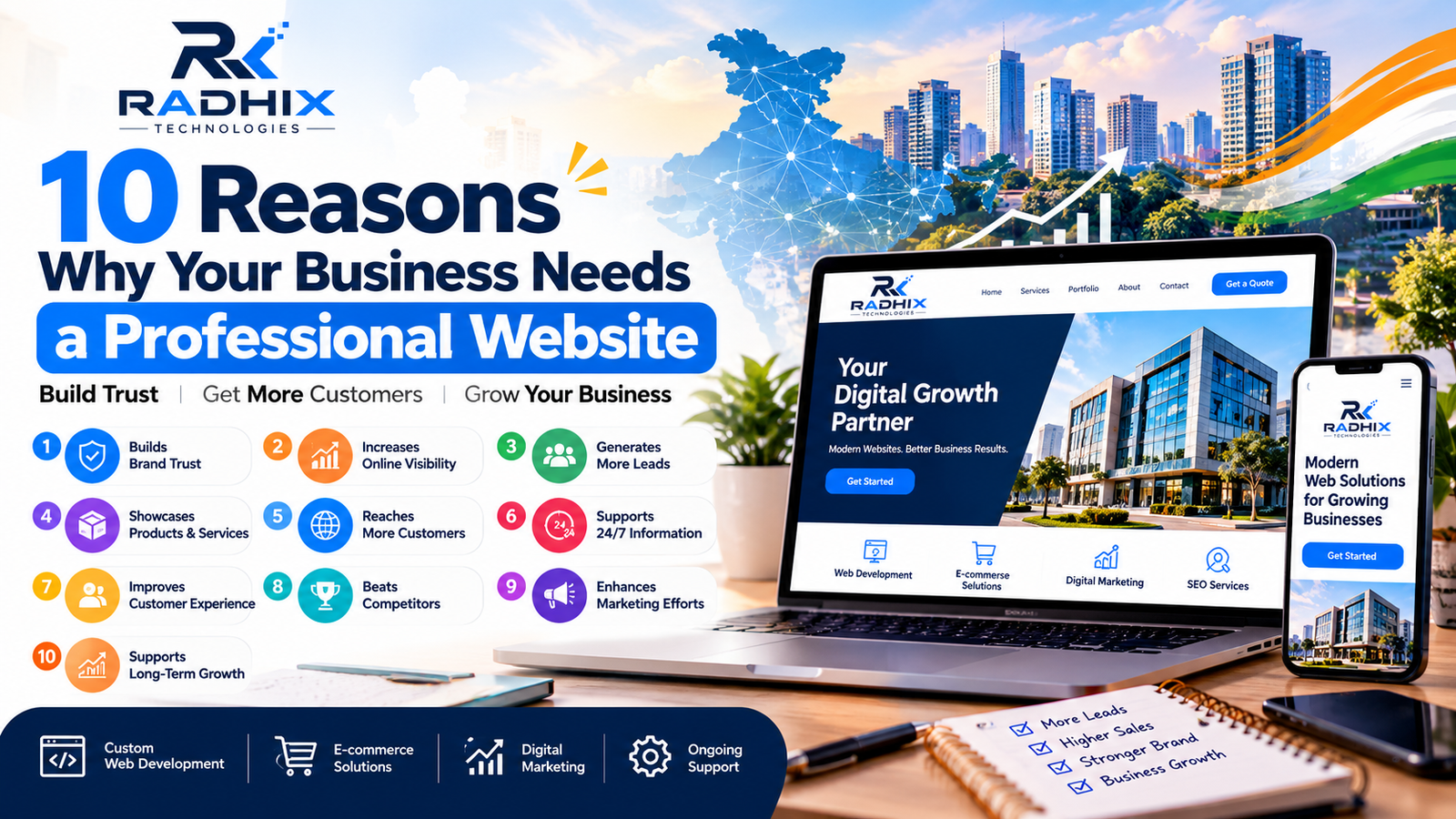
Why Does Your Business Need a Professional Website?
A professionally developed website helps customers discover your business, understand your services, and contact your team. It also provides a central platform for your digital marketing activities.
The key benefits include:
- Brand credibility: Present your company professionally and build customer confidence.
- Online visibility: Create opportunities to attract customers through search engines.
- Lead generation: Use enquiry forms, calls to action, and contact options to generate business enquiries.
- Customer convenience: Make your products, services, and business information accessible online.
- Business growth: Expand your reach and add new digital features as your business develops.
For businesses operating in Delhi, Gurugram, Noida, Faridabad, and Ghaziabad, a well-planned website can support both local customer acquisition and wider market expansion.
1. Check the Company's Portfolio and Experience
The first step is to review the company's portfolio. Previous projects can help you understand its design capabilities, technical experience, and approach to solving business problems.
Look for websites that are relevant to your industry or have functionality similar to your requirements.
While reviewing a portfolio, consider:
- Website design quality and visual consistency.
- Mobile responsiveness across different devices.
- Navigation and overall user experience.
- Website loading speed and functionality.
- E-commerce, booking, or integration capabilities, where relevant.
Do not evaluate a company based only on attractive screenshots. If possible, visit live websites and test their important features.
2. Evaluate Technical Expertise
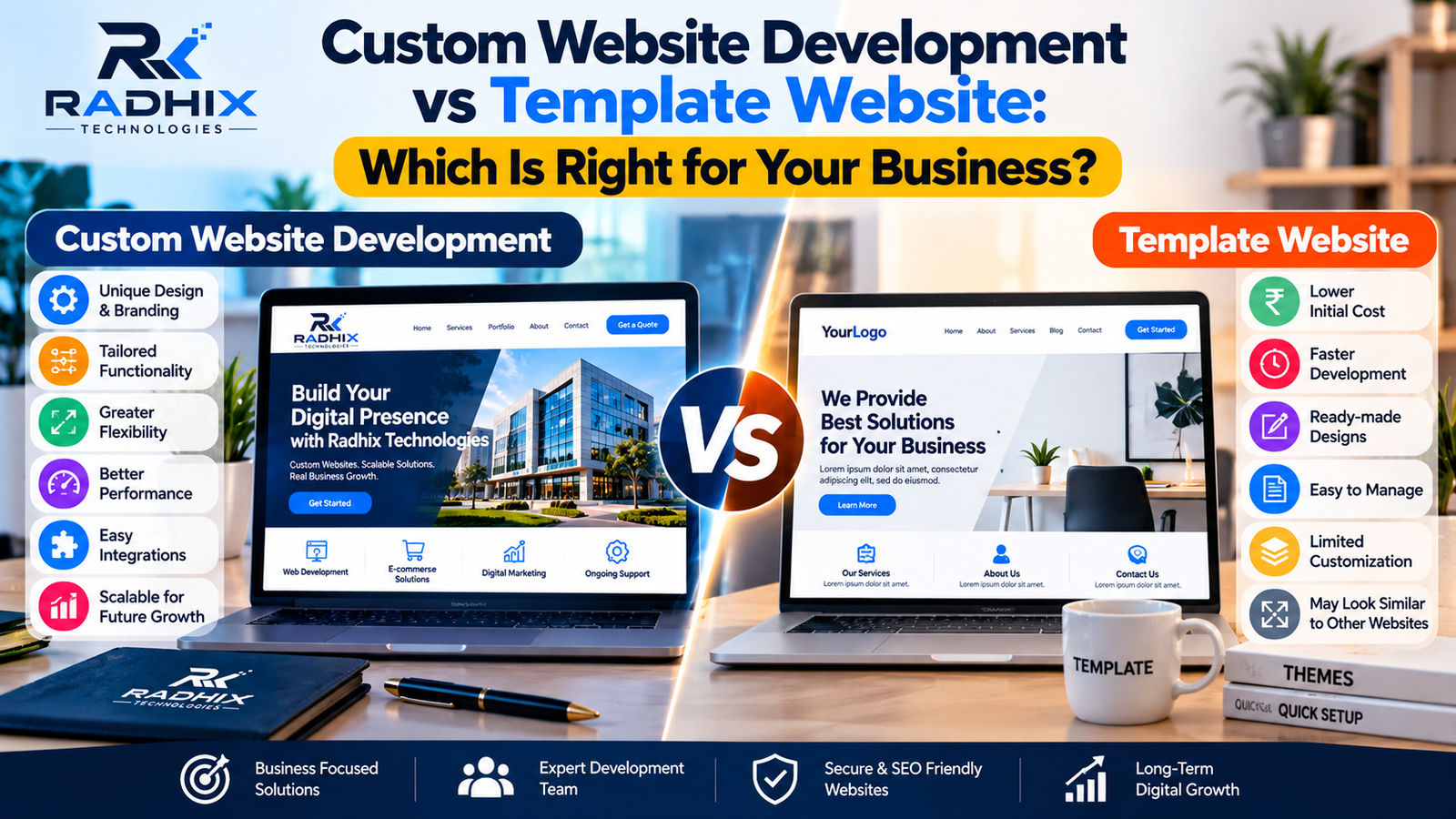
Your website's technology should match your business requirements. A basic business website may work well with WordPress, while a complex web application may require a customized technology stack.
Depending on the project, relevant technologies may include WordPress, Shopify, React, Vue.js, Node.js, PHP/Laravel, Python, and suitable database systems.
Ask the development company which technology it recommends and why. The team should explain the advantages, limitations, maintenance requirements, and future scalability of the proposed solution.
The best technology is not necessarily the newest one. It is the technology that meets your requirements reliably and can be maintained within your budget.
3. Look for SEO-Friendly Website Development
A visually attractive website is not enough if customers cannot find it online. Search engine optimization should be considered during the planning and development stages.
A website development company should understand the technical foundations of SEO, including:
- Search-engine-friendly URLs.
- Editable page titles and meta descriptions.
- Proper heading structure.
- Mobile-responsive layouts.
- Fast-loading pages and optimized images.
- Internal linking and XML sitemap configuration.
- HTTPS security and appropriate indexing settings.
- Structured data where suitable.
For local businesses, location-specific service pages and accurate business information can support local search visibility.
Remember that SEO-friendly development does not guarantee first-page rankings. Search performance also depends on content quality, competition, website authority, and ongoing optimization.
4. Compare Website Development Pricing
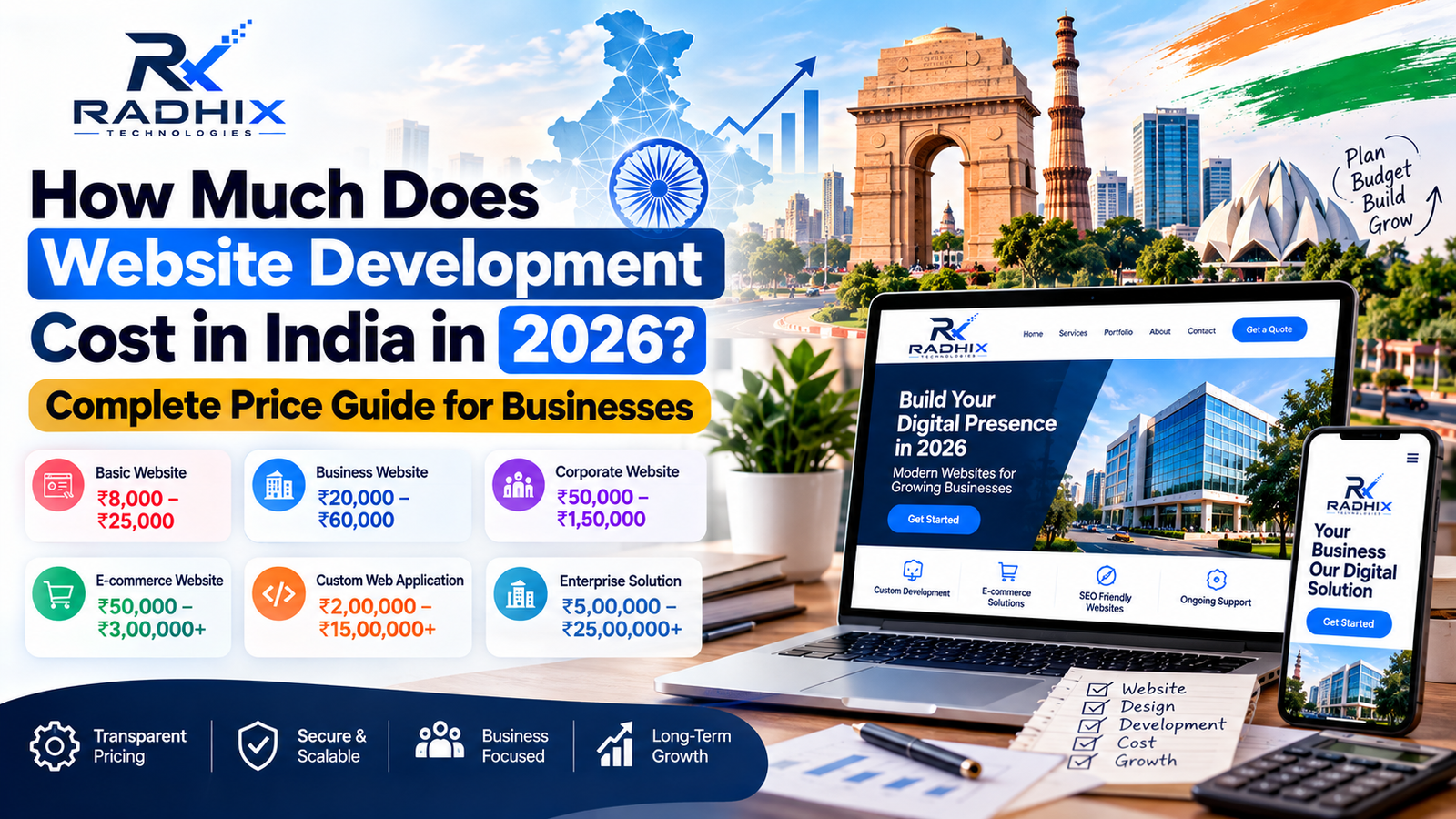
Website development costs vary according to project complexity, design requirements, functionality, and the experience of the development team.
The following are indicative planning estimates for India, not fixed quotations.
Website Type Estimated Cost
- Basic business website ₹8,000–₹25,000
- Professional corporate website ₹25,000–₹1,50,000
- E-commerce website ₹50,000–₹3,00,000+
- Custom web application ₹2,00,000–₹15,00,000+
Ask for a written quotation that clearly explains what is included in the price.
Check whether the quotation covers design, development, content entry, domain registration, hosting, SSL, integrations, testing, and maintenance. Also confirm applicable taxes, payment milestones, revision limits, and third-party licence fees.
Choosing the cheapest option may not provide the best value if essential features, security, or ongoing support are missing.
5. Check Mobile Responsiveness and User Experience
Many customers browse websites on smartphones. Therefore, your website should work smoothly across mobile phones, tablets, laptops, and desktop computers.
A responsive website adapts its layout to different screen sizes while keeping text readable and navigation convenient.
A good development company should focus on:
- Clear navigation and page structure.
- Readable typography and appropriate spacing.
- Accessible buttons and forms.
- Consistent design across devices.
- Optimized images and loading performance.
- Simple paths for enquiries, bookings, and purchases.
Ask the company how it tests websites across different devices and browsers before launch.
6. Understand Security and Data Protection
Website security is important for protecting your business information and customer data. The security requirements depend on whether your website collects enquiries, accepts payments, stores personal information, or manages user accounts.
Discuss measures such as HTTPS, secure authentication, software updates, access controls, backups, and appropriate protection against common web vulnerabilities.
For e-commerce websites and applications handling sensitive information, ask how payment processing and customer data will be managed.
A professional development partner should explain the security measures included in the project and identify any additional requirements.
7. Ask About Customization and Scalability
Your business requirements may change over time. You might initially need a simple website and later want to add online payments, customer dashboards, booking functionality, or integrations with CRM and inventory systems.
Choose a development company that considers your future plans when designing the website structure.
Discuss whether new pages, features, integrations, and additional traffic can be accommodated without unnecessary redevelopment.
However, scalability should be planned according to realistic business needs. Building an unnecessarily complex system from the beginning can increase costs without providing immediate value.
8. Evaluate Communication and Project Management
Clear communication helps prevent misunderstandings, delays, and unexpected expenses.
Before hiring a company, understand how the team manages requirements, design approvals, development updates, testing, and project handover.
Ask these questions:
- Who will be your main point of contact?
- How frequently will progress updates be provided?
- How will changes to the project scope be handled?
- What is the expected delivery timeline?
- Who will review and approve the completed work?
A written project plan with clear milestones makes it easier to track progress and understand responsibilities.
9. Confirm Maintenance and After-Launch Support
Website development does not end when the website goes live. Software updates, backups, security checks, performance improvements, and bug fixes may be needed throughout its lifecycle.
Before signing an agreement, ask whether maintenance is included or charged separately.
You should also clarify the support process, response times, backup arrangements, and charges for additional development work.
Reliable after-launch support can help your website remain functional and aligned with changing business needs.
10. Verify Ownership and Contract Terms
Before making a final decision, ensure that your business will have appropriate access to its website and related services.
Your agreement should clarify ownership and access to source code, website files, database, domain, hosting account, design assets, and third-party licences.
Confirm payment milestones, delivery conditions, project scope, confidentiality requirements, and handover responsibilities in writing.
These details help protect your investment and make it easier to maintain or transfer the website in the future.
Why Consider Radhix Technologies for Website Development?
Radhix Technologies helps businesses explore digital solutions based on their goals, budget, audience, and functionality requirements.
Whether you need a corporate website, an e-commerce platform, a landing page, or a custom web application, the right development approach should balance usability, performance, security, and future flexibility.
When evaluating Radhix Technologies or any other provider, review the portfolio, discuss your requirements, request a detailed quotation, and confirm the deliverables and support arrangements before proceeding.
The aim should be to build a website that serves your customers and supports your business objectives over the long term.
Conclusion
Choosing the best website development company in Delhi NCR requires more than comparing prices. You should evaluate technical expertise, portfolio quality, SEO knowledge, security practices, communication, scalability, and after-launch support.
A reliable development partner will understand your objectives, recommend an appropriate solution, provide a clear project scope, and explain the expected costs and timeline.
Whether your business operates in Delhi, Noida, Gurugram, Faridabad, or Ghaziabad, taking time to select the right web development company can help you make a better long-term investment.
Looking for website development services in Delhi NCR? Contact Radhix Technologies to discuss your project requirements and explore a website solution suited to your business goals.
Frequently Asked Questions
1. How do I choose the best website development company in Delhi NCR?
Review the company's portfolio, technical expertise, pricing transparency, SEO knowledge, communication process, security practices, and maintenance support before making a decision.
2. How much does website development cost in Delhi NCR?
Costs depend on the type of website, required features, design, and integrations. A basic business website may cost thousands of rupees, while complex custom applications may require several lakhs.
3. How long does it take to develop a website?
A basic website may take one to three weeks, while a professional corporate website may require several weeks. Complex e-commerce platforms and web applications can take months.
4. Is SEO included in website development?
Basic technical SEO may be included in a development package, but ongoing SEO, content creation, link building, and marketing services may be charged separately.
5. Should I choose a freelancer or a web development agency?
A freelancer may be suitable for a smaller project with a limited scope. An agency may provide a broader range of design, development, testing, and support capabilities. Compare the actual deliverables and experience rather than relying only on the provider type.
6. What should I receive after website development?
Depending on your agreement, deliverables may include the completed website, source code, database, design files, administrative access, documentation, and deployment details. Confirm ownership and handover terms in writing.