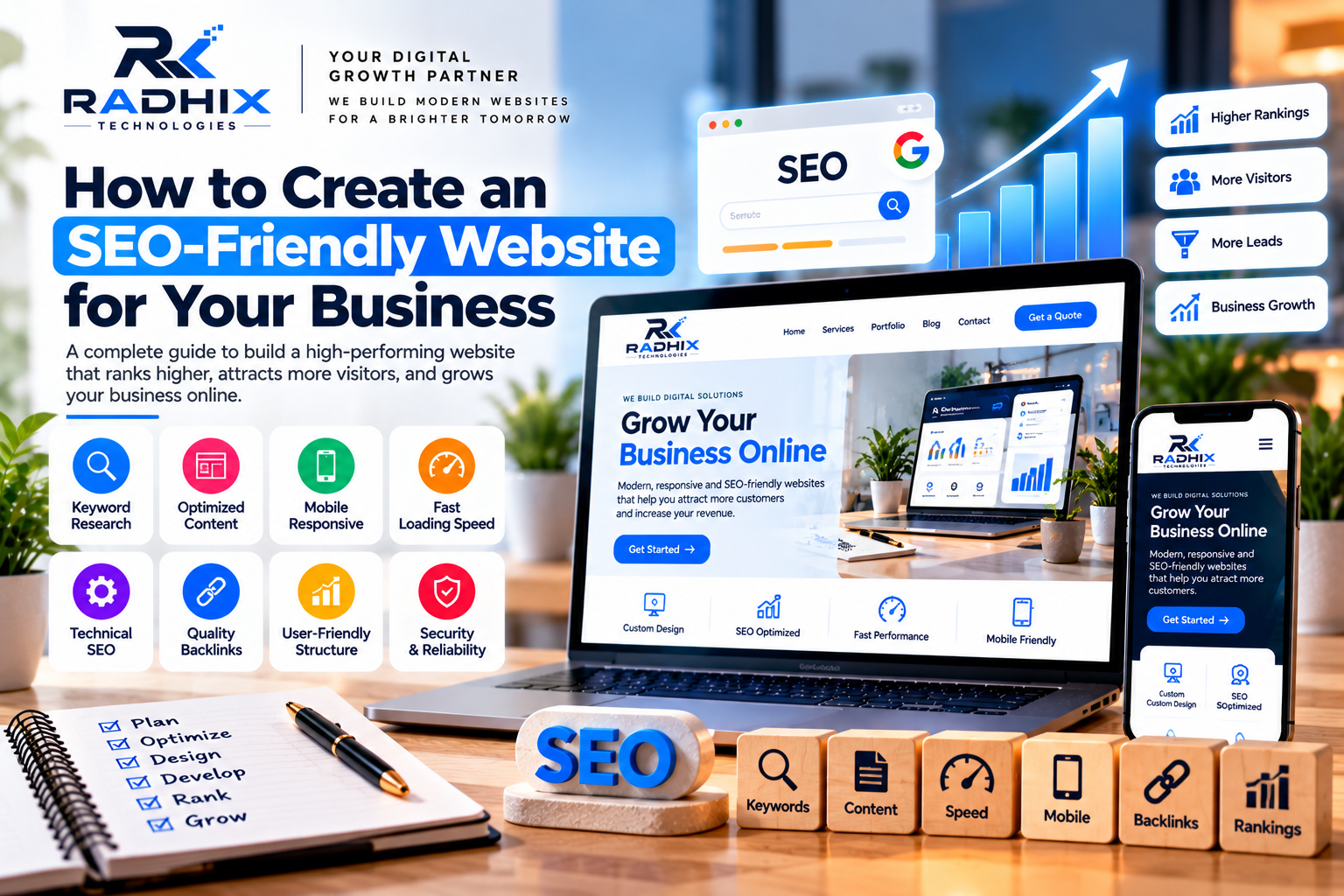
How to Create an SEO-Friendly Website for Your Business
Creating a professional website is an important step for any business that wants to build an online presence. However, simply launching a website does not guarantee that potential customers will find it through search engines. Your website also needs a clear structure, useful content, good performance, and a positive user experience.
An SEO-friendly website helps search engines understand your pages and makes it easier for visitors to find the information they need. Whether you run a startup, a local service company, an e-commerce store, or an established organization, search engine optimization should be considered from the beginning of website development.
In this guide, Radhix Technologies explains how to create an SEO-friendly website that supports online visibility, customer engagement, and long-term business growth.
What Is an SEO-Friendly Website?
An SEO-friendly website is designed and maintained to help search engines discover, crawl, understand, and index its content appropriately.
It also provides a useful experience for visitors through readable content, intuitive navigation, mobile-friendly layouts, secure connections, and efficient loading performance.
SEO-friendly website development combines technical implementation, content planning, website structure, and ongoing optimization. No single feature guarantees top search rankings, but a strong foundation can make your website easier to discover and use.
1. Choose the Right Domain Name and Website Platform
Your domain name represents your business online. Choose a name that is easy to remember, relevant to your brand, and simple to communicate.
Whenever possible, avoid unnecessarily long names, confusing spellings, and excessive hyphens. A keyword does not need to appear in your domain name for your website to rank well.
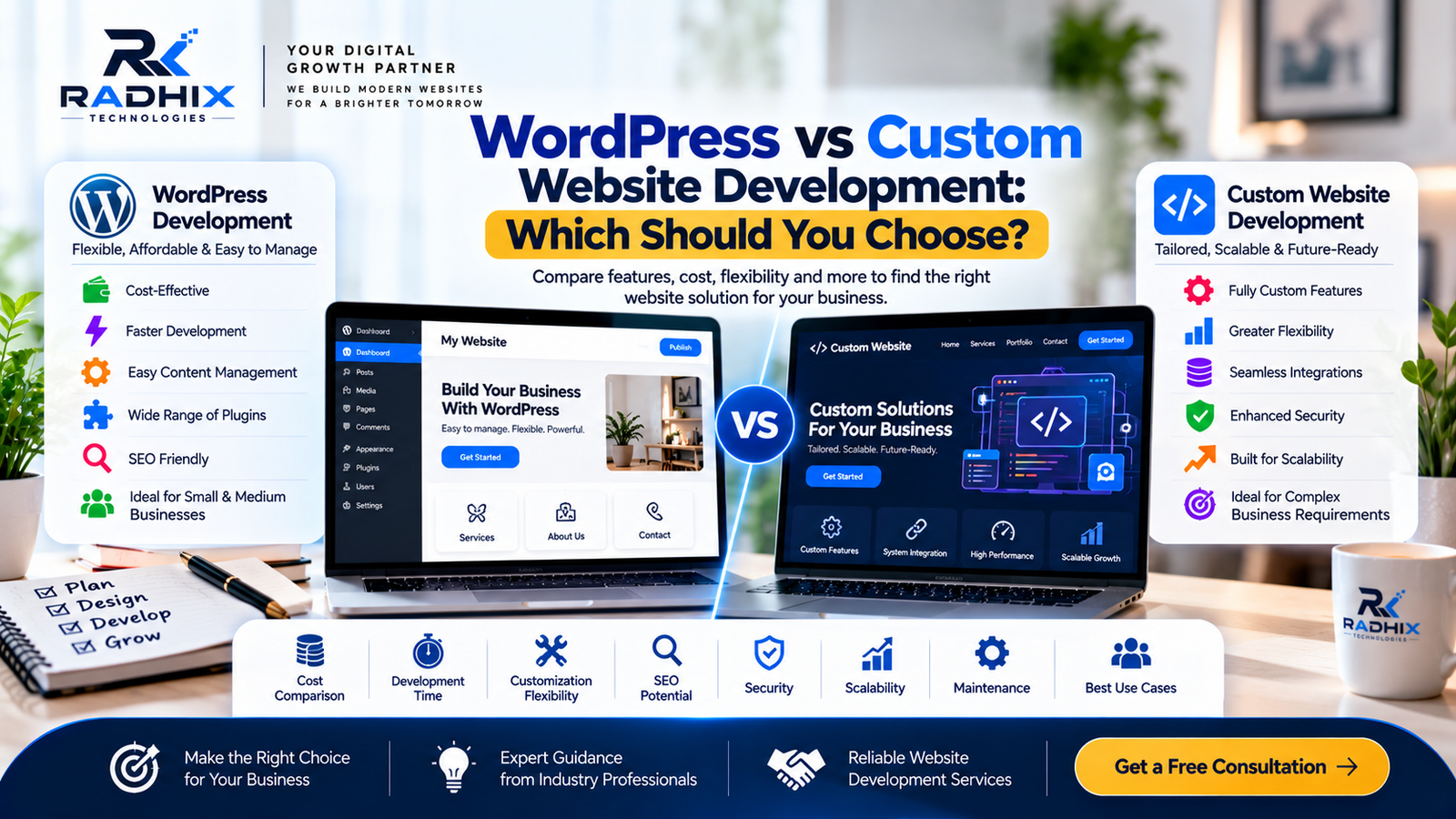
Next, choose a website platform that matches your requirements.
WordPress can be suitable for company websites, blogs, and many online stores. Custom development may be appropriate for specialized workflows, advanced integrations, or complex web applications.
The right platform should support content management, technical SEO, security updates, performance optimization, and future business requirements.
2. Conduct Keyword Research
Keyword research helps you understand the phrases people use when searching for your products or services.
Start by identifying your main services, target audience, location, and the problems your business solves.
For example, a web development company might target relevant topics such as:
- Website development services.
- Business website development.
- E-commerce website development.
- Custom web application development.
- Website redesign services.
- Website development company in Faridabad.
Use keyword research tools, search suggestions, competitor analysis, and customer questions to discover relevant opportunities.
Focus on search intent. Someone searching for website development costs may need a pricing guide, while someone searching for a development company may want to review services and request a quotation.
Avoid placing keywords repeatedly just to increase their frequency. Use them naturally where they help readers understand the page.
3. Create a Clear Website Structure
A well-organized website helps visitors navigate your content and helps search engines understand how your pages relate to one another.
A typical business website may include:
- Home.
- About Us.
- Services.
- Individual service pages.
- Portfolio or case studies.
- Blog.
- Contact Us.
- Privacy Policy.
Create a logical hierarchy and use descriptive navigation labels. Important pages should be accessible through clear menus and relevant internal links.
For example, a blog article about website redesign can link to your website redesign service page when the link provides useful additional information.
Avoid creating unnecessary duplicate pages or complicated URL structures.
4. Optimize Page Titles and Meta Descriptions
Page titles help users and search engines understand the topic of a page. Write a unique, descriptive title for each important URL and include the primary topic naturally.
Meta descriptions provide a summary that may appear in search results. Although they are not a direct ranking factor, a relevant description can help users decide whether to visit your website.
For example:
Meta title: SEO-Friendly Website Development for Businesses
Meta description: Learn how to build an SEO-friendly business website with optimized content, responsive design, technical SEO, and fast-loading pages.
Titles and descriptions should accurately reflect the page content. Avoid misleading claims, keyword stuffing, and identical metadata across every page.
5. Publish Helpful and Original Content
High-quality content is one of the most important elements of an effective SEO strategy.
Your website should answer real customer questions and explain how your products or services solve their problems.
Useful content formats include:
- Detailed service pages.
- Practical how-to guides.
- Frequently asked questions.
- Product descriptions.
- Case studies and project examples.
- Industry insights and educational blog posts.
Use clear headings, short paragraphs, relevant examples, and descriptive images where they improve understanding.
Content should demonstrate genuine expertise and provide information that readers can use. Avoid copying articles from other websites or publishing large numbers of low-value pages simply to target keywords.
Review older content regularly to keep important information accurate and relevant.
6. Make Your Website Mobile-Friendly
Visitors access websites through smartphones, tablets, and desktop computers. A responsive website adjusts its layout to different screen sizes.
Mobile usability improvements include readable text, accessible menus, touch-friendly buttons, well-sized images, and forms that work on smaller screens.
Google primarily uses the mobile version of website content for indexing, so ensure that important text, links, metadata, and other relevant information remain accessible on mobile devices.
Test key pages on different screen sizes and fix overlapping elements, horizontal scrolling, and difficult navigation.
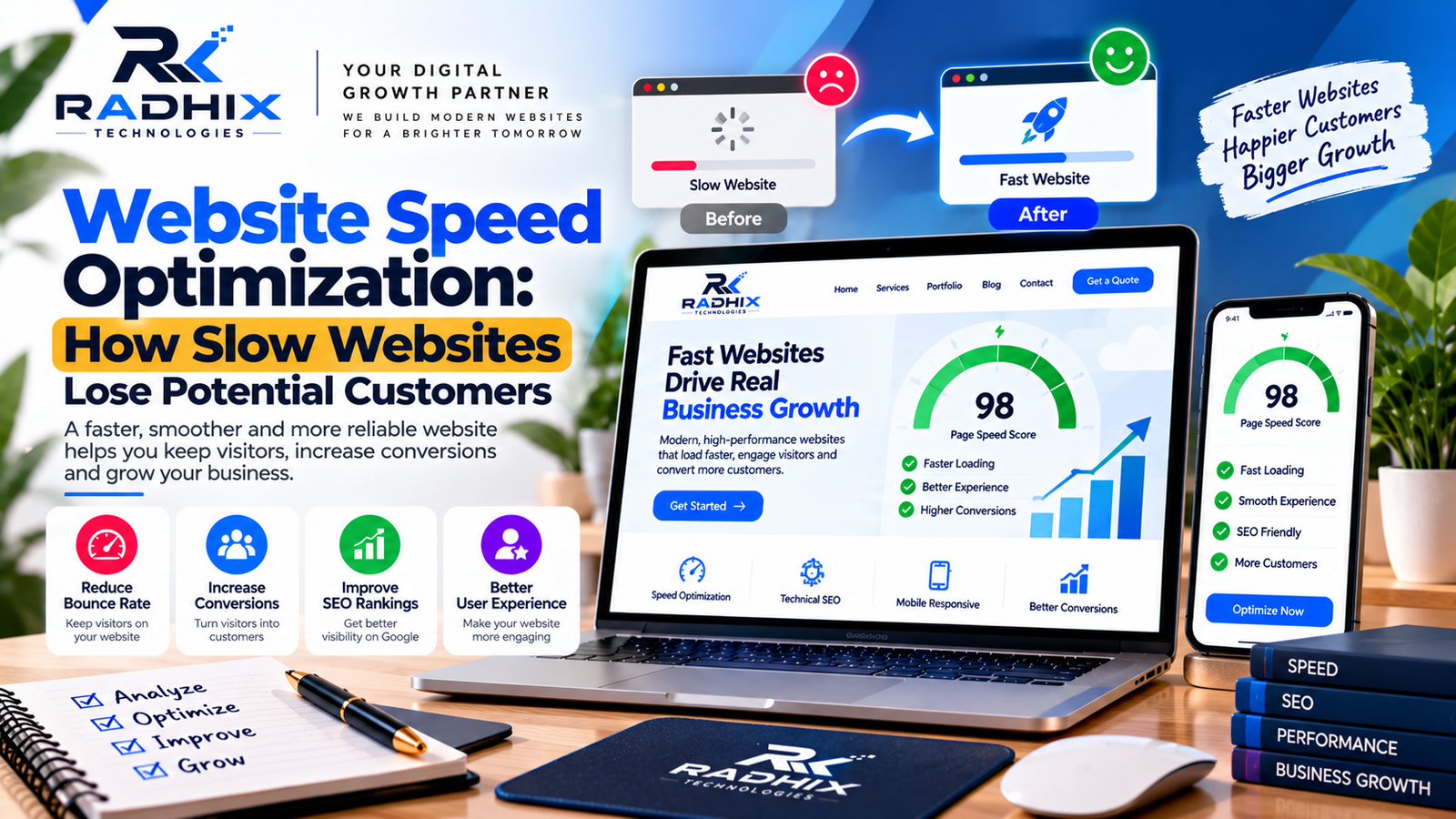
7. Improve Website Loading Speed
A slow website can frustrate visitors and make important information harder to access. Performance should therefore be considered during website design and development.
Useful optimization techniques include:
- Compressing and resizing images.
- Using modern image formats where appropriate.
- Reducing unnecessary JavaScript and CSS.
- Enabling suitable caching.
- Choosing reliable hosting.
- Limiting unnecessary third-party scripts.
- Loading below-the-fold images efficiently.
Google's Core Web Vitals provide useful measurements of loading performance, responsiveness, and visual stability.
Measure performance with tools such as PageSpeed Insights and prioritize improvements based on actual results. A lightweight website is not automatically fast on every device, so real-world performance matters.
8. Use SEO-Friendly URLs and Internal Links
URLs should be descriptive, readable, and consistent.
For example:
/services/website-development
is generally easier to understand than a long URL containing random parameters.
Use hyphens between words and avoid unnecessary URL changes. If a page URL must change, implement an appropriate redirect to the new destination.
Internal links connect related pages within your website. They help visitors discover useful information and provide context about the relationship between your content.
Use meaningful anchor text that describes the destination instead of relying exclusively on vague phrases such as "click here."
9. Optimize Images and Other Media
Images can make your website more engaging, but poorly optimized media may increase loading times.
Use appropriately sized images and compress them without unnecessarily reducing quality. Where suitable, use modern formats such as WebP or AVIF.
Write descriptive alternative text for meaningful images so that their purpose can be understood by users who rely on assistive technologies.
Decorative images generally do not need descriptive alt text. Avoid filling image descriptions with repeated keywords.
Ensure that videos and other embedded media do not unnecessarily slow down important pages.
10. Implement Technical SEO Basics
Technical SEO helps search engines access and understand your website.
Important tasks include:
HTTPS: Use a properly configured secure connection.
XML sitemap: Maintain an accurate sitemap that includes the important URLs you want search engines to discover.
Robots.txt: Configure crawling rules carefully. Do not accidentally block essential website resources.
Indexing controls: Check that public pages intended for search visibility are not unintentionally marked noindex.
Canonical URLs: Use appropriate canonical tags to identify the preferred URL when duplicate or very similar pages exist.
Structured data: Add suitable schema markup when it accurately describes your business, services, products, or articles.
Broken links: Fix important broken internal links and outdated redirects.
After launching a new website or making major changes, review indexing and performance through Google Search Console.
11. Optimize Your Website for Local SEO
Local SEO is particularly useful for businesses that serve customers in specific locations.
If your company operates in Faridabad, Delhi NCR, or nearby markets, make your service areas clear where they are relevant to your business.
Local SEO activities may include:
- Maintaining an accurate Google Business Profile.
- Displaying consistent business contact information.
- Creating useful location-specific service pages.
- Adding accurate opening hours and location details.
- Encouraging genuine customer reviews.
- Providing clear directions for customers visiting your premises.
Avoid creating many nearly identical location pages with only the city name changed. Each page should provide useful, relevant information for the audience it serves.
12. Secure Your Website and Maintain It Regularly
Security and maintenance support the reliability of your online presence.
Keep your website platform, themes, plugins, libraries, and dependencies updated. Use strong administrator passwords, appropriate access permissions, and reliable backups.
Review website forms and integrations to ensure they handle data appropriately. Businesses that collect personal information should provide suitable privacy information and follow applicable requirements.
Schedule regular checks for broken links, outdated content, performance issues, and technical errors.
A website is not a one-time project. Ongoing maintenance helps it remain useful as customer expectations and technology change.
13. Track SEO Performance and Improve Over Time
SEO is an ongoing process. Use data to understand which pages attract visitors and where improvements may be needed.
Google Search Console can help you review search impressions, clicks, queries, indexing issues, and search performance.
Analytics tools can help you understand visitor behaviour, enquiries, and important actions on your website.
Monitor relevant metrics such as:
- Organic search traffic.
- Search impressions and clicks.
- Performance of important landing pages.
- Enquiry form submissions.
- Qualified leads and sales.
- Mobile usability and page performance.
Use these insights to improve content, navigation, landing pages, and conversion paths. Avoid judging SEO success only by rankings for a few keywords.
Common SEO Mistakes to Avoid
When building an SEO-friendly website, avoid these common mistakes:
- Copying content from other websites.
- Repeating keywords unnaturally.
- Ignoring mobile usability.
- Publishing thin or duplicate pages.
- Leaving important pages unintentionally blocked from indexing.
- Changing URLs without suitable redirects.
- Using large, unoptimized images.
- Ignoring broken links and outdated information.
- Publishing content without understanding search intent.
- Expecting immediate results without ongoing optimization.
A sustainable SEO strategy focuses on helping users, maintaining technical quality, and improving the website based on evidence.
Why Consider Radhix Technologies for SEO-Friendly Website Development?
Radhix Technologies helps businesses explore website development solutions that balance design, functionality, usability, and search visibility.
Whether you need a new corporate website, an e-commerce store, a service website, or a custom web application, SEO requirements should be considered during planning and development.
Depending on the agreed project scope, a website project may include responsive design, structured page layouts, editable metadata, technical SEO foundations, performance optimization, analytics configuration, testing, and deployment.
Before starting your project, discuss your business goals, target audience, required features, content needs, budget, and maintenance expectations.
Conclusion
Creating an SEO-friendly website requires more than adding keywords to your pages. Your website should combine useful content, clear navigation, mobile-responsive design, reliable performance, secure configuration, and a technically sound structure.
Start by understanding your audience and organizing your content around their needs. Then optimize page metadata, improve performance, implement technical SEO basics, and measure the results over time.
With consistent improvements, your website can provide a stronger foundation for online visibility, customer engagement, and business growth.
Ready to build an SEO-friendly website for your business? Contact Radhix Technologies to discuss a website development solution aligned with your goals.
Frequently Asked Questions
1. What makes a website SEO-friendly?
An SEO-friendly website has useful content, a clear structure, descriptive metadata, mobile-responsive layouts, reliable performance, secure connections, and appropriate technical settings that help search engines discover and understand its pages.
2. Can a new website rank on Google immediately?
A new website may take time to be discovered, indexed, and gain visibility. Results depend on competition, content quality, technical setup, authority, and the search queries being targeted.
3. Is WordPress good for SEO?
WordPress can support effective SEO through content management, configurable URLs, metadata tools, and plugins. Good results still require quality content, correct configuration, and ongoing optimization.
4. How much does SEO-friendly website development cost in India?
Costs depend on the number of pages, design, content, functionality, technical requirements, and whether ongoing SEO services are included. Request a quotation based on your project scope.
5. How often should I update website content?
Update content whenever information becomes outdated or customer needs change. Review important pages regularly and prioritize updates that improve accuracy, usefulness, or business relevance.
6. Does mobile-friendly design improve SEO?
Mobile usability is important because Google primarily uses the mobile version of website content for indexing. Responsive design supports accessibility across devices, but it does not guarantee higher rankings on its own.