Software Development Life Cycle: Complete Guide for Business Owners
Introduction
Every successful software application starts with an idea. It could be a business website, mobile application, e-commerce platform, CRM system, ERP solution, or a customised business management tool. But how does this idea become a fully functional software product?
The answer is the Software Development Life Cycle (SDLC).
SDLC is a structured process that guides software development from the initial planning stage to deployment and ongoing maintenance. It helps businesses define their requirements, manage development costs, reduce risks, and build software that supports their operational goals.
For business owners, understanding SDLC is important because software development is not just about writing code. It is about making the right decisions at every stage of a project.
In this guide, we will explore the complete Software Development Life Cycle, its seven major phases, popular development models, and how businesses can use this process to build successful digital products.
1. What Is the Software Development Life Cycle (SDLC)?
The Software Development Life Cycle is a systematic approach used to plan, design, develop, test, deploy, and maintain software applications.
It provides a clear roadmap for development teams and business stakeholders, ensuring that everyone understands what needs to be built, how it will work, and when it should be delivered.
For example, imagine you want to develop an online grocery delivery platform. Before development begins, the team must understand how customers will place orders, how vendors will manage products, how delivery partners will receive assignments, and how administrators will manage the entire system.
SDLC organises these requirements into manageable stages.
In simple terms: SDLC transforms a business idea into a planned, tested, and working software solution.
2. Why Is SDLC Important for Business Owners?
Without a structured development process, software projects can face unclear requirements, unexpected expenses, technical issues, and delayed delivery.
A well-defined SDLC process helps businesses avoid many of these challenges.
Key benefits include:
- Better project planning: Defines the scope, features, resources, and timeline.
- Budget control: Helps estimate development expenses before work begins.
- Improved software quality: Testing helps identify problems before launch.
- Reduced development risks: Technical and business challenges can be identified early.
- Clear communication: Keeps business owners and developers aligned.
- Scalability: Allows future business requirements to be considered during architecture planning.
- Better project monitoring: Progress can be reviewed through milestones and deliverables.
For a business owner, SDLC provides greater visibility and control over the software development investment.
3. The 7 Main Phases of the Software Development Life Cycle
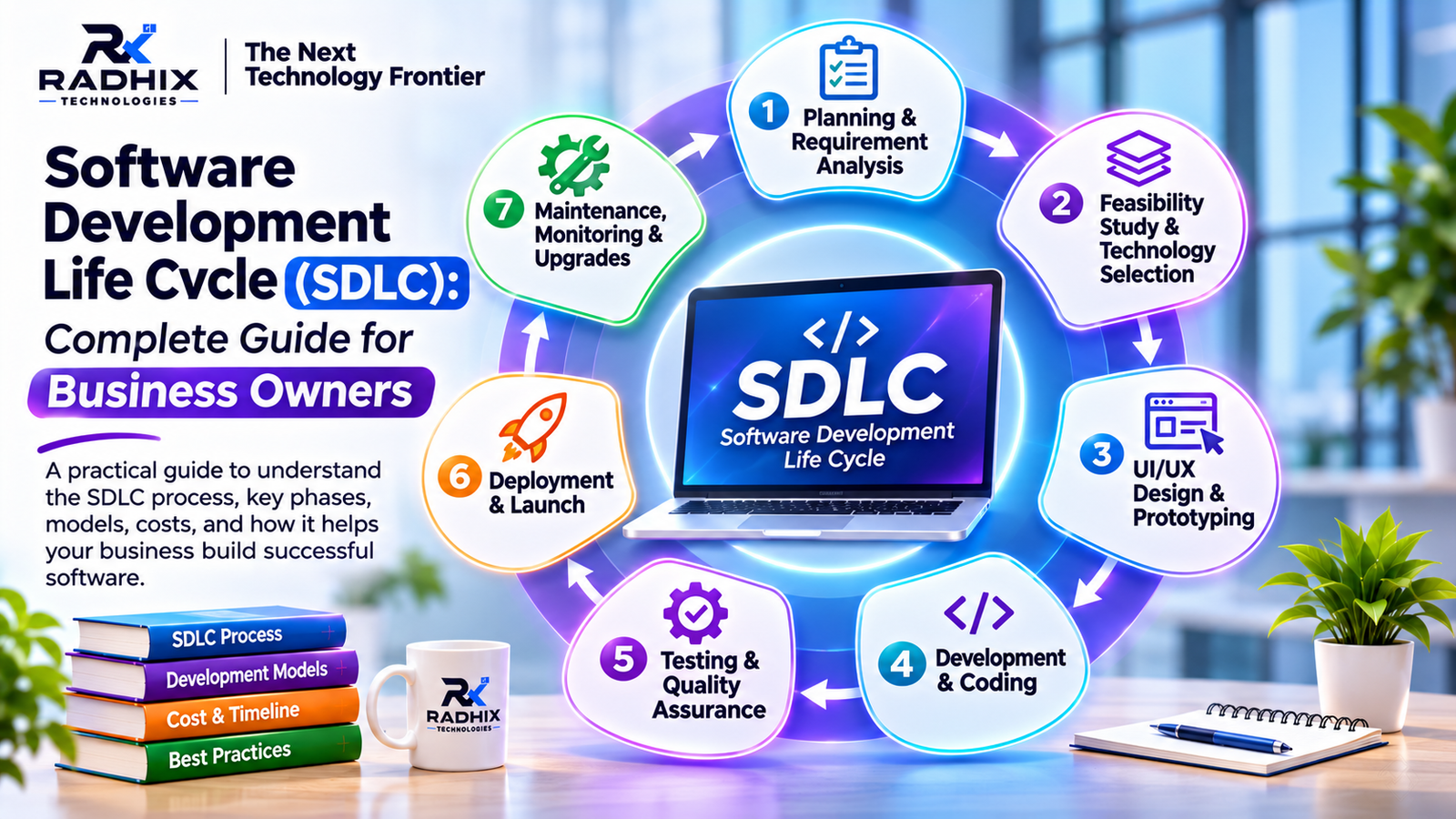
A typical SDLC process consists of seven major phases. Each phase has a specific objective and contributes to the final software product.
Phase 1: Planning and Requirement Analysis
Every successful software project begins with understanding the business problem.
In this phase, the development team discusses the business model, target users, project objectives, required features, budget, and expected timeline.
For example, if you want to develop a property listing platform, your requirements may include:
- Customer registration and login
- Property listing and search
- Property owner dashboard
- Location-based filters
- Admin management panel
- Lead and enquiry management
- Payment integration
The development team documents these requirements and separates essential features from optional features.
Business Owner's Responsibility: Explain your business requirements, share your expectations, prioritise features, and approve the project scope.
Expected Deliverable: Software Requirement Specification (SRS), project scope, initial budget estimate, and development timeline.
Phase 2: Feasibility Study and Technology Selection
Once the requirements are clear, the next step is to evaluate whether the project is technically and commercially practical.
The development team analyses:
- Technical feasibility
- Estimated development cost
- Available resources
- Project timeline
- Security requirements
- Third-party API availability
- Infrastructure requirements
- Future scalability
The team also selects a suitable technology stack.
TechnologyCommon ApplicationReact / Next.jsWebsite and web application frontendNode.js / ExpressBackend developmentMongoDBNoSQL databaseMySQLRelational databaseFlutterCross-platform mobile applicationsAWS / Cloud HostingApplication hosting and infrastructure
Technology should be selected according to project requirements, performance expectations, security, and maintenance needs—not simply because a technology is popular.
Business Owner's Responsibility: Review the proposed technology, infrastructure requirements, estimated costs, and maintenance plan.
Expected Deliverable: Technical architecture plan and technology stack recommendation.
Phase 3: UI/UX Design and Prototyping
Before coding starts, the design team creates the visual structure and user experience of the software.
UI (User Interface) focuses on how the application looks, while UX (User Experience) focuses on how easily users can interact with it.
This phase may include:
- Wireframes
- Website and mobile app layouts
- Dashboard designs
- Navigation structure
- Interactive prototypes
- Responsive design for different devices
Example: In an e-commerce application, customers should be able to search for products, add items to their cart, make payments, and track orders without confusion.
A good design makes these actions simple and convenient.
Business Owner's Responsibility: Review the screens, provide feedback, and approve the design before development begins.
Expected Deliverable: Approved UI/UX designs and interactive prototypes.
Phase 4: Software Development and Coding
This is the stage where the approved designs and technical plans are converted into working software.
Developers build the frontend, backend, database, APIs, and required business functionality.
For an online booking platform, development may include:
- Customer registration and login
- Service listings
- Booking management
- Payment processing
- Booking notifications
- Admin dashboard
- Reports and analytics
The frontend manages the user-facing experience, while the backend handles application logic, authentication, data processing, and database communication.
Development may be completed module by module, with regular progress demonstrations.
Business Owner's Responsibility: Review development progress, clarify business requirements, and provide timely feedback.
Expected Deliverable: Functional software modules and an integrated development version.
Phase 5: Software Testing and Quality Assurance
A software application may look complete, but it should not be launched until it has been properly tested.
Quality Assurance (QA) helps identify errors, security weaknesses, performance problems, and usability issues.
Common types of software testing include:
- Functional Testing: Checks whether features work as expected.
- UI Testing: Verifies layouts, buttons, forms, and navigation.
- Performance Testing: Evaluates application speed and stability.
- Security Testing: Checks authentication, access controls, and vulnerabilities.
- Compatibility Testing: Checks performance across supported devices and browsers.
- User Acceptance Testing (UAT): Allows business stakeholders to verify whether the software meets their requirements.
Example: In a payment application, testing should verify successful payments, failed transactions, duplicate payment handling, transaction records, and refund workflows.
Business Owner's Responsibility: Participate in UAT, test important business workflows, and approve the application for release.
Expected Deliverable: Tested software, bug reports, and release approval.
Phase 6: Deployment and Launch
After successful testing and approval, the software is prepared for production.
Deployment means making the application available to its intended users.
This phase may include:
- Production server setup
- Domain and hosting configuration
- Database deployment
- SSL certificate configuration
- Environment setup
- Data migration, if required
- Final security checks
- Application launch
For mobile applications, deployment may also involve publishing to the Google Play Store or Apple App Store, subject to their review and approval processes.
Business Owner's Responsibility: Provide required business content, approve the final release, arrange necessary accounts, and plan user onboarding.
Expected Deliverable: Live and accessible software application.
Phase 7: Maintenance, Monitoring, and Future Upgrades
Software development does not end when the application goes live.
After launch, the software requires monitoring, maintenance, updates, and improvements.
This phase may include:
- Bug fixes
- Security updates
- Server monitoring
- Database backups
- Performance optimisation
- Feature improvements
- Third-party API updates
- User feedback implementation
For example, an e-commerce business may initially launch with basic product and order management. Later, it may introduce loyalty programmes, automated marketing, advanced reports, or additional payment options.
Business Owner's Responsibility: Monitor business performance, collect user feedback, prioritise improvements, and plan future upgrades.
Expected Deliverable: Stable software with ongoing technical support and planned improvements.
4. Popular SDLC Models: Which Development Approach Is Better?
Different projects require different development approaches. An SDLC model determines how development activities are organised and managed.
SDLC ModelHow It WorksSuitable ForWaterfallSequential development phasesProjects with stable requirementsAgileDevelopment in short, iterative cyclesProjects with evolving requirementsSpiralIterative development with risk analysisComplex, high-risk projectsV-ModelTesting activities are planned alongside development stagesProjects requiring structured verificationDevOpsIntegrates development and operations through automation and continuous deliveryProducts requiring frequent releases
Agile is often useful for business applications where requirements may change after reviewing working versions. However, Waterfall or other models can be suitable when requirements are stable or a project has specific approval and compliance requirements.
The right model depends on project complexity, business objectives, risk level, and delivery expectations.
5. How SDLC Affects Software Development Cost and Timeline
The development life cycle directly influences project cost and delivery time.
A project with unclear requirements may require repeated changes, additional development work, and extended testing.
A well-planned project helps teams estimate resources and identify dependencies earlier.
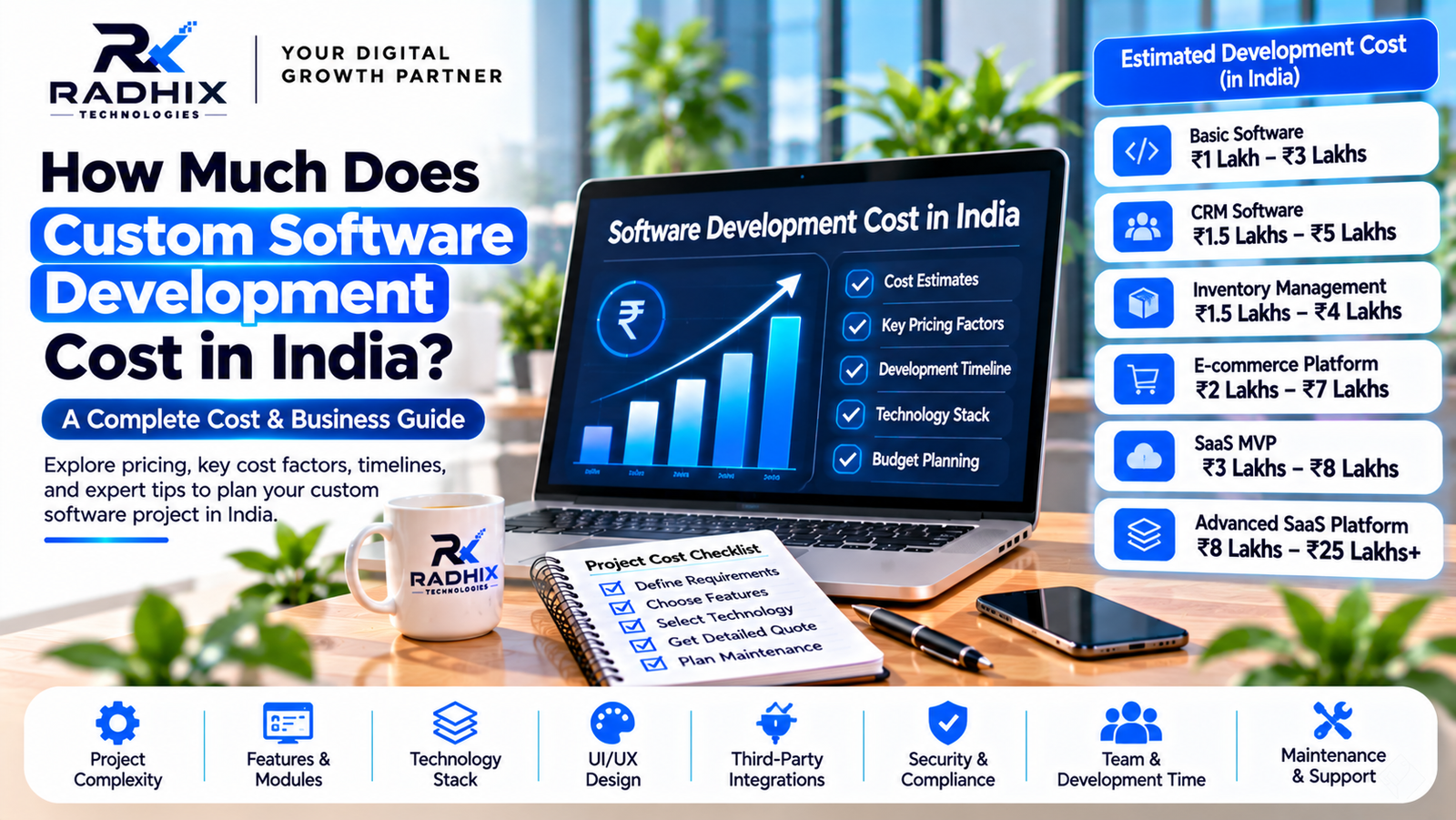
The main factors affecting software development cost include:
- Number and complexity of features
- UI/UX design requirements
- Web and mobile platform requirements
- Third-party API integrations
- Security and compliance requirements
- Database and infrastructure needs
- Testing and maintenance scope
Practical advice: Do not try to launch every possible feature in the first release. Start with a Minimum Viable Product (MVP) that covers the most important business requirements. Add advanced functionality after validating the product with real users.
6. Common SDLC Mistakes Business Owners Should Avoid
Even a well-defined development process can face challenges if important decisions are overlooked.
Here are some common mistakes to avoid:
- Starting development without clearly defined requirements.
- Choosing technology only because it is popular.
- Ignoring UI/UX and user experience.
- Changing project scope repeatedly without reviewing cost and timeline.
- Skipping proper software testing.
- Not defining source code and ownership terms.
- Ignoring security, backups, and maintenance.
- Failing to plan for future business growth.
A clear agreement, regular communication, documented approvals, and milestone-based reviews can help prevent many of these problems.
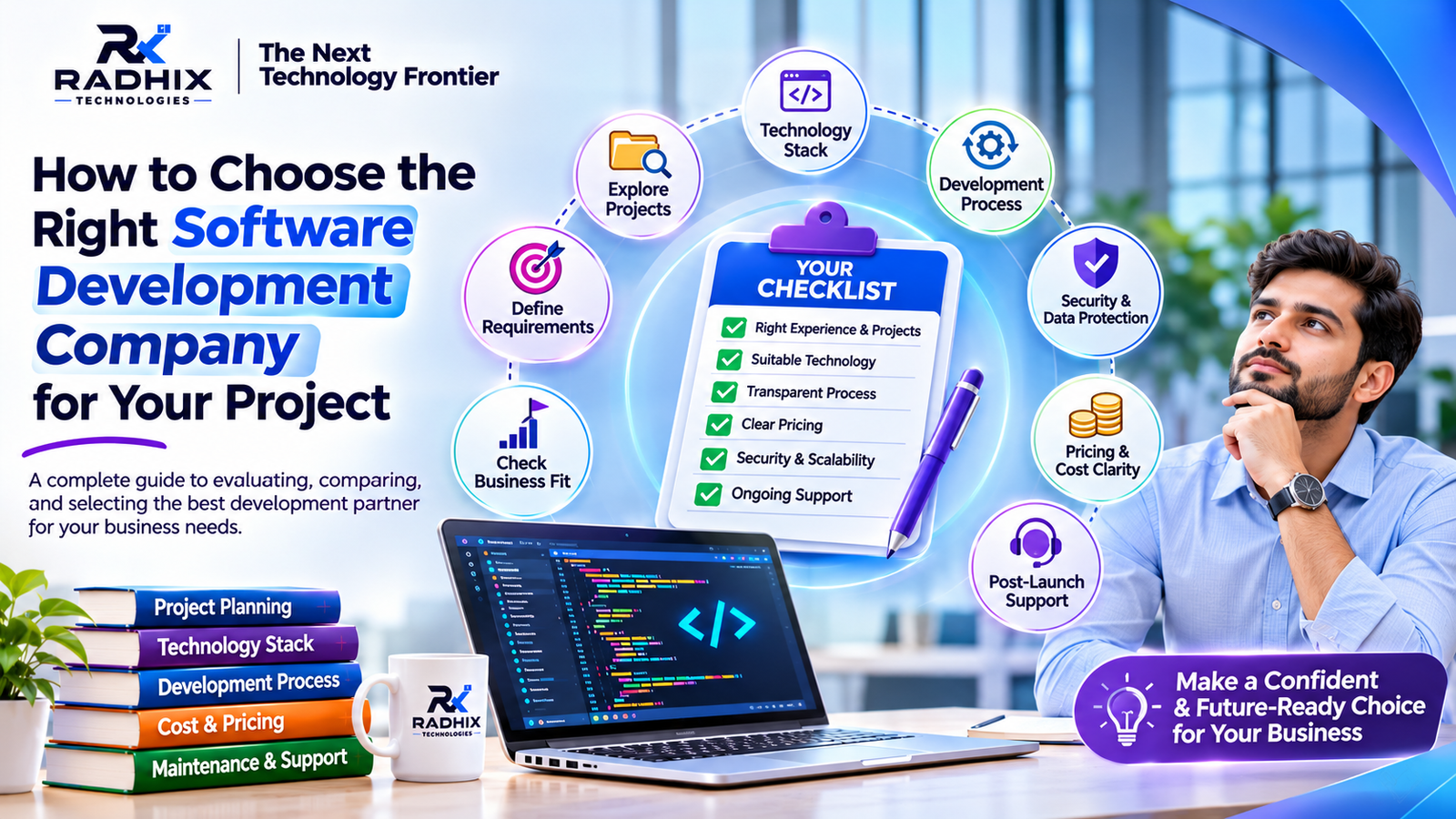
7. How to Choose the Right Software Development Partner
The development partner you select can significantly affect the outcome of your project.
Before finalising a software development company, consider the following:
- Does the team understand your business requirements?
- Can it explain the proposed technology stack?
- Does it provide a clear project scope and timeline?
- Does it follow a structured testing process?
- Are source code ownership and handover terms defined?
- Is maintenance and post-launch support available?
- Are communication and progress reports consistent?
Do not select a development partner based only on the lowest quotation. Evaluate the complete scope, technical approach, deliverables, and long-term support.
8. Why Choose Radhix Technologies for Software Development?
Radhix Technologies Pvt. Ltd. focuses on developing business-oriented digital solutions that help organisations improve their operations and customer experience.
Our development approach includes understanding business requirements, planning the technical architecture, designing user-friendly interfaces, developing application modules, testing functionality, and supporting deployment.
Our software development services include:
- Custom website and web application development
- Business management software
- CRM and ERP solutions
- E-commerce and multi-vendor platforms
- Admin and vendor dashboards
- API and third-party integrations
- Mobile application development
Whether you are planning a new digital product or modernising an existing business process, the right development approach begins with understanding your requirements.
Visit Radhix Technologies to explore software development services and discuss your project.
Conclusion
The Software Development Life Cycle is much more than a technical process. It is a structured approach that connects your business idea with a working digital product.
From requirement analysis and technology selection to design, development, testing, deployment, and maintenance, every phase contributes to the final result.
For business owners, understanding SDLC means better project control, clearer expectations, improved communication, and more informed technology investments.
Remember: Successful software is not built by coding alone. It is built through proper planning, the right development process, continuous testing, and a clear understanding of business goals.
Frequently Asked Questions (FAQs)
1. What does SDLC stand for?
SDLC stands for Software Development Life Cycle. It is a structured process used to plan, design, develop, test, deploy, and maintain software.
2. What are the seven phases of SDLC?
The seven common phases are planning and requirement analysis, feasibility study and technology selection, UI/UX design, development, testing, deployment, and maintenance.
3. Why is SDLC important for business owners?
It helps business owners manage project scope, budget, timelines, software quality, risks, and communication with the development team.
4. Which SDLC model is best for startups?
Agile is often suitable for startups because it supports iterative development, regular feedback, and changing requirements. The best choice still depends on the project.
5. How long does the software development life cycle take?
The timeline depends on project complexity, number of features, integrations, team size, and testing requirements. A simple application may take a few weeks, while a complex platform may require several months.
6. Does software maintenance come after deployment?
Yes. Maintenance continues after deployment and may include bug fixes, security updates, performance improvements, backups, and new features.
7. What is the difference between SDLC and Agile?
SDLC is the overall software development life cycle, while Agile is one approach or model used to organise work across that life cycle.