How to Build a Multi-Tenant SaaS Application
Introduction
Software as a Service (SaaS) has become a popular business model for delivering software applications over the internet. Instead of installing software separately on every computer, users can access applications through a web browser or mobile device using a subscription.
Many successful SaaS platforms serve multiple businesses through a single application. Each business has its own account, users, settings and data, while the underlying software infrastructure is shared. This approach is known as multi-tenant architecture.
Building a multi-tenant SaaS application can help software companies reduce infrastructure costs, simplify maintenance and serve multiple customers efficiently.
But how do you build a secure, scalable and reliable multi-tenant SaaS application? In this guide, we will explain the architecture, technologies, database design, development process and important considerations.
1. What Is a Multi-Tenant SaaS Application?
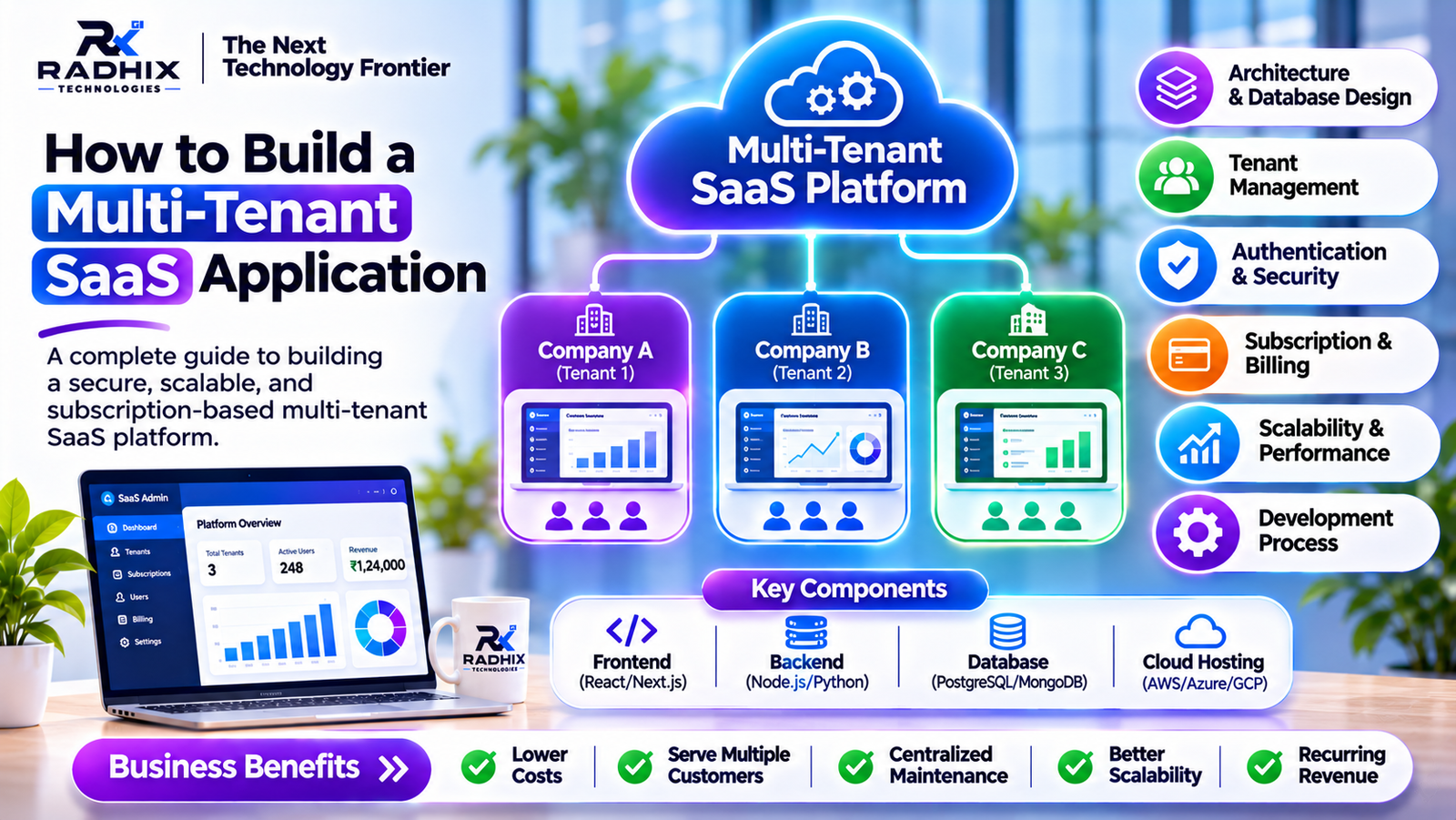
A multi-tenant SaaS application is a software platform where multiple customers, called tenants, use the same application infrastructure while keeping their data and configurations logically separated.
A tenant can represent a company, organization, business or individual customer.
For example, imagine a cloud-based CRM application used by three companies:
- Company A manages its own customers and sales activities.
- Company B manages its own employees and customer records.
- Company C manages its own business operations.
All three companies use the same application, but one company cannot access another company's private information.
Example: A multi-company HR management system can allow different organizations to manage employee records, attendance, payroll and leave applications through one SaaS platform.
2. Understand the Basic Multi-Tenant Architecture
Before starting development, it is important to understand how the architecture works.
A typical multi-tenant SaaS application contains the following components:
A. Tenant Management
Tenant management handles customer organizations and their accounts.
It includes:
- Tenant registration.
- Organization profile management.
- Tenant identification.
- Subscription management.
- Tenant-specific settings.
- Account activation and suspension.
B. User Management
Each tenant can have multiple users with different permissions.
For example:
- Super Admin
- Organization Admin
- Manager
- Employee
- Customer
Role-based access control ensures that users can access only the features and information permitted by their roles.
C. Application Layer
The application layer contains the shared business logic and features used by all tenants.
Examples include:
- CRM modules.
- Billing and invoicing.
- Reports and analytics.
- User dashboards.
- Notifications.
- Customer management.
D. Database Layer
The database stores tenant information, user accounts and business records. It must be designed to prevent unauthorized access between tenants.
E. Subscription and Billing Module
A SaaS application may offer different subscription plans with different features, usage limits and billing cycles.
3. Choose the Right Multi-Tenant Database Architecture
Database architecture is one of the most important decisions when developing a multi-tenant SaaS application.
There are three commonly used approaches.
A. Shared Database with Shared Schema
In this approach, all tenants use the same database tables. Each tenant's records contain a tenant_id field to identify which organization owns the data.
Example:
IDTenant IDCustomer Name1T001Rahul2T002Amit3T001Priya4T003Neha
Advantages:
- Lower infrastructure costs.
- Easier database management.
- Efficient resource utilization.
- Suitable for large numbers of tenants.
Disadvantages:
- Requires strict tenant-level data isolation.
- Queries must correctly filter tenant records.
- Database design needs careful planning.
This approach is often suitable for startups and SaaS platforms serving many small and medium-sized businesses.
B. Shared Database with Separate Schemas
In this approach, tenants share the same database server but have separate database schemas.
Each tenant's tables are logically organized within its own schema.
Advantages:
- Better logical separation.
- Easier tenant-specific data organization.
- Can support different tenant-level database structures.
Disadvantages:
- Schema migrations can become complex.
- Database administration requires additional planning.
- Managing a large number of schemas may increase operational effort.
C. Separate Database for Each Tenant
In this architecture, every tenant has its own database.
Advantages:
- Stronger database-level separation.
- Easier tenant-specific backup and restoration.
- Useful for customers with dedicated infrastructure requirements.
- Supports certain compliance and customization needs.
Disadvantages:
- Higher infrastructure costs.
- More complicated database maintenance.
- Requires automated migration and backup management.
Which approach is best?
For many early-stage SaaS products, a shared database with a shared schema can be a practical starting point. However, applications with strict isolation, regulatory or enterprise requirements may benefit from separate schemas or databases.
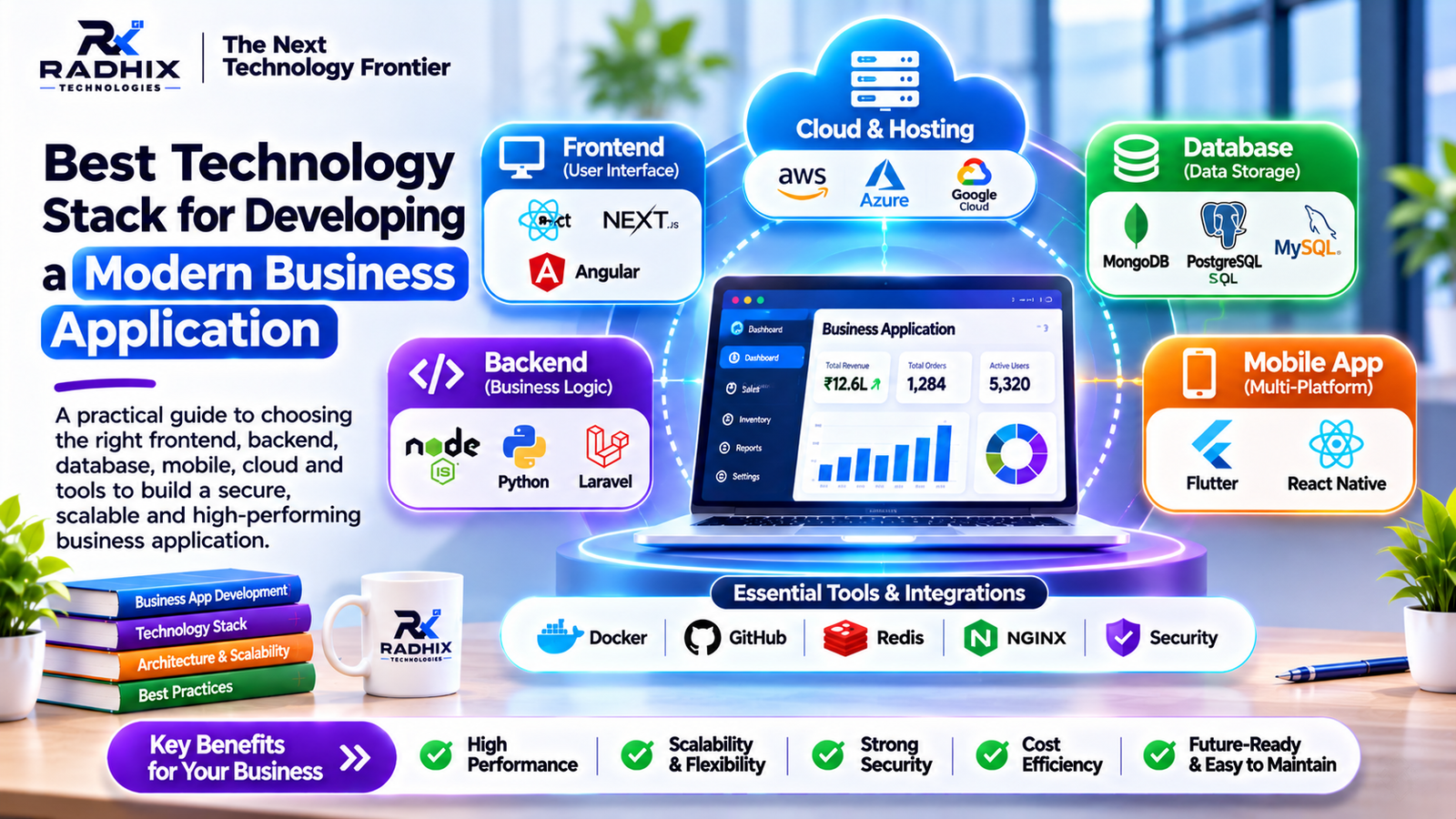
4. Select the Right Technology Stack
The technology stack should support scalability, security, performance and future development.
Here is a practical technology combination for a modern multi-tenant SaaS application.
Application LayerRecommended TechnologiesFrontendReact.js or Next.jsBackendNode.js with Express or NestJSDatabasePostgreSQL or MongoDBAuthenticationJWT, OAuth 2.0 or OpenID ConnectCachingRedisCloud HostingAWS, Azure or Google CloudFile StorageAmazon S3 or compatible object storageAPI TestingPostmanVersion ControlGitHubDeploymentDocker and CI/CD tools
The final stack should depend on your application's business logic, data structure, development team's expertise and expected workload.
5. Implement Tenant Identification
Every request made to the application must be associated with the correct tenant.
Tenant identification can be implemented using different methods:
A. Subdomain-Based Identification
Each organization receives a unique subdomain.
For example:
- company-a.example.com
- company-b.example.com
- company-c.example.com
The application identifies the tenant based on the requested subdomain.
B. Custom Domain-Based Identification
Enterprise customers may use their own domain to access the SaaS platform.
For example, a company may access its software through app.companyname.com.
C. Authenticated User-Based Identification
The tenant information can also be associated with the authenticated user's account.
After login, the backend identifies the user's organization and applies the relevant access permissions.
Important: Never trust a tenant ID simply because it is supplied by the frontend. The backend must verify the user's authenticated identity and tenant membership before accessing any tenant-specific data.
6. Build Secure Authentication and Authorization
Security is essential because multiple organizations share the same application infrastructure.
Your SaaS platform should include:
- Secure user registration and login.
- Password hashing.
- Multi-factor authentication where appropriate.
- Role-based access control (RBAC).
- Tenant-level permission management.
- Secure session handling.
- Account suspension and access controls.
- Audit logs for important activities.
For example, an organization administrator should manage employees belonging to their own organization but should not be able to view or modify employees from another tenant.
Tenant authorization must be enforced on the backend for every relevant operation, not just by hiding buttons or pages in the frontend.
7. Develop Subscription and Billing Management
A multi-tenant SaaS application commonly generates revenue through monthly or annual subscriptions.
You can create multiple subscription plans.
PlanExample FeaturesBasicLimited users and essential featuresProfessionalMore users, reports and integrationsBusinessAdvanced modules and automationEnterpriseCustom limits and dedicated support
Important billing features include:
- Monthly and yearly subscriptions.
- Free trials.
- Payment gateway integration.
- Automatic renewal.
- Invoice generation.
- Payment history.
- Subscription upgrades and downgrades.
- Usage tracking.
- Failed payment handling.
- Plan cancellation and renewal management.
The system should also enforce subscription limits on the backend. For example, a plan with a limit of 10 users should not allow an organization to create an eleventh active user without upgrading or changing its plan.
8. Focus on Data Security and Tenant Isolation
Tenant isolation is one of the most critical requirements in multi-tenant SaaS development.
A security failure could expose one company's confidential information to another company.
Follow these practices:
- Apply tenant-level authorization to every data request.
- Use database constraints and appropriate access controls.
- Validate tenant ownership before updating or deleting records.
- Secure file uploads and downloads.
- Encrypt data during transmission.
- Protect sensitive information at rest.
- Maintain audit logs.
- Perform regular security testing.
- Implement backups and recovery procedures.
- Test for cross-tenant access vulnerabilities.
For shared-schema databases, use consistent tenant filtering and consider PostgreSQL Row-Level Security (RLS) as an additional protection layer.
Security should be implemented at multiple levels rather than depending on a single check.
9. Make Your SaaS Application Scalable
As the number of tenants grows, the application must handle more users, requests, database operations and stored files.
Important scalability practices include:
- Use load balancing to distribute incoming traffic.
- Implement Redis caching where appropriate.
- Optimize database queries and indexes.
- Use background jobs for time-consuming operations.
- Store files in scalable object storage.
- Monitor application performance.
- Use automated deployment processes.
- Scale application resources according to workload.
You should also monitor resource usage by tenant. This helps prevent one customer from consuming excessive shared resources and affecting other customers.
10. Step-by-Step Process to Build a Multi-Tenant SaaS Application
A structured development process makes the project easier to manage.
Step 1: Define Business Requirements
Identify the target customers, application modules, subscription model and expected number of tenants.
Step 2: Design the Architecture
Choose the tenant model, database strategy, authentication approach and technology stack.
Step 3: Design UI/UX
Create dashboards, registration screens, organization settings, user management pages and admin panels.
Step 4: Develop Tenant Management
Build tenant registration, organization profiles, tenant identification and account management.
Step 5: Develop Core Application Modules
Implement the main business functionality, such as CRM, HRM, ERP, billing or inventory management.
Step 6: Integrate Subscription Management
Add pricing plans, payment gateway integration, invoices and subscription controls.
Step 7: Implement Security
Add authentication, authorization, tenant isolation, secure file access and audit logging.
Step 8: Test the Application
Test individual modules, tenant isolation, performance, security and subscription limits.
Step 9: Deploy the Application
Configure cloud infrastructure, domains, SSL, monitoring, backups and production deployment.
Step 10: Maintain and Improve
Monitor application performance, fix issues, update dependencies and introduce new features based on customer requirements.
11. Common Mistakes to Avoid
While building a multi-tenant SaaS application, businesses and development teams should avoid these common mistakes:
- Selecting a database architecture without evaluating future requirements.
- Trusting tenant IDs received directly from the frontend.
- Forgetting tenant filtering in database queries.
- Implementing permissions only in the user interface.
- Ignoring subscription and usage limits.
- Not testing cross-tenant data access.
- Using shared infrastructure without resource monitoring.
- Ignoring backups and disaster recovery.
- Building too many unnecessary features before validating the product.
A well-planned architecture can prevent expensive changes and security problems later.
12. Build Your SaaS Application with Radhix Technologies
Radhix Technologies Pvt. Ltd. helps businesses turn their software ideas into practical digital solutions through custom software and application development.
Whether you are planning a CRM, ERP, HRM, inventory management system, business portal or subscription-based SaaS platform, choosing the right architecture is essential.
A professional development process should focus on:
- Custom SaaS application development.
- Multi-tenant architecture planning.
- Web and mobile application development.
- Database and API integration.
- Payment gateway and subscription management.
- Admin and customer dashboards.
- Security, testing and deployment.
Radhix Technologies focuses on developing business applications according to specific project requirements, with attention to usability, scalability and long-term maintenance.
Visit https://www.radhix.com/ to explore software development solutions.
Conclusion
Building a multi-tenant SaaS application requires careful planning of architecture, database design, tenant identification, authentication, subscription management and security.
A shared database with a shared schema can be a cost-effective choice for many SaaS startups, while separate schemas or databases may be appropriate for applications requiring stronger isolation or dedicated customer environments.
Technologies such as React, Next.js, Node.js, PostgreSQL, MongoDB, Redis and cloud platforms provide a strong foundation for modern SaaS development.
Most importantly, tenant isolation must be built into the application's architecture from the beginning. With the right development strategy, businesses can create a secure, scalable and maintainable SaaS platform that supports long-term growth.
Frequently Asked Questions (FAQs)
1. What is multi-tenant architecture in SaaS?
Multi-tenant architecture allows multiple customers to use the same software application and infrastructure while keeping their data and configurations separated.
2. Which database is best for a multi-tenant SaaS application?
PostgreSQL is a strong option for relational business applications. MongoDB can also be suitable for document-oriented applications. The decision depends on data structure and isolation requirements.
3. What is the difference between single-tenant and multi-tenant SaaS?
In a single-tenant architecture, each customer typically gets a dedicated application environment. In a multi-tenant architecture, multiple customers share an application infrastructure with appropriate data isolation.
4. Is Node.js suitable for multi-tenant SaaS development?
Yes. Node.js is suitable for API-driven SaaS applications, real-time features, authentication, tenant management and integrations.
5. How do you keep tenant data separate?
Tenant data can be separated through tenant-specific database records, schemas or databases. Backend authorization, secure queries and database-level controls help enforce isolation.
6. Can a multi-tenant SaaS application support different subscription plans?
Yes. A SaaS application can offer Basic, Professional, Business and Enterprise plans with different features, user limits and usage restrictions.
7. Is multi-tenant architecture suitable for startups?
Yes. It can reduce infrastructure and maintenance costs while allowing startups to serve multiple customers through one application. The architecture must still be designed with security and future scalability in mind.