How Long Does SEO Take to Show Results for a New Website?
Launching a new website is an important step for any business, but getting visitors from search engines takes time. Many business owners ask the same question: How long does SEO take to show results for a new website?
The answer depends on several factors, including website quality, keyword competition, technical SEO, content quality, backlinks, and the overall SEO strategy.
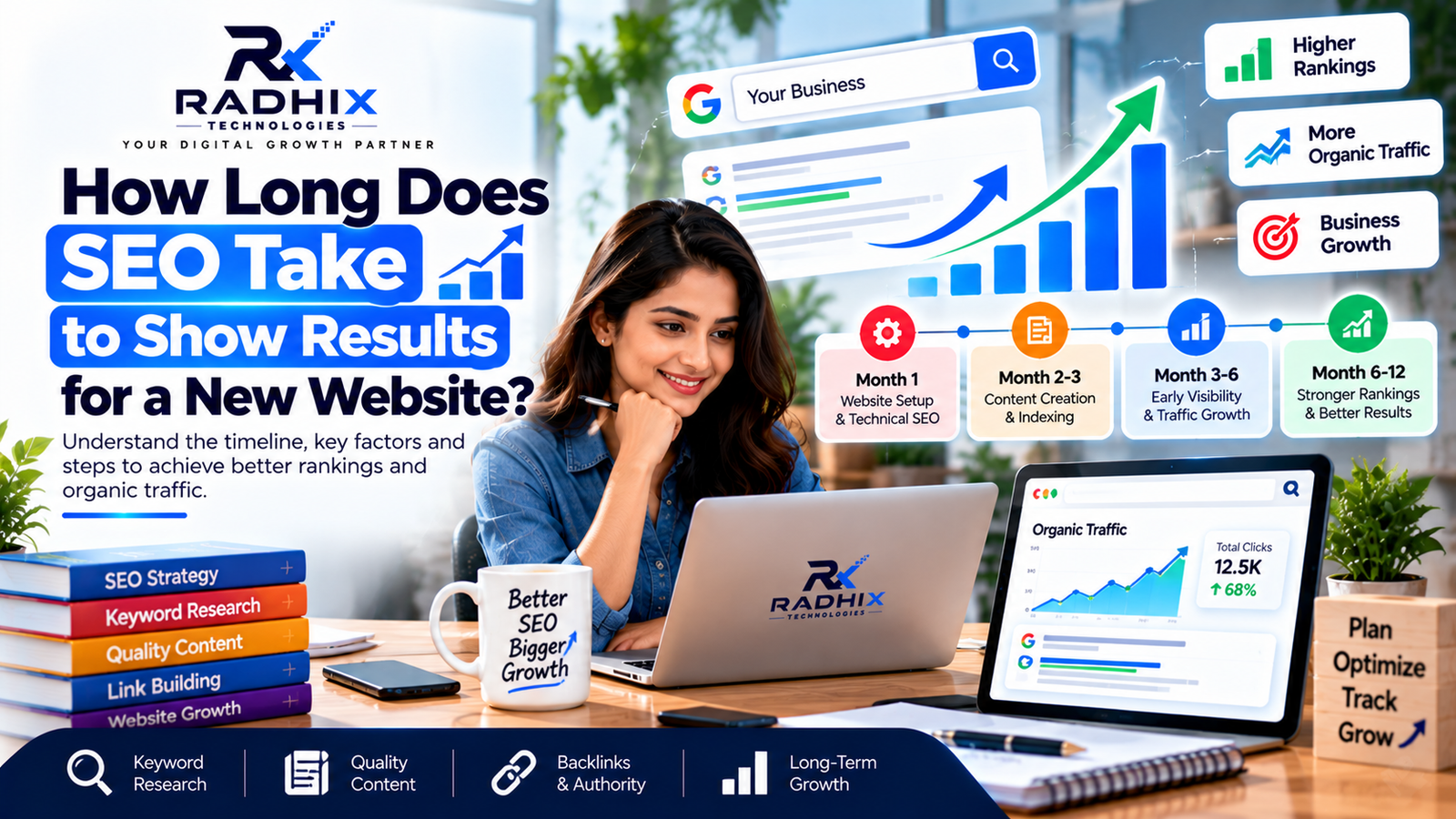
In general, a new website may begin showing early signs of SEO progress within 3 to 6 months. More meaningful improvements in organic traffic and keyword rankings often take 6 to 12 months or longer. However, these are general estimates, not guaranteed timelines. Some websites see progress sooner, while highly competitive industries may require more time.
In this guide, we will explain the SEO timeline for a new website, the factors that influence rankings, and the steps businesses can take to improve their chances of success.
What Is SEO and Why Does It Take Time?
Search Engine Optimization (SEO) is the process of improving a website so that search engines can discover, understand, and potentially rank its pages for relevant search queries.
SEO includes several activities, such as:
- Technical SEO and website performance optimization
- Keyword research and search intent analysis
- On-page SEO and content optimization
- Publishing useful, relevant content
- Improving website structure and internal linking
- Earning quality backlinks and brand mentions
- Monitoring rankings, traffic, and conversions
SEO takes time because search engines need to discover pages, crawl and index them, evaluate their relevance, and determine how useful they are compared with competing pages. Search engines continually update their results, and rankings can change as competitors improve their websites or search intent evolves.
For a new website, building trust, creating useful content, and establishing a clear topical focus can take sustained effort.
How Long Does SEO Take for a New Website?
Although every website is different, the following timeline can help set realistic expectations.
Month 1: Website Setup and Technical SEO
The first month should focus on creating a strong SEO foundation.
Important activities include:
- Setting up Google Search Console and website analytics.
- Checking whether important pages can be crawled and indexed.
- Creating and submitting an XML sitemap.
- Reviewing robots.txt and canonical tags.
- Conducting keyword research.
- Optimizing page titles, meta descriptions, headings, and URLs.
- Improving mobile usability and page performance.
- Planning a content strategy around customer search intent.
At this stage, the main objective is to make the website accessible to search engines and prepare it for future growth.
Expected outcome: A technically sound website with important pages ready for discovery and indexing. Actual indexing timelines vary.
Months 2–3: Content Development and Early Visibility
During this period, businesses should focus on publishing useful content and improving important website pages.
Recommended activities include:
- Publishing informative blog posts.
- Optimizing service and product pages.
- Adding relevant internal links.
- Improving website navigation.
- Answering common customer questions.
- Monitoring indexed pages and search queries.
- Identifying and fixing technical issues.
Some pages may begin appearing for relevant search queries, and early impressions may become visible in Google Search Console. Competitive keywords may still have little or no visibility.
Expected outcome: Early indexing, search impressions, and possible movement in keyword rankings.
Months 3–6: Early SEO Growth
With consistent work, some websites begin to show clearer progress during this stage.
Potential improvements include:
- Increased impressions in search results.
- Better visibility for specific long-tail keywords.
- Growth in organic website visitors.
- Improved rankings for selected pages.
- More enquiries from relevant search traffic.
Results depend on the quality of the website, competition, content relevance, and the effectiveness of the SEO strategy.
Expected outcome: Early measurable progress, with some pages gaining visibility and potentially attracting organic visitors.
Months 6–12: Building Stronger Organic Visibility
For many new websites, this period provides a better opportunity to assess the impact of sustained SEO efforts.
Businesses may focus on:
- Expanding successful content topics.
- Improving pages that receive impressions but few clicks.
- Strengthening internal linking.
- Earning relevant, high-quality backlinks.
- Refreshing outdated or underperforming content.
- Improving conversion rates on high-traffic pages.
- Targeting additional relevant keywords.
Expected outcome: Potentially stronger keyword coverage, more consistent organic traffic, and improved lead-generation opportunities.
However, ranking for highly competitive keywords may take longer than 12 months. SEO is an ongoing process rather than a one-time activity.
7 Factors That Affect SEO Results for a New Website
Several factors determine how quickly a website can make progress in search results.
1. Keyword Competition
Keywords have different levels of competition. Broad terms such as “digital marketing company” may be harder to rank for than specific searches related to a service and location.
For example, a new website targeting “website development company in Faridabad” may face a different competitive landscape from one targeting “website development company in India.”
Tip: Start with relevant long-tail keywords that match your services, location, and customers' needs. Evaluate the actual competition before choosing your target keywords.
2. Website Technical Health
Technical SEO helps search engines access and understand your website.
Common issues that can affect progress include:
- Broken links and incorrect redirects.
- Pages accidentally blocked from crawling.
- Important pages missing from the index.
- Duplicate or poorly managed URLs.
- Slow-loading pages and usability problems.
- Poor mobile experiences.
Tip: Conduct a technical SEO audit before investing heavily in content or link building.
3. Content Quality and Relevance
Publishing large quantities of content does not automatically improve rankings. Content should provide useful information, answer the user's question, and demonstrate relevant knowledge.
High-quality content should:
- Match the search intent behind the target keyword.
- Provide accurate and helpful information.
- Use clear headings and logical organization.
- Include relevant examples where appropriate.
- Link to useful related pages.
- Offer original value rather than repeating competitors.
Tip: Focus on creating the best useful resource for your intended audience instead of publishing content solely to target keywords.
4. Website Structure and Internal Linking
A well-organized website makes it easier for users and search engines to navigate related pages.
For example, a digital marketing website could organize its content into categories such as SEO, content marketing, social media marketing, and paid advertising. Relevant blogs can link to their related service pages.
Tip: Use descriptive navigation, logical categories, and contextual internal links to connect related content.
5. Backlinks and Brand Authority
Backlinks are links from other websites to your website. Relevant, trustworthy backlinks can help search engines understand your website's reputation and connections within a topic.
However, buying manipulative links or participating in link schemes can create risks.
Tip: Build authority through useful resources, genuine industry relationships, digital PR, and relevant business directories where appropriate.
6. Consistency of SEO Activities
SEO generally requires continuous improvement. Publishing helpful content, maintaining technical health, and reviewing performance can help a website build visibility over time.
Consistency does not mean publishing every day. It means following a realistic plan and maintaining quality.
Tip: Create a monthly SEO calendar with clear deliverables for content, technical improvements, internal linking, and performance reviews.
7. Industry and Location
The competitiveness of your industry and target location can influence the timeline.
A business targeting a specific local area may have different opportunities from a national or international website competing for broad keywords.
For local businesses, maintaining accurate business information, creating useful location-specific pages, and optimizing a Google Business Profile for eligible businesses can support local visibility.
Tip: Focus on the geographic areas and customer groups that are most relevant to your business.
How Can You Make SEO Work More Effectively?
While no ethical SEO strategy can guarantee rankings by a specific date, several practices can improve your website's foundation and help you measure progress.
Step 1: Perform Keyword Research
Identify the terms your potential customers use when searching for your products or services. Consider search intent, relevance, competition, and the value of attracting that audience.
Step 2: Optimize Important Website Pages
Improve your homepage, service pages, product pages, and other important landing pages. Use clear page titles, descriptive headings, helpful copy, and relevant internal links.
Step 3: Publish Useful Content Regularly
Create blogs, guides, FAQs, and case studies that address real customer questions. Organize content around related topics to help visitors explore your expertise.
Step 4: Fix Technical SEO Issues
Review crawlability, indexing, redirects, canonical tags, mobile usability, and page performance. Prioritize issues that prevent search engines or users from accessing important content.
Step 5: Build Relevant Website Authority
Earn links naturally by publishing valuable resources and building genuine relationships with relevant websites, publications, and industry organizations.
Step 6: Monitor Results and Improve
Use Google Search Console to understand impressions, clicks, search queries, and page performance. Use website analytics to evaluate engagement and conversions.
Review the data regularly and improve pages based on what you learn.
How to Measure SEO Progress Before Rankings Improve
SEO success is not limited to reaching the first page of Google. A new website can track several indicators to understand whether its strategy is moving in the right direction.
SEO MetricWhat It Tells YouIndexed pagesWhether important pages are included in search resultsSearch impressionsHow often your pages appear in search resultsOrganic clicksHow many visits arrive through unpaid search resultsKeyword visibilityHow your pages appear for relevant search queriesOrganic conversionsWhether search visitors complete valuable actionsQualified leadsWhether SEO attracts potential customers who fit your businessConversion rateHow effectively organic visitors take the desired action
Review these metrics together. For example, increasing impressions without many clicks may indicate that a page needs a more relevant title, a clearer description, or better alignment with search intent.
Likewise, increased traffic without enquiries may indicate that the landing page, offer, or conversion process needs improvement.
Common SEO Mistakes That Delay Results
Avoid these mistakes when working on a new website:
- Expecting immediate rankings for competitive keywords.
- Publishing duplicate, thin, or unhelpful content.
- Ignoring technical SEO problems.
- Targeting keywords that do not match customer intent.
- Using keyword stuffing or manipulative link-building tactics.
- Neglecting mobile usability and page experience.
- Making frequent major website changes without measuring their impact.
- Ignoring conversion tracking and lead quality.
- Promising guaranteed rankings or fixed SEO results.
A sustainable SEO strategy prioritizes useful content, a technically healthy website, and ongoing measurement.
Is SEO Worth It for a New Website?
Yes, SEO can be a valuable long-term investment for a new website when it is aligned with business goals.
Although it may take months to see meaningful results, SEO can help businesses reach people who are actively searching for relevant information, products, or services.
Potential benefits include:
- Improved organic visibility.
- More relevant website traffic.
- Increased brand awareness.
- Better customer education.
- Opportunities to generate qualified leads.
- Long-term value from useful website content.
The value of SEO depends on how well the website attracts the right audience and converts visitors into customers. Businesses should evaluate SEO by its contribution to their goals rather than rankings alone.
How Radhix Technologies Can Help
Radhix Technologies provides website development and digital solutions to help businesses strengthen their online presence. A strong website combined with a structured SEO strategy can help businesses create a better foundation for organic growth.
SEO support may include technical website audits, keyword research, on-page optimization, content planning, website performance improvements, and ongoing reporting.
If you are launching a new website or want to improve your existing search visibility, visit https://www.radhix.com/ to learn more about Radhix Technologies and its services.
Conclusion
So, how long does SEO take to show results for a new website? Early progress may appear within 3 to 6 months, while more meaningful organic traffic growth can take 6 to 12 months or longer. The actual timeline depends on your website, target keywords, competition, content quality, technical health, and consistency.
The best approach is to set realistic expectations, establish a strong SEO foundation, publish genuinely helpful content, and monitor performance regularly.
Remember: SEO is a long-term investment. Focus on attracting the right audience, providing value, and improving your website continuously instead of chasing instant rankings.
Want to improve your website's SEO? Contact Radhix Technologies to discuss your website development and digital marketing requirements.