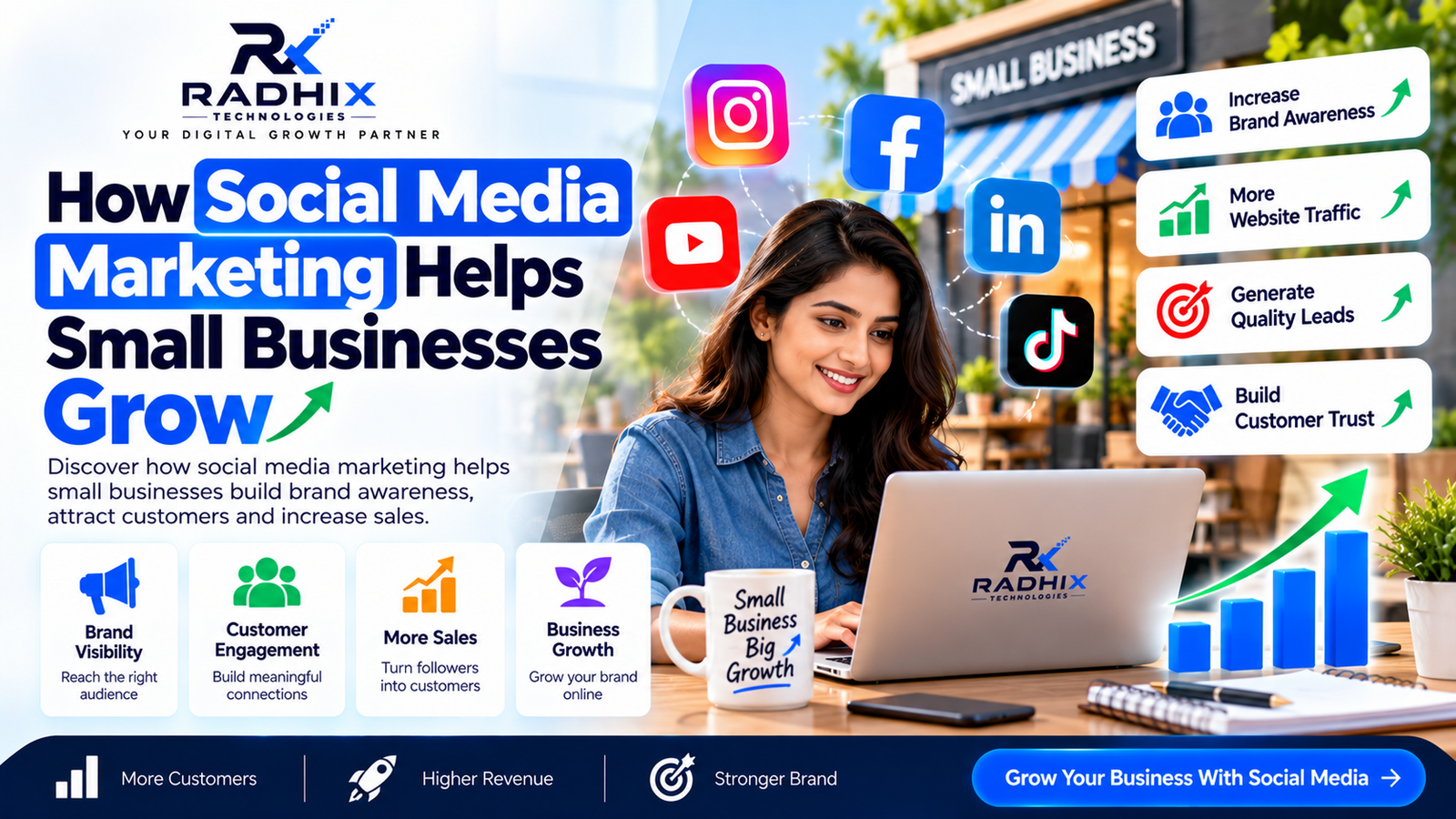
How Social Media Marketing Helps Small Businesses Grow
Introduction
Growing a small business in today's competitive digital world requires more than offering good products or services. Businesses also need to reach the right audience, build customer trust, communicate their value, and create opportunities for sales.
Social media marketing provides small businesses with a way to connect with potential customers, showcase their products and services, share useful information, and build a recognisable brand online. Platforms such as Instagram, Facebook, LinkedIn, and YouTube can help businesses communicate with their audiences and promote their offerings.
With a clear strategy and consistent effort, social media marketing can support brand awareness, customer engagement, website traffic, and lead generation.
In this guide, we will explain how social media marketing helps small businesses grow and explore practical strategies to improve your online presence.
What Is Social Media Marketing?
Social media marketing is the process of using social networking platforms to promote a business, communicate with customers, share content, and achieve marketing goals.
It may include:
- Creating and publishing social media content
- Sharing product and service information
- Running paid advertising campaigns
- Responding to customer questions and messages
- Building an online community
- Collaborating with relevant creators
- Promoting website content and offers
- Measuring engagement and marketing performance
For small businesses, social media marketing can provide a flexible way to reach audiences without depending entirely on traditional advertising. However, results depend on the target audience, platform selection, content quality, budget, and consistency.
1. Increases Brand Awareness
People are more likely to consider businesses they recognise and understand. Social media gives small businesses opportunities to introduce their brand to potential customers and communicate what makes their offerings useful.
By regularly sharing relevant content, businesses can help audiences become familiar with their products, services, values, and expertise.
How to Improve Brand Awareness
- Create consistent branding across your social media profiles.
- Use a recognisable business logo and profile image.
- Explain your products or services clearly.
- Share useful educational content.
- Publish project highlights and product demonstrations.
- Use short-form videos where appropriate.
- Maintain a consistent and professional communication style.
For example, a website development company can share website design examples, development tips, project showcases, and explanations of how a professional website supports business growth.
The objective is to help potential customers understand your brand and remember it when they need your services.
2. Helps Small Businesses Reach Their Target Audience
Social media platforms offer different ways to reach people based on their interests, professional roles, location, and other available targeting options.
Instead of trying to appeal to everyone, small businesses should focus on audiences that are most likely to need their products or services.
Steps to Identify Your Target Audience
Define your ideal customer: Understand who is most likely to purchase from your business.
Identify customer needs: Consider the problems your products or services solve.
Select relevant platforms: Choose platforms that your target audience actually uses.
Develop suitable content: Share information that answers their questions and addresses their interests.
Review engagement: Monitor which content attracts relevant conversations, enquiries, and visits.
For example, a B2B software company may find LinkedIn useful for reaching business professionals, while a fashion or home décor business may benefit from visual platforms such as Instagram.
The best platform depends on your business model and customer behaviour.
3. Generates Website Traffic
Social media can introduce people to your website, where they can learn more about your business, explore services, view products, or submit enquiries.
Sharing valuable content can encourage interested users to visit relevant pages rather than relying only on promotional posts.
How to Drive Traffic From Social Media
- Share links to helpful blog articles.
- Promote relevant service and product pages.
- Include a clear website link in your profile.
- Create posts that explain a problem and introduce a useful resource.
- Share case studies and project examples.
- Use calls to action that explain what visitors should do next.
- Add tracking parameters to campaign links where appropriate.
For example, a digital marketing company can share a blog about SEO mistakes and direct readers to a relevant SEO service page.
Measure website visits and meaningful actions rather than judging success only by likes or follower counts.
4. Supports Lead Generation and Sales
Social media marketing can help small businesses attract potential customers by sharing useful information and making it easy for interested people to contact them.
Depending on the platform, businesses may generate leads through direct messages, enquiry forms, lead generation ads, website visits, or product catalogues.
Lead Generation Strategies
- Add clear contact information to your profiles.
- Share service explanations and product demonstrations.
- Use relevant calls to action.
- Respond promptly to genuine enquiries.
- Create landing pages for specific campaigns.
- Test paid lead generation campaigns when suitable.
- Track enquiries and identify which channels produce qualified leads.
For example, a company offering business website development could publish a post explaining the benefits of a professional website and invite interested business owners to request a consultation.
Remember that not every enquiry becomes a customer. Businesses should track lead quality, conversion rates, and acquisition costs to understand the real value of their campaigns.
5. Builds Customer Trust and Credibility
Customers often research a business before making a purchase. An active and informative social media presence can help them understand what the business offers and how it interacts with customers.
Trust is built through accurate information, transparent communication, genuine customer feedback, and consistent service quality.
Ways to Build Trust Through Social Media
- Share real project examples.
- Publish accurate product or service information.
- Respond professionally to customer questions.
- Address complaints respectfully.
- Share genuine testimonials with permission.
- Demonstrate your expertise through educational posts.
- Avoid exaggerated claims and misleading promotions.
- Keep business details and contact information updated.
Small businesses should prioritise authenticity over trying to make every post look like a large brand's advertising campaign.
6. Provides a Cost-Effective Marketing Option
Social media offers businesses opportunities to publish organic content without paying for every post. Paid advertising is also available for businesses that want to test more targeted campaigns.
However, social media marketing is not completely cost-free. Businesses may need to invest time, creative resources, photography, video production, social media management, and advertising.
How to Manage Your Social Media Budget
- Start with one or two relevant platforms.
- Create a realistic content schedule.
- Reuse suitable content across platforms with appropriate adjustments.
- Test small advertising campaigns before scaling.
- Measure results against your business goals.
- Focus on qualified enquiries and sales rather than vanity metrics.
- Review the cost of content production and campaign management.
A smaller business can begin with a manageable plan and expand its activity as it learns which strategies work for its audience.
7. Improves Customer Engagement
Social media allows businesses to communicate directly with customers through comments, messages, polls, live sessions, and other platform features.
These interactions can help businesses understand customer questions, collect feedback, and identify opportunities to improve their products or services.
Engagement Ideas for Small Businesses
- Ask relevant questions about customer needs.
- Share useful tips and short tutorials.
- Respond to comments and messages.
- Publish behind-the-scenes content.
- Run question-and-answer sessions.
- Explain common customer problems.
- Share product demonstrations.
- Invite customers to provide honest feedback.
Engagement should be meaningful rather than focused only on increasing reactions. A useful conversation with a potential customer may be more valuable than a large number of unrelated likes.
8. Helps Small Businesses Compete With Larger Brands
Small businesses may not have the marketing budgets of large companies, but they can still build a strong online presence by focusing on a specific audience and communicating their strengths clearly.
Social media provides opportunities to demonstrate expertise, highlight personalised service, showcase local knowledge, and build relationships with customers.
Ways to Stand Out
- Focus on a specific niche or customer group.
- Explain what makes your offering different.
- Share detailed examples of your work.
- Publish content that answers customer questions.
- Show how your product or service solves real problems.
- Communicate in a helpful and consistent tone.
- Build relationships with relevant local communities.
Instead of copying competitors, identify what your business does well and communicate that value to the right audience.
9. Supports Local Business Growth
Local businesses can use social media to reach people in their service areas, promote events, introduce new products, and build relationships with their communities.
Local Social Media Marketing Tips
- Mention your service area where it is relevant.
- Share genuine local projects or business updates.
- Promote local events and collaborations.
- Publish content that answers common local customer questions.
- Keep your contact information accurate.
- Use location features when they are appropriate and available.
- Encourage genuine customer feedback.
- Connect social media activity with your Google Business Profile and website where relevant.
For example, a local salon, restaurant, retailer, or digital services company can share useful information tailored to its customers and the locations it actually serves.
Social media should complement local SEO rather than replace an accurate business profile and a useful website.
10. Creates Opportunities for Influencer and Creator Collaborations
Small businesses can sometimes reach relevant audiences by collaborating with creators whose content and followers align with their products or services.
A successful collaboration depends on audience relevance, trust, content quality, and clear expectations rather than follower count alone.
How to Choose a Suitable Creator
- Review the creator's audience and content style.
- Check whether their audience matches your target customers.
- Look for genuine engagement rather than suspicious follower numbers.
- Agree on deliverables and timelines.
- Set a clear campaign objective.
- Track referral visits, enquiries, or sales where possible.
- Ensure paid partnerships are disclosed appropriately.
A local business may find a smaller creator with a relevant audience more useful than a larger creator whose followers are unlikely to become customers.
11. Helps Businesses Understand Customer Preferences
Social media insights can provide useful information about how people interact with content. Businesses can use these insights to refine their messaging, content topics, and campaign strategy.
What to Monitor
- Reach and impressions
- Engagement and meaningful conversations
- Profile visits
- Website clicks
- Video views and watch time
- Enquiries and qualified leads
- Conversions and sales where measurable
- Advertising cost and return
Different platforms define their metrics differently, so compare results carefully.
Use the information to identify patterns. For example, if tutorial videos consistently attract relevant enquiries, you may decide to produce more educational content.
Avoid assuming that high engagement automatically means high revenue. Connect social media reporting to actual business outcomes wherever possible.
12. Builds a Consistent Brand Identity
A consistent brand identity helps customers recognise your business across different marketing channels.
This includes visual elements, tone of voice, messaging, and the way you explain your products and services.
Brand Consistency Checklist
- Use consistent logo and brand colours.
- Maintain a recognisable visual style.
- Keep your business description accurate.
- Use a tone that suits your target audience.
- Communicate the same core value proposition.
- Make contact information easy to find.
- Align social media messaging with your website.
Consistency does not mean every post must look identical. Your content can vary while maintaining a recognisable brand identity.
13. Develop a Practical Social Media Content Strategy
Posting randomly can make it difficult to maintain consistency or evaluate results. A simple content strategy helps businesses plan what to publish and why.
Useful Content Categories
Educational content: Tips, tutorials, checklists, and answers to frequently asked questions.
Product or service content: Demonstrations, features, benefits, and explanations of your process.
Trust-building content: Genuine testimonials, project examples, and behind-the-scenes updates.
Engagement content: Questions, polls, and discussions relevant to your audience.
Promotional content: Offers, announcements, consultations, and product launches with clear terms.
A balanced content plan should provide value and build relationships rather than make every post a sales pitch.
Example Weekly Posting Schedule
- Monday: Educational tip or industry insight
- Tuesday: Product or service highlight
- Wednesday: Short video or demonstration
- Thursday: Frequently asked question
- Friday: Project showcase or customer story
- Weekend: Community update or a relevant interactive post
This schedule is only an example. Choose a frequency that your business can maintain without sacrificing content quality.
14. Measure Results and Improve Your Strategy
Social media marketing should support clear business objectives. These may include improving brand awareness, generating qualified leads, increasing website visits, or supporting sales.
A Simple Measurement Process
- Define one or two primary business goals.
- Select metrics that reflect those goals.
- Establish a baseline using available platform data.
- Publish and promote relevant content.
- Review performance over a consistent period.
- Identify the content and campaigns producing meaningful results.
- Improve your strategy based on the evidence.
For example, a business focused on lead generation should pay close attention to qualified enquiries and cost per lead, not just follower growth.
Marketing performance varies by industry, audience, budget, and execution. Regular measurement helps businesses make informed decisions instead of relying on assumptions.
Common Social Media Marketing Mistakes to Avoid
Small businesses should avoid these common problems:
- Posting without a clear strategy
- Targeting an audience that is too broad
- Publishing only promotional content
- Ignoring customer messages
- Using inconsistent branding
- Buying fake followers or engagement
- Running advertisements without conversion tracking
- Copying competitors without understanding the audience
- Expecting immediate sales from every post
- Ignoring the quality of leads and customers
- Sharing misleading claims or unauthorised customer information
Avoiding these mistakes can help businesses focus their time and budget on activities that support real marketing goals.
How Radhix Technologies Can Help Small Businesses Grow
Radhix Technologies helps businesses strengthen their online presence through website development and digital solutions. A practical digital marketing strategy can combine social media content with a professional website, search engine optimisation, targeted advertising, and clear enquiry pathways.
Depending on your business goals, support may include:
- Social media marketing strategy
- Social media content planning
- Creative post and campaign development
- Social media advertising
- Website development and landing pages
- Search engine optimisation
- Lead generation strategy
- Campaign analytics and performance tracking
The right approach depends on your industry, target audience, marketing budget, and business objectives.
Want to grow your business online? Visit Radhix Technologies to explore digital solutions for your business.
Frequently Asked Questions (FAQs)
1. How does social media marketing help small businesses?
Social media marketing helps small businesses introduce their brand to potential customers, share useful information, build relationships, drive website traffic, and generate enquiries through organic content and paid campaigns.
2. Which social media platform is best for small businesses?
The best platform depends on your target audience and business model. LinkedIn may suit many B2B businesses, Instagram can be useful for visual products and services, Facebook may support local communities and consumer businesses, and YouTube can be effective for educational and demonstration videos.
3. Is social media marketing affordable for small businesses?
It can be adapted to different budgets. Businesses can begin with organic content and a focused platform strategy, then test paid advertising if appropriate. Costs may include staff time, creative production, management services, and advertising spend.
4. How often should a small business post on social media?
There is no universal posting frequency. Start with a schedule you can maintain consistently, then adjust based on audience response, content quality, and business goals.
5. Can social media marketing generate leads?
Yes. Businesses can generate enquiries through messages, website links, lead forms, advertisements, and other platform features. The quality of those leads depends on targeting, messaging, offers, and follow-up.
6. How can I measure social media marketing success?
Measure the metrics that match your goals, such as reach for awareness, website clicks for traffic, qualified enquiries for lead generation, and tracked sales for revenue. Do not rely on follower counts alone.
7. Should small businesses hire a social media marketing agency?
An agency may be useful when a business needs specialist strategy, consistent content production, paid campaign management, or performance reporting. Before hiring one, define your objectives, budget, expected deliverables, and measurement process.
Conclusion
Social media marketing can help small businesses build brand awareness, reach relevant audiences, develop customer relationships, and create opportunities for website traffic, leads, and sales.
The key is to choose suitable platforms, understand your customers, publish useful content, respond to genuine enquiries, and measure meaningful business outcomes.
Start with a manageable strategy and improve it over time using real performance data. When social media marketing works alongside a professional website and a broader digital marketing plan, it can become a valuable part of your business growth strategy.