How Much Does Custom Software Development Cost in India?
Custom software development has become an important investment for businesses looking to automate operations, improve productivity, manage customers, and build digital products. From CRM and ERP systems to e-commerce platforms, SaaS applications, and enterprise management software, businesses increasingly need solutions designed around their specific requirements.
However, one of the first questions businesses ask before starting a software project is: How much does custom software development cost in India?
The answer depends on several factors, including project complexity, features, technology stack, integrations, design requirements, security, and development time.
India has a broad software development market with different pricing models and service providers. Businesses can choose from small development teams, specialised software companies, and large technology firms depending on their requirements and budget.
In this guide, we will explain the estimated cost of custom software development in India, different project categories, factors affecting pricing, development timelines, and how to plan your software development budget.
What Is Custom Software Development?
Custom software development is the process of designing, developing, testing, and maintaining software according to the specific requirements of a business or organisation.
Unlike ready-made software, which offers standard features for multiple users, custom software is developed around a company's workflows, operational requirements, and business goals.
Examples of custom software include:
- Customer Relationship Management (CRM) software
- Enterprise Resource Planning (ERP) systems
- Inventory and warehouse management software
- E-commerce and multi-vendor platforms
- School and college management software
- Hospital management systems
- Booking and appointment platforms
- SaaS applications
- Business automation software
- Logistics and delivery management systems
The overall development cost depends on the type of application and the functionality required.
Custom Software Development Cost in India: Estimated Pricing
The cost of custom software development in India can vary significantly depending on the project scope and complexity.
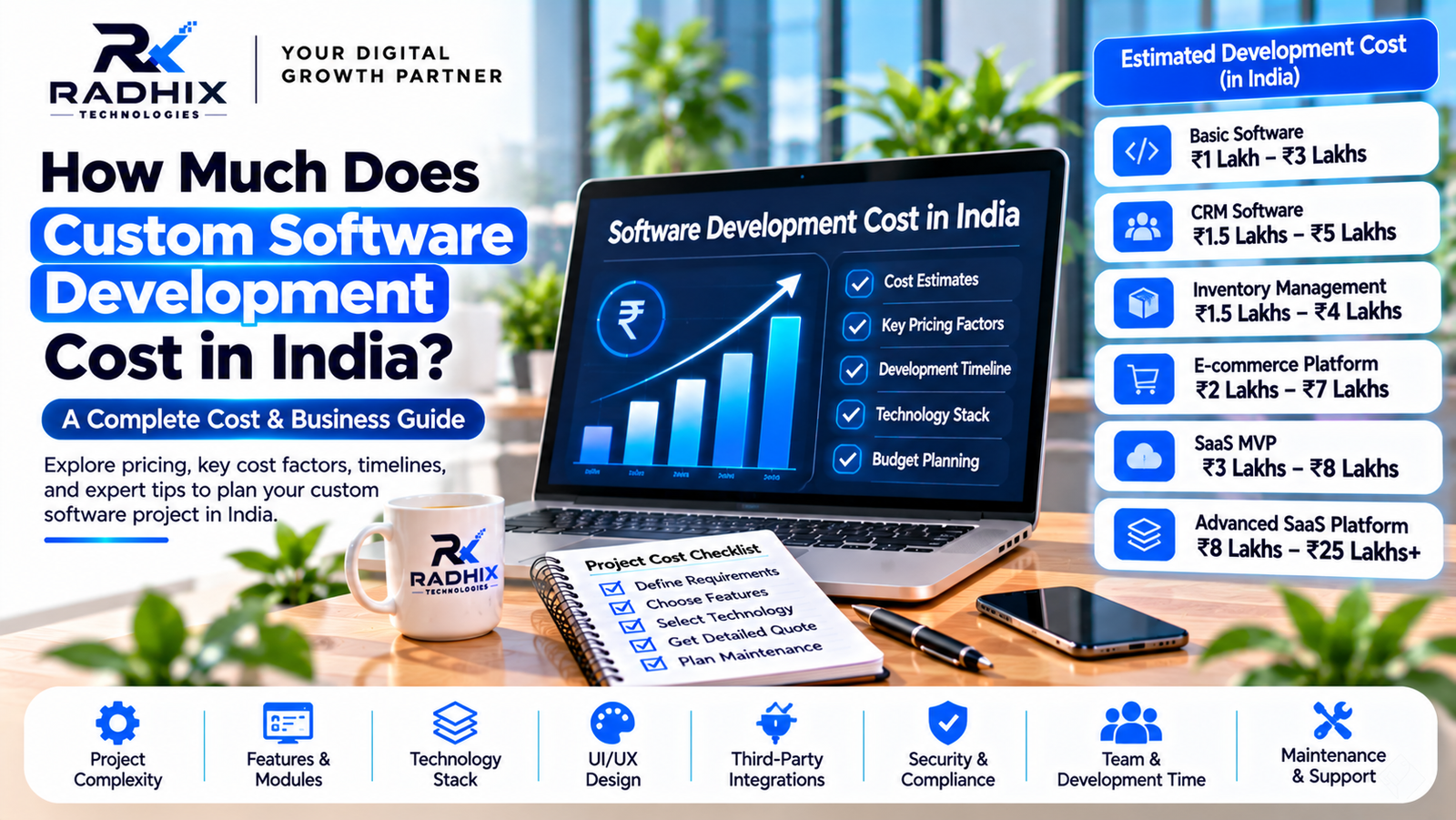
The following table provides illustrative budget ranges for planning purposes. These are not fixed market rates or quotations. Actual pricing depends on the detailed requirements and development agreement.
Software Project TypeEstimated Development
- CostBasic Business Software₹1,00,000 – ₹3,00,000
- CRM Software₹1,50,000 – ₹5,00,000
- Inventory Management Software₹1,50,000 – ₹4,00,000
- School / College ERP₹2,00,000 – ₹6,00,000
- E-commerce Platform₹2,00,000 – ₹7,00,000
- Booking Management Software₹1,50,000 – ₹5,00,000
- Multi-Vendor Marketplace₹3,00,000 – ₹10,00,000
- SaaS MVP Development₹3,00,000 – ₹8,00,000
- Advanced SaaS Platform₹8,00,000 – ₹25,00,000+
- Complex Enterprise Software₹15,00,000 – ₹50,00,000+
Important: These estimates are indicative budgeting ranges. They may exclude GST, cloud hosting, third-party API subscriptions, paid software licences, external services, and ongoing maintenance unless specifically included in the quotation.
Cost of Custom Software Based on Project Complexity
Another way to estimate development cost is to divide projects into three broad categories.
1. Basic Software Development
<text>Estimated Budget: ₹1 Lakh – ₹3 Lakhs</text>
Basic software generally includes essential functionality and a limited number of user roles.
Typical features include:
- User registration and login
- Basic admin dashboard
- Data entry and management
- Simple reports
- Basic search and filtering
- User profile management
- Standard database integration
Examples include small business management tools, simple CRM applications, and internal employee management systems.
2. Medium-Level Software Development
<text>Estimated Budget: ₹3 Lakhs – ₹10 Lakhs</text>
Medium-level applications usually contain multiple modules, user roles, integrations, and more advanced workflows.
Typical features include:
- Multiple user dashboards
- Role-based access control
- Advanced reports and analytics
- Payment gateway integration
- API integration
- Automated notifications
- Inventory or order management
- Responsive web application
- Advanced admin panel
Examples include multi-vendor platforms, school ERP systems, booking portals, and business management applications.
3. Advanced Software Development
<text>Estimated Budget: ₹10 Lakhs – ₹50 Lakhs+</text>
Advanced applications involve complex workflows, extensive integrations, higher security requirements, and architecture designed for larger operations.
Typical features include:
- Multi-tenant architecture
- Advanced analytics
- AI-powered functionality
- Complex API integrations
- Multi-branch management
- Advanced automation
- High-volume transaction processing
- Cloud infrastructure
- Advanced security and monitoring
- Web and mobile applications
Examples include enterprise ERP platforms, advanced SaaS products, fintech platforms, and large-scale business applications.
10 Factors That Affect Custom Software Development Cost
Understanding the factors behind software pricing helps businesses plan their budget more accurately.
1. Project Requirements and Complexity
The number of features and complexity of business workflows directly affect development effort.
A basic application with a few modules will generally require less time than a platform containing multiple dashboards, automated processes, and complex integrations.
2. Number of User Roles
Applications may have different types of users, such as:
- Super Admin
- Admin
- Customers
- Employees
- Vendors
- Delivery Partners
- Managers
Each role may require separate dashboards, permissions, and workflows. More complex role management can increase development effort.
3. UI/UX Design Requirements
A professional interface improves usability and customer experience.
Development cost may increase when a project requires:
- Custom UI/UX design
- Advanced dashboard layouts
- Interactive elements
- Multiple user journeys
- Responsive mobile layouts
- Complex design systems
4. Technology Stack
The choice of frontend, backend, database, and infrastructure technologies affects project planning and implementation.
Common technologies include:
Development AreaTechnologiesFrontendReact.js, Next.js, HTML, CSS, JavaScriptBackendNode.js, Express.js, Python, PHPDatabaseMongoDB, MySQL, PostgreSQLMobile AppsFlutter, React Native, KotlinCloud HostingAWS, Azure, Google CloudAPI DevelopmentREST APIs, GraphQLUI/UX DesignFigma
The technology stack should be selected according to the application's requirements, performance expectations, and future maintenance needs.
5. Third-Party API Integrations
Many applications require external services to perform specific functions.
Examples include:
- Payment gateways
- WhatsApp Business API
- SMS and email services
- Google Maps APIs
- Shipping and logistics APIs
- Accounting integrations
- AI services
- Identity verification services
Integration development can add to the project cost. Some providers also charge separate setup fees, usage charges, or recurring subscription fees.
6. Database and Architecture
A simple application may use a straightforward database structure, while a complex platform may require more advanced architecture.
Factors include:
- Database design
- Data relationships
- Multi-tenant architecture
- Data migration
- Performance optimisation
- Backup and recovery
- High-availability requirements
7. Security Requirements
Software handling customer records, financial information, or confidential business data needs appropriate security controls.
Security-related development may include:
- Authentication
- Role-based access
- Data encryption
- Secure API development
- Audit logs
- Backup management
- Security testing
- Access monitoring
8. Web and Mobile Application Requirements
A web application and a mobile application have different development and testing requirements.
If a business needs:
- Customer web portal
- Admin web panel
- Android application
- iOS application
- Vendor or employee application
The overall development scope and budget may increase.
9. Testing and Quality Assurance
Testing is essential to identify issues before the software is launched.
The project may require functional testing, API testing, security testing, database testing, performance testing, and cross-device compatibility testing.
10. Maintenance and Technical Support
Software requires ongoing attention after launch.
Maintenance may include:
- Bug fixes
- Security updates
- Server monitoring
- Database backups
- Performance improvements
- Compatibility updates
- Feature enhancements
Businesses should confirm whether maintenance is included in the development quotation or charged separately.
Software Development Cost Breakdown
A custom software project usually includes several stages. The following is an illustrative allocation of the total development budget.
Development StageIndicative Budget AllocationRequirement Analysis and Planning5–10%UI/UX Design10–15%Frontend Development20–25%Backend Development25–30%API and Third-Party Integrations5–10%Testing and Quality Assurance10–15%Deployment and Launch5%
The actual allocation can vary depending on the application. For example, an API-heavy platform may require more integration effort, while a design-intensive application may require a larger UI/UX budget.
How Long Does Custom Software Development Take?
The development timeline depends on project complexity, the number of modules, integrations, testing requirements, and team availability.
Project TypeIndicative TimelineBasic Business Software3–6 WeeksCRM Application4–8 WeeksInventory Management Software4–8 WeeksBooking Management Portal4–8 WeeksE-commerce Platform6–12 WeeksSaaS MVP6–12 WeeksMulti-Vendor Platform8–16 WeeksAdvanced Enterprise Software4–9 Months or More
These timelines are planning estimates, not guaranteed delivery commitments. Final schedules should be agreed after requirement analysis.
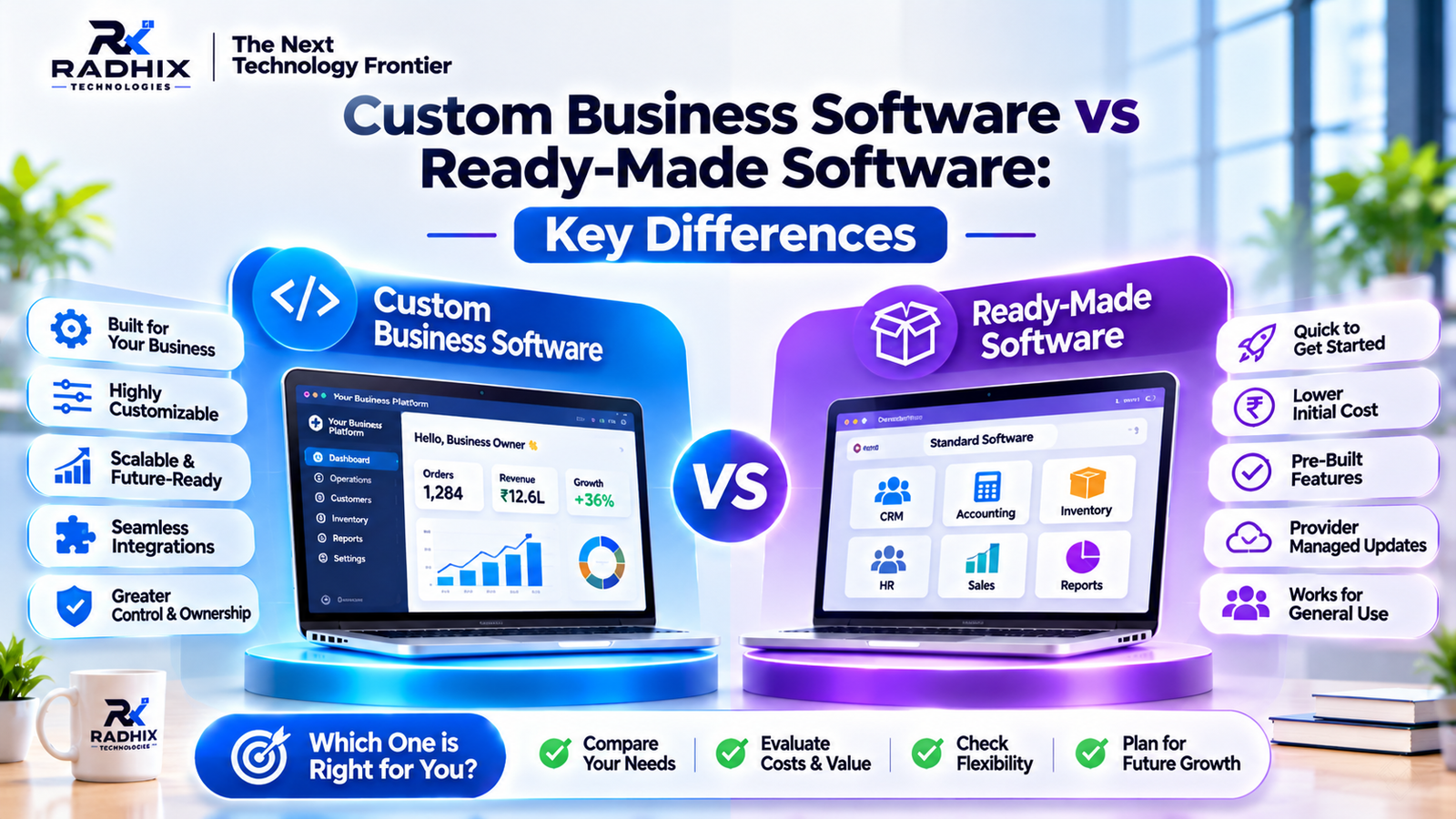
Custom Software Development vs Ready-Made Software
Businesses often compare custom software with ready-made solutions before deciding where to invest.
ComparisonCustom SoftwareReady-Made SoftwareFeaturesDesigned for specific needsStandard featuresFlexibilityGreater customisationLimited by the productIntegrationCan be planned around requirementsDepends on supported integrationsInitial CostGenerally higherOften lowerDeploymentRequires development and setupOften quicker to startOwnershipDefined by the development agreementUsually licensedScalabilityCan be planned for future needsDepends on provider capabilities
Ready-made software can be suitable when its features meet your requirements. Custom software is worth considering when your business has specialised workflows or needs functionality that existing products cannot provide.
How to Reduce Custom Software Development Cost
Businesses can manage their development budget by following a practical approach.
1. Start With an MVP
Build essential features first rather than developing every planned feature in the initial version.
2. Define Clear Requirements
Prepare a detailed feature list and user workflows before development begins. This helps reduce misunderstandings and unexpected scope changes.
3. Prioritise Important Features
Separate essential features from optional enhancements. Develop the core functionality first and add advanced modules later.
4. Choose a Suitable Technology Stack
Select technologies based on project requirements rather than choosing expensive or complex solutions unnecessarily.
5. Plan Integrations Carefully
Identify required APIs and third-party services in advance. Check their pricing, availability, technical limitations, and usage policies.
6. Use a Milestone-Based Development Approach
Divide the project into manageable stages with clear deliverables and review points.
7. Plan Maintenance From the Beginning
Consider hosting, backups, updates, and support costs while preparing the overall project budget.
What Should Be Included in a Software Development Quotation?
Before hiring a software development company, request a detailed proposal.
A professional quotation should clearly mention:
- Project overview and objectives
- Detailed features and modules
- User roles and permissions
- Technology stack
- UI/UX design scope
- API and third-party integrations
- Project timeline
- Development cost and GST
- Payment milestones
- Testing and deployment
- Source code and ownership terms
- Documentation and handover
- Maintenance and support
- Exclusions and additional charges
A transparent quotation makes it easier to compare proposals and understand what is included in the development price.
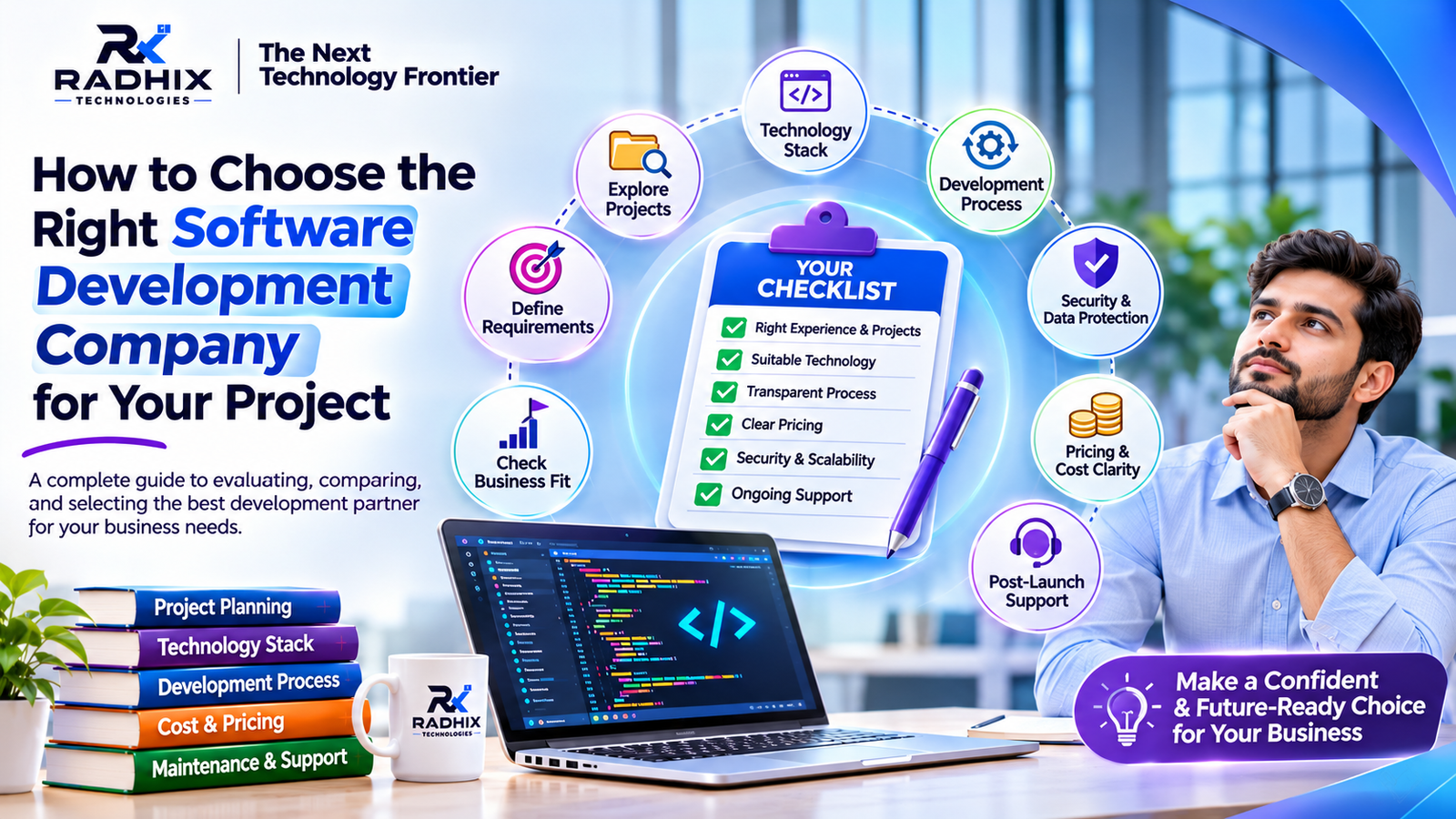
How to Choose the Right Custom Software Development Company in India
Choosing a development partner is an important decision because software projects involve time, money, business processes, and important data.
Consider these points before finalising a company.
Check the Portfolio: Review completed projects and evaluate whether the company has experience with similar applications.
Evaluate Technical Expertise: Check the team's experience with the technologies and integrations required for your project.
Understand the Development Process: Ask about requirement analysis, design approvals, development milestones, testing, and deployment.
Review the Quotation: Compare the actual scope of work rather than selecting a company based only on the lowest price.
Discuss Ownership: Confirm source code delivery, intellectual property rights, database access, and documentation in the agreement.
Confirm Maintenance: Understand the support period, bug-fixing policy, hosting responsibility, and charges for future changes.
Check Communication: A reliable development partner should provide clear updates and a defined communication process.
Why Choose Radhix Technologies for Custom Software Development?
Radhix Technologies Pvt. Ltd. helps businesses build digital solutions designed around their operational needs and business objectives.
Our services include:
- Custom Software Development
- CRM and ERP Development
- Web Application Development
- SaaS Product Development
- E-commerce and Multi-Vendor Platforms
- Android and iOS App Development
- Booking and Management Portals
- API and Third-Party Integrations
- Business Process Automation
- UI/UX Design
- Software Maintenance and Support
We focus on understanding project requirements, planning suitable technologies, developing practical features, and delivering software according to the agreed scope.
Whether you are a startup planning a new software product or an established organisation looking to automate business operations, Radhix Technologies can help you explore a suitable development approach.
Visit Radhix Technologies to learn more about our software development services and discuss your project requirements.
Conclusion
The cost of custom software development in India depends on the type of application, complexity, features, integrations, technology stack, security requirements, and development timeline.
A basic business application may require a relatively small investment, while a complex SaaS or enterprise platform can require a significantly larger budget.
The best way to estimate software development cost is to define your requirements clearly, prioritise essential features, evaluate suitable technologies, and request a detailed quotation.
Businesses should focus not only on the initial development price but also on software quality, scalability, security, ownership, and long-term maintenance.
With proper planning and the right development partner, custom software can become a valuable investment in business efficiency and digital growth.
Frequently Asked Questions (FAQs)
1. How much does custom software development cost in India?
The cost can range from approximately ₹1 lakh for a basic application to ₹50 lakhs or more for complex enterprise software. The actual price depends on features, complexity, integrations, and project requirements.
2. What is the cost of basic software development in India?
A basic business application may have an indicative development budget of ₹1 lakh to ₹3 lakhs, depending on its features and scope.
3. How much does SaaS product development cost in India?
A focused SaaS MVP may have an indicative budget of ₹3 lakhs to ₹8 lakhs. Advanced SaaS platforms with complex architecture and integrations can cost considerably more.
4. How long does custom software development take?
A basic application may take around 3–6 weeks, while medium-sized applications can require 1–4 months. Complex enterprise platforms may take several months or longer.
5. Which factors affect software development cost?
Major factors include project complexity, number of features, user roles, UI/UX design, technology stack, API integrations, security, testing, and maintenance requirements.
6. Is custom software more expensive than ready-made software?
Custom software generally requires a higher initial development investment. However, it may be more suitable when a business needs specialised workflows, integrations, or greater control over its application.
7. Does software development cost include hosting and maintenance?
Not necessarily. Hosting, third-party subscriptions, maintenance, and support may be charged separately. Businesses should confirm these details in the quotation.
8. Can I develop software within a limited budget?
Yes. You can start with an MVP containing essential features, validate the product, and introduce additional modules in later development phases.
9. Who owns the source code after software development?
Ownership depends on the agreement between the client and development company. The contract should clearly define intellectual property rights, source code delivery, and access to project assets.
10. How can I get a custom software development quotation?
Prepare your project requirements, feature list, user roles, platform preferences, and expected integrations. Share these details with a development company to receive a scope-based quotation.