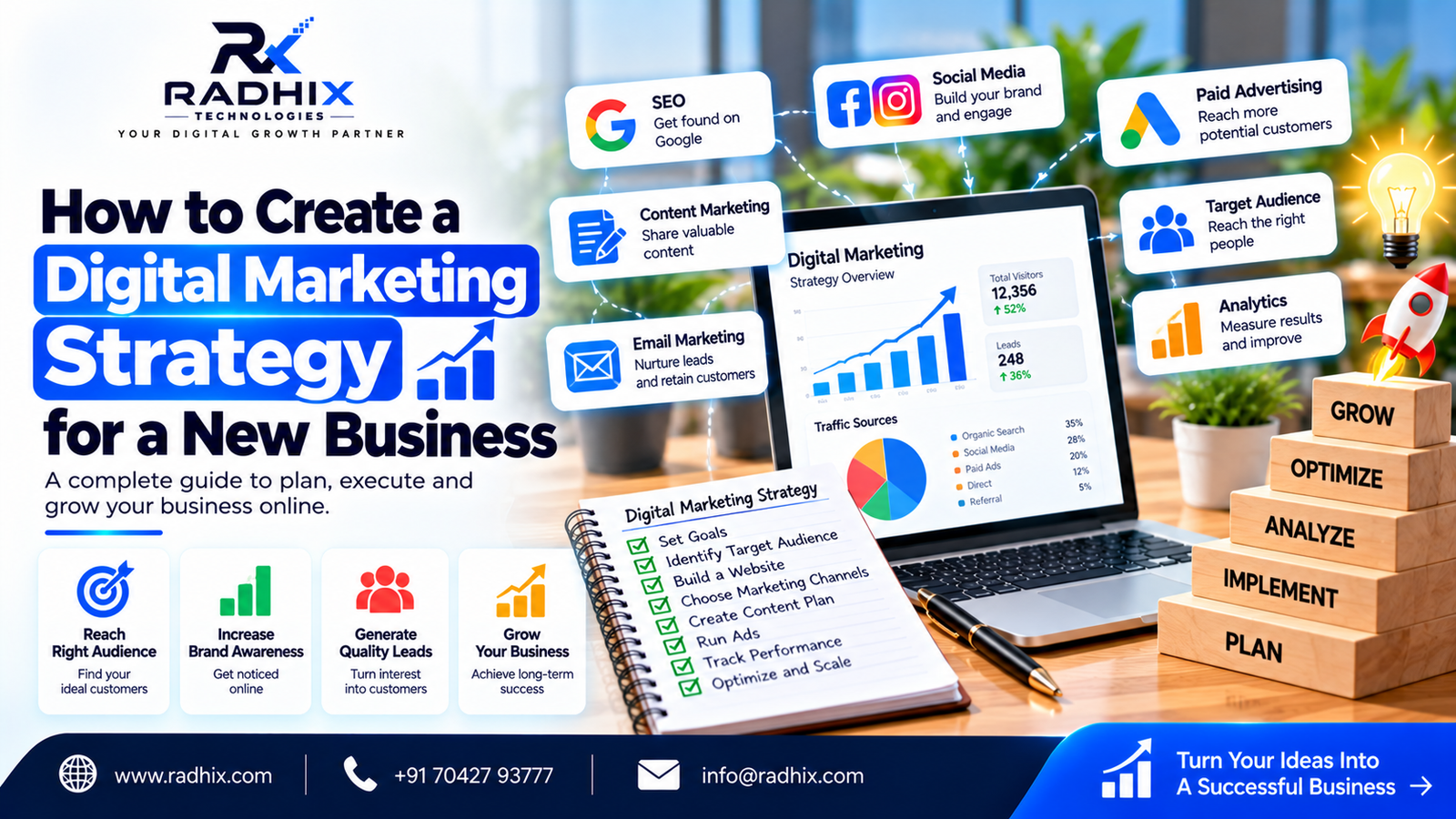
How to Create a Digital Marketing Strategy for a New Business
Introduction
Starting a new business is exciting, but attracting customers in a competitive market can be challenging. Even if you offer excellent products or services, people need to discover your business, understand its value, and trust your brand before they decide to purchase.
Digital marketing helps new businesses reach potential customers through search engines, social media, websites, online advertising, email marketing, and other digital channels. However, using every available platform without a clear plan can waste time and money.
A well-planned digital marketing strategy helps you identify your target audience, choose suitable marketing channels, set realistic goals, manage your budget, and measure results.
In this guide, we will explain how to create a digital marketing strategy for a new business and build a practical foundation for long-term online growth.
What Is a Digital Marketing Strategy?
A digital marketing strategy is a structured plan for promoting your business through online channels to achieve specific business objectives.
It defines who you want to reach, what you want to communicate, which platforms you will use, how much you plan to spend, and how you will measure success.
A digital marketing strategy may include:
- Search Engine Optimisation (SEO)
- Website development and landing pages
- Social media marketing
- Google Ads and paid social advertising
- Content marketing and blogging
- Email marketing
- Local SEO and Google Business Profile optimisation
- Lead generation and conversion tracking
Your strategy should be based on your business model, customer needs, budget, and objectives rather than simply following marketing trends.
1. Define Your Business Goals
Before investing in digital marketing, decide what you want your business to achieve. Clear goals help you choose suitable channels and evaluate whether your marketing activities are effective.
Common Digital Marketing Goals
Brand Awareness: Help more people discover and recognise your business.
Website Traffic: Attract relevant visitors to your website.
Lead Generation: Generate enquiries, consultation requests, or quotation requests.
Online Sales: Increase purchases through your website or online store.
Local Visibility: Help customers in your service area discover your business.
Customer Retention: Maintain relationships with existing customers and encourage repeat business.
How to Set Effective Goals
Use specific, measurable, achievable, relevant, and time-bound goals.
For example, instead of saying, “I want to grow my business online,” set a goal such as:
“Generate 20 qualified enquiries per month through the website and digital marketing campaigns within six months.”
This is an illustrative target, not a guaranteed result. Set targets based on your current performance, budget, sales capacity, and market conditions.
2. Identify Your Target Audience
Your digital marketing strategy will be more effective when you understand the people most likely to need your products or services.
Trying to reach everyone can make your messaging too broad and your advertising budget less efficient.
Questions to Understand Your Audience
- Who is most likely to purchase from your business?
- What problems are they trying to solve?
- Which locations do they live or work in?
- What budget or price range is relevant to them?
- Which social media platforms do they use?
- What questions do they ask before making a purchase?
- What factors influence their buying decisions?
Create a Simple Customer Profile
For example, a business offering website development services might target small and medium-sized businesses that need a professional website, improved online visibility, or an e-commerce platform.
Understanding this audience helps the business create relevant website content, choose suitable advertising channels, and communicate benefits clearly.
Use real customer feedback and market research where available rather than relying entirely on assumptions.
3. Research Your Competitors
Competitor research helps you understand the market, identify customer expectations, and discover opportunities to differentiate your business.
The purpose is not to copy competitors. It is to learn what they communicate, which channels they use, and where your business can provide additional value.
What to Review
- Competitor websites and service pages
- Search visibility for relevant keywords
- Social media content and engagement
- Advertising messages and offers
- Customer reviews and common complaints
- Pricing information where publicly available
- Content topics and frequently asked questions
- Website usability and enquiry process
How to Use Your Findings
Look for gaps that your business can address. You might provide clearer service information, more useful educational content, a better customer experience, or a specialised service for a particular audience.
Your competitive advantage should come from genuine strengths rather than unsupported claims about being the best or cheapest provider.
4. Build a Professional Business Website
Your website is often the central destination for your digital marketing activities. It gives potential customers a place to learn about your business, explore your services, and contact you.
Social media profiles and advertising campaigns can attract attention, but a professional website helps you present detailed information and guide visitors toward the next step.
Essential Website Features
- Clear homepage and business introduction
- Dedicated service or product pages
- Contact information and enquiry forms
- Mobile-friendly design
- Fast and reliable page performance
- Secure HTTPS connection
- Clear calls to action
- Relevant testimonials or project examples where genuine
- Privacy policy and other applicable legal information
- Analytics and suitable conversion tracking
For example, a new digital marketing agency can create separate pages for SEO, social media marketing, and paid advertising. Each page should explain the service and provide an appropriate way to enquire.
Avoid building unnecessary features before understanding what your customers need. Start with a reliable, useful website and expand it as your business grows.
5. Choose the Right Digital Marketing Channels
Not every business needs to use every digital marketing channel from the beginning. Choose channels that match your audience, business objectives, available resources, and buying process.
Search Engine Optimisation (SEO)
SEO helps your website appear in relevant organic search results. It can support long-term visibility by improving content relevance, technical accessibility, and website structure.
Useful starting activities include keyword research, service page optimisation, helpful blog content, internal linking, and technical SEO checks.
SEO generally requires ongoing effort, and results depend on competition, content quality, search demand, and other factors.
Social Media Marketing
Social media can help businesses build awareness, share useful content, engage with customers, and introduce products or services to potential buyers.
Choose platforms based on where your target audience spends time. LinkedIn may suit many B2B businesses, while Instagram or Facebook may be useful for consumer-focused businesses and local services.
Google Ads
Google Ads can help businesses reach people searching for specific products or services. Paid search campaigns may be useful when a business needs to test demand or generate relevant enquiries.
Begin with a focused campaign, a suitable landing page, and clear conversion tracking.
Content Marketing
Content marketing helps answer customer questions and demonstrate your expertise. Blogs, guides, videos, case studies, and FAQs can support awareness, research, and purchase decisions.
Create content based on actual customer needs rather than publishing articles simply to increase the number of pages on your website.
Email Marketing
Email marketing can help businesses communicate with people who have voluntarily subscribed or requested information. It may support lead nurturing, customer education, and repeat purchases.
Keep emails relevant and follow applicable privacy and unsubscribe requirements.
Local SEO
For businesses serving a particular location, local SEO can help customers discover relevant services nearby.
Maintain an accurate and eligible Google Business Profile, keep business details updated, collect genuine customer reviews, and create useful local website content where appropriate.
6. Create a Content Marketing Plan
Consistent, useful content helps your business communicate its expertise and answer questions that potential customers may have before making a purchase.
A content plan helps you decide what to publish, where to publish it, and which objective each piece of content supports.
Content Ideas for a New Business
- Educational blog articles
- Frequently asked questions
- Product or service demonstrations
- Short educational videos
- Customer success stories, where genuine
- Industry tips and practical guides
- Comparison articles
- Checklists and downloadable resources
- Behind-the-scenes business updates
- Answers to common customer objections
Example Weekly Content Schedule
- Monday: Educational social media post
- Tuesday: Service or product highlight
- Wednesday: Short video or demonstration
- Thursday: Blog article or useful guide
- Friday: Frequently asked question or project showcase
This is only an example. Choose a publishing frequency that your team can maintain without compromising quality.
Every piece of content should have a clear purpose. Some content may build awareness, while other content may support enquiries or sales.
7. Set a Realistic Digital Marketing Budget
A new business should allocate its marketing budget carefully. The right budget depends on your industry, target audience, competition, business goals, and available resources.
Digital marketing costs may include:
- Website development and maintenance
- SEO services
- Content writing and creative production
- Social media management
- Paid advertising
- Email marketing tools
- Analytics and tracking tools
- Landing page improvements
How to Manage Your Budget
- Decide how much you can afford to invest consistently.
- Prioritise the channels most relevant to your customers.
- Separate advertising spend from agency or service fees.
- Start with a manageable test budget for paid campaigns.
- Measure qualified leads and business outcomes.
- Review results before increasing spending.
- Keep some flexibility for testing and improvements.
Avoid dividing your budget equally across every platform simply because it is available.
For a new business, a focused approach is often easier to manage and evaluate than launching several campaigns simultaneously without sufficient resources.
8. Optimise Your Website for Search Engines
If customers use search engines to find your products or services, SEO should be considered as part of your overall digital marketing plan.
Basic SEO Checklist
- Research relevant keywords and search intent.
- Write unique title tags and useful meta descriptions.
- Use clear headings and logical page structure.
- Create helpful, original content.
- Use descriptive URLs.
- Add relevant internal links.
- Optimise images and meaningful alt text.
- Make the website mobile-friendly.
- Check page performance and indexing.
- Use appropriate structured data where relevant.
- Monitor organic performance in Google Search Console.
Avoid keyword stuffing or publishing large numbers of low-quality pages. Focus on providing accurate information and a useful experience for visitors.
9. Launch Targeted Advertising Campaigns
Paid advertising can help new businesses test messages, reach relevant audiences, and promote specific offers.
However, launching an advertisement is only one part of the process. Your offer, creative, landing page, lead handling, and tracking all influence the outcome.
Before Launching an Ad Campaign
- Define the campaign objective.
- Select a relevant audience.
- Create clear and accurate ad copy.
- Use suitable images or videos.
- Direct visitors to a relevant page.
- Configure conversion tracking.
- Set a manageable budget.
- Check that enquiry forms and contact options work.
- Establish how leads will be followed up.
For example, a business offering website development could run a focused campaign for its website design service rather than advertising every service in a single generic advertisement.
Evaluate campaigns based on qualified enquiries, customer acquisition costs, and sales—not just impressions or clicks.
10. Build Trust Through Online Reviews and Customer Experience
New businesses often need to establish credibility before customers feel comfortable purchasing from them.
A consistent online presence, clear communication, genuine customer feedback, and reliable service can help reduce uncertainty.
Trust-Building Activities
- Keep your business information accurate.
- Explain your services and processes clearly.
- Share genuine work examples.
- Request honest reviews from actual customers.
- Respond professionally to customer feedback.
- Publish helpful information.
- Set realistic expectations about pricing and delivery.
- Protect customer information.
- Provide a straightforward enquiry and support process.
Do not purchase fake reviews or publish fabricated testimonials. Trust should be built through real customer experiences.
11. Set Up Analytics and Conversion Tracking
Digital marketing becomes easier to improve when you can measure what happens after people interact with your content or advertisements.
Use appropriate analytics tools to understand traffic sources, visitor behaviour, and important actions.
Useful Tools
Google Analytics 4: Helps analyse website activity and configured conversion events.
Google Search Console: Provides information about organic search performance and indexing.
Meta Ads Manager: Provides reporting for eligible Facebook and Instagram advertising campaigns.
Google Ads: Provides advertising performance and conversion reporting when suitable tracking is configured.
The tools you need depend on your marketing channels and business model.
Important Metrics to Track
- Website traffic by source
- Organic clicks and search impressions
- Landing page conversion rate
- Qualified leads
- Cost per lead
- Lead-to-customer conversion rate
- Customer acquisition cost
- Revenue attributed to marketing where reliably measurable
Choose metrics that relate directly to your goals. A campaign generating many clicks may still be unsuccessful if the visitors are not relevant or do not convert.
12. Improve Your Strategy Through Regular Testing
Digital marketing is not a one-time activity. Customer behaviour, competition, advertising costs, and platform features can change over time.
Regular testing helps you understand which messages, channels, and customer journeys work best for your business.
What You Can Test
- Different landing page headlines
- Alternative ad creatives
- Different audience segments
- Calls to action
- Blog topics and content formats
- Website enquiry forms
- Email subject lines
- Advertising offers and messages
Change a small number of elements at a time when practical, and use appropriate data before making major decisions.
Do not assume that every change will improve performance. Record what you test and use the results to guide the next step.
13. A Practical 90-Day Digital Marketing Plan for a New Business
A 90-day plan can help you establish a foundation, test marketing channels, and prioritise improvements.
Month 1: Build the Foundation
- Define your target audience and business goals.
- Research competitors and customer needs.
- Build or improve your business website.
- Set up essential analytics.
- Create or optimise relevant business profiles.
- Research keywords and plan initial content.
- Prepare your core brand messaging.
Month 2: Start Marketing Activities
- Publish useful website content.
- Begin a consistent social media schedule.
- Improve key service pages for SEO.
- Test a focused advertising campaign if suitable.
- Create relevant landing pages.
- Establish a process for handling enquiries.
- Encourage genuine customer feedback where applicable.
Month 3: Measure and Optimise
- Review website traffic and enquiries.
- Evaluate the quality of leads.
- Identify the strongest-performing content.
- Review advertising costs and conversions.
- Improve underperforming landing pages.
- Refine your target audience and messaging.
- Plan the next quarter based on the results.
This is a starting framework, not a guarantee of specific traffic, rankings, or sales. The pace and results will depend on your industry, resources, and market conditions.
Common Digital Marketing Mistakes New Businesses Should Avoid
New businesses may waste time and money when they:
- Start marketing without clear objectives.
- Target an audience that is too broad.
- Use every platform without a plan.
- Neglect their website.
- Publish content without understanding customer needs.
- Run advertisements without tracking conversions.
- Spend too much before validating their offer.
- Focus on followers and likes instead of business outcomes.
- Ignore enquiries or respond too slowly.
- Expect immediate results from SEO.
- Make unsupported claims in advertisements.
- Fail to review and improve their strategy.
Avoiding these mistakes can help your business build a more structured and measurable digital marketing process.
How Radhix Technologies Can Help Your New Business
Radhix Technologies helps businesses strengthen their online presence through website development and digital solutions. A well-planned digital marketing strategy can combine the right website experience, relevant content, search visibility, social media activity, and targeted advertising.
Depending on your business goals, support may include:
- Business website development
- Search engine optimisation (SEO)
- Social media marketing
- Google Ads and paid advertising
- Content marketing and blog writing
- Landing page development
- Lead generation strategy
- Analytics and conversion tracking
The right marketing plan depends on your business model, target audience, budget, and growth objectives.
Ready to build your business online? Visit Radhix Technologies to explore digital solutions for your business.
Frequently Asked Questions (FAQs)
1. How do I create a digital marketing strategy for a new business?
Start by defining your business goals, researching your target audience, reviewing competitors, building a professional website, selecting suitable marketing channels, and setting a realistic budget. Track results and refine your strategy regularly.
2. Which digital marketing channel is best for a new business?
There is no single best channel for every business. SEO may support long-term search visibility, social media can build awareness, and paid advertising may help test offers or generate enquiries. Choose based on your audience and objectives.
3. How much should a new business spend on digital marketing?
The appropriate budget depends on your business goals, industry, competition, and available resources. Start with a manageable plan, measure the results, and increase spending when the evidence supports it.
4. How long does digital marketing take to show results?
Paid campaigns may generate initial activity soon after launch, while SEO and content marketing generally require ongoing effort. Meaningful business results depend on your offer, audience, competition, and execution.
5. Does every new business need a website?
A website is not mandatory for every marketing activity, but it can provide a central place to explain your offerings, build credibility, publish useful information, and collect enquiries. The appropriate website depends on your business model.
6. How can I measure digital marketing success?
Measure results against your objectives. Useful metrics may include qualified enquiries, conversion rate, customer acquisition cost, sales, revenue, website traffic, and relevant search performance data.
7. Should I hire a digital marketing agency for my new business?
An agency may help if you need specialist skills, a structured strategy, consistent execution, or performance reporting. Before hiring one, define your goals, budget, required services, deliverables, and reporting expectations.
Conclusion
Creating a digital marketing strategy for a new business starts with understanding your customers and defining clear goals. A professional website, relevant content, suitable marketing channels, realistic budgeting, and reliable performance tracking can provide a strong foundation for online growth.
You do not need to implement every marketing tactic immediately. Begin with the activities most relevant to your audience, measure their results, and improve your approach over time.
With consistent planning and a focus on customer needs, digital marketing can help your business build visibility, attract relevant enquiries, and create opportunities for sustainable growth.